Opinion
The Fall of Mekelle Is Not the End of Ethiopia's War
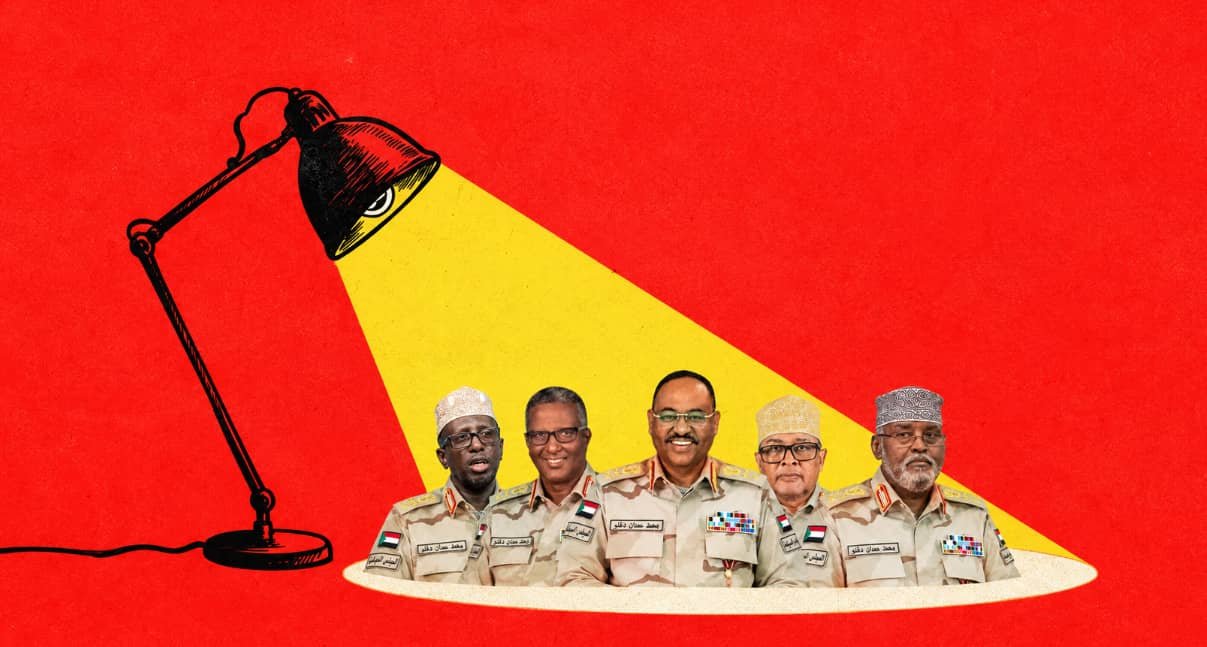
Africa Intelligence has now reported what many in the region long suspected: Hemedti's Rapid Support Forces have maintained quiet, high-level security ties with Israel throughout Sudan's war. According to the report, senior RSF figures, including Hemedti's brothers Abdul Rahim and Algoney, traveled to Tel Aviv in May 2025 and again in February 2026 to meet Israeli Foreign Ministry officials and intelligence officers. Earlier investigations had already linked the RSF to Israeli surveillance technology, including Predator-related phone-hacking equipment reportedly delivered before the war began.
Read that alongside one more line from the same report: the RSF's principal external material backer remains the United Arab Emirates.
This is not an isolated scandal. It is a pattern, and Somalia is where the pattern is easiest to see.
Somali precedent
For years, Israel courted the separatist leadership in Hargeisa. Somaliland delegations were hosted, cultivated, and encouraged while Mogadishu was fighting for survival against al-Shabaab. Then, on 26 December 2025, Israel became the first state in the world to recognize Somaliland's secession, tearing at the territorial integrity of a founding member of both the Arab League and the OIC. Netanyahu dressed the move up as being "in the spirit of the Abraham Accords." In truth it was the first time any state had formally rewarded the dismemberment of an African country since the OAU enshrined the sanctity of colonial borders in 1964.
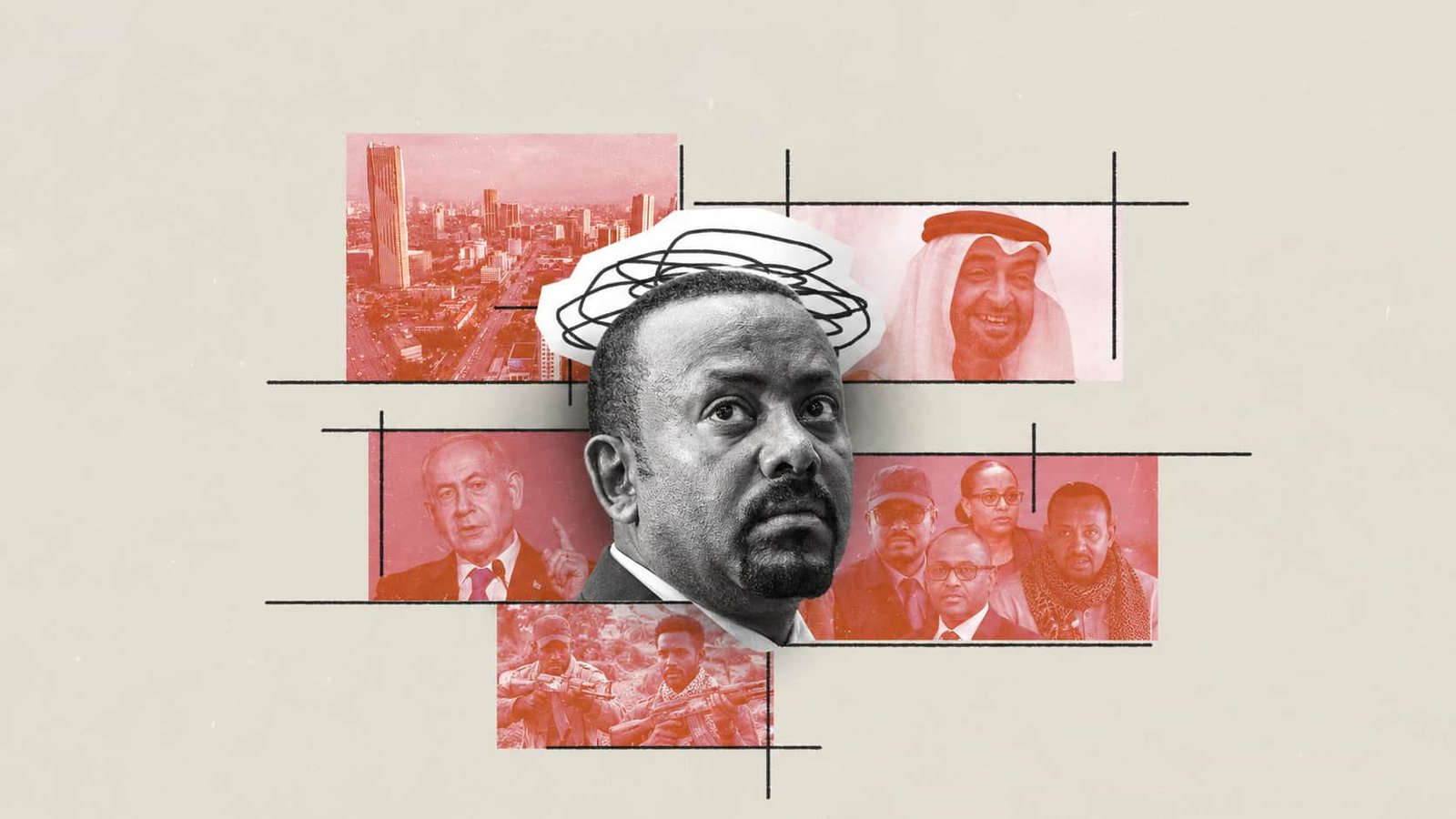
Who prepared the ground? UAE, which spent a decade building its own parallel state in Somaliland: the Berbera port concession, the airbase, the direct security relationships that bypassed Mogadishu entirely. And Ethiopia, whose January 2024 memorandum with Hargeisa promised naval access and a base on the Berbera coast in exchange for the prospect of recognition, an attempt to carve territory and military facilities out of a neighbor's sovereign land that would have been unthinkable without the Emirati infrastructure already on the ground and the Israeli appetite for a Red Sea foothold. Israel merely harvested what Abu Dhabi and Addis Ababa had planted. Within weeks of the recognition, an Emirati official was telling Israeli television that UAE recognition of Somaliland could come "sooner or later," and by August 2026 Israel's ambassador to the UAE was meeting Somaliland's representative in Abu Dhabi to discuss deepening the relationship. The choreography is not subtle.
The courtship did not stop at recognition. In June 2026, Somaliland's leader Abdirahman Cirro was received in Jerusalem by President Herzog with full honors, spoke of a "historic milestone," and dangled mineral rights and even talk of an Israeli military base within reach of Bab el-Mandeb. And the contagion is spreading beyond Hargeisa. Puntland, which publicly rejected Israel's recognition, quietly signed the Nairobi agreement with Somaliland in October 2025 and has since concluded a direct security arrangement with Washington over Bosaso, bypassing Mogadishu. There are now persistent allegations, so far unconfirmed, that Puntland's president Said Abdullahi Deni has himself made contact with Israel, including claims of a visit. Whether or not that particular trip took place, the direction of travel is unmistakable: every fragment of Somalia is being encouraged to find its own foreign patron, and the patrons keep leading back to the same address.
Somalia responded the only way a sovereign state could. On 12 January 2026, Mogadishu terminated all agreements with the UAE, ended defense and security cooperation, and cancelled Emirati operational control over Somali ports. It was a costly decision, taken by a country that could ill afford it, because the alternative was to accept partition administered from abroad.
The same playbook in Sudan
Now look back at Sudan with Somali eyes. A state fractured by war. A non-state armed force accused of genocide in Darfur. And behind it, the same trio of enablers: the UAE arming and financing the RSF as its principal backer, Israel supplying intelligence relationships and surveillance capacity, and a regional environment in which Ethiopia's own ambitions on the Red Sea keep every border in play.
The method is consistent. Identify the fracture line in an Arab or African state. Adopt the separatist, the warlord, the parallel authority. Build ports, bases, and intelligence ties with the fragment rather than the state. Then, when the fragment is strong enough, legitimize it, whether through recognition in Somaliland's case or through normalization-for-impunity in the RSF's case. What the Abraham Accords promised as a framework for peace has been repurposed as a framework for partition.
The losers are the same everywhere: the unity of Somalia, the unity of Sudan, the Red Sea as a space governed by its littoral states rather than by external patrons, and the African Union's founding principle that borders are not for sale. The winners are also the same everywhere, and they are not African.
Türkiye: the counterweight
One regional power has consistently stood on the other side of this equation. When the Ethiopia-Somaliland memorandum threatened to set the precedent in 2024, it was Ankara that pulled the parties back from the brink: the Ankara Declaration of 11 December 2024, signed by Abiy Ahmed and Hassan Sheikh Mohamud under President Erdoğan's mediation, committed Ethiopia to pursuing sea access through legitimate commercial arrangements that respect Somalia's sovereignty and territorial integrity, not through deals with secessionists. That single document defused what the MoU had ignited, and it is precisely the framework Israel's recognition was designed to blow up.
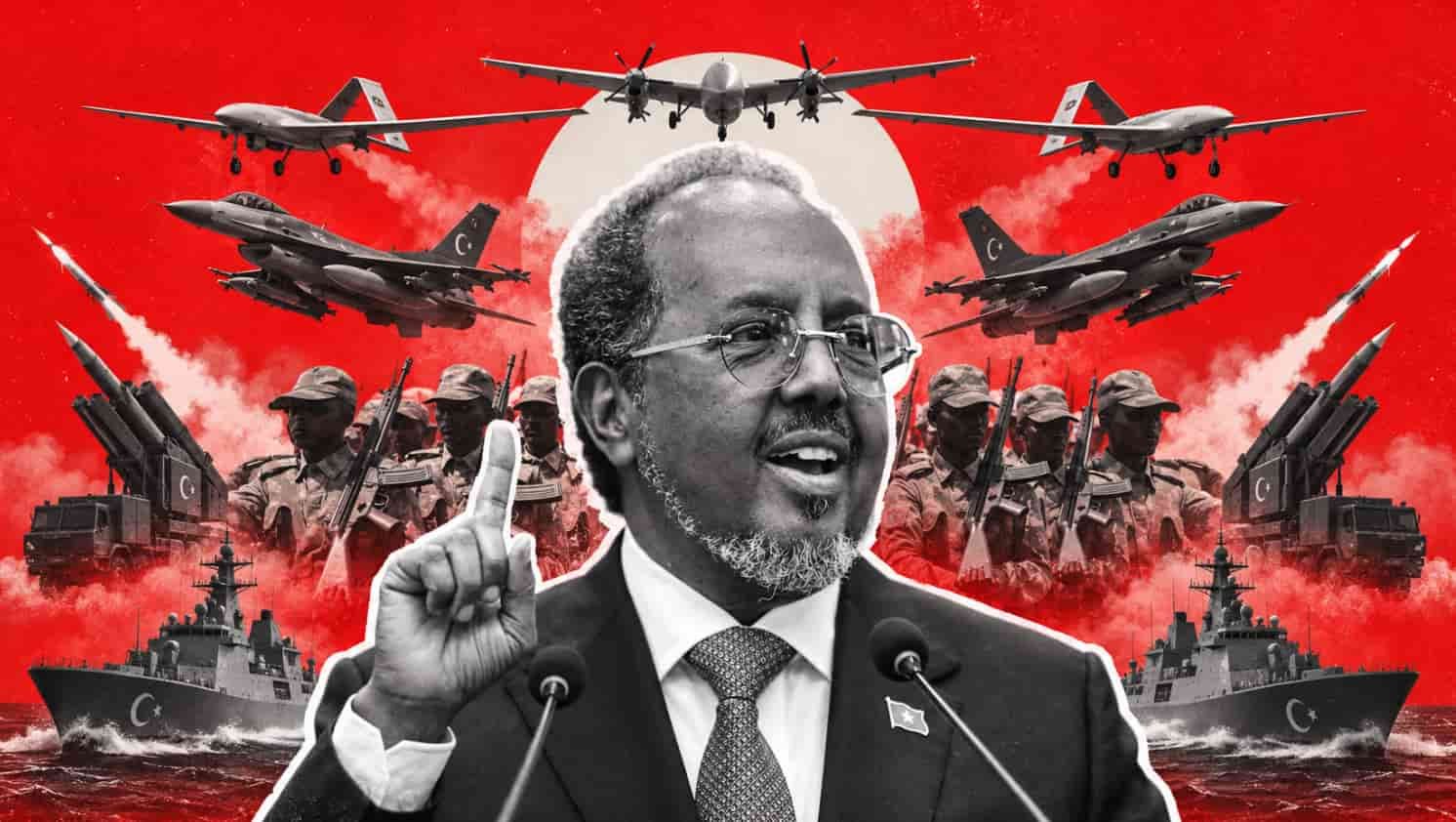
Ankara's response to the recognition was immediate and unambiguous. Erdoğan called it "illegitimate and unacceptable," standing beside President Hassan Sheikh Mohamud within days of the announcement, and Türkiye convened an extraordinary OIC session to reject it collectively. The response was not only rhetorical: Turkish fighter jets deployed to the Turkish base in Mogadishu in a visible show of force, and TURKSOM continues to train the Somali National Army, the very institution on which the country's reunification depends. In February 2026, Erdoğan took the message to Addis Ababa itself, telling Abiy's government publicly that Türkiye values the sovereignty and territorial integrity of the region's states and that the Horn must not become a playground for foreign powers.
The same logic governs Ankara's Sudan policy. Türkiye has backed the legitimate government and the Sudanese Armed Forces throughout the war, has been widely reported as a source of the drone capability that helped the SAF turn the tide, and offered its mediation to address the Emirati role in the conflict. Where the Israel-UAE-Ethiopia axis invests in fragments, Türkiye invests in states: in Somalia's army, Sudan's unity, and a regional order in which borders are settled by the region's own peoples rather than auctioned to the highest external bidder. It is no accident that the loudest objections to Turkish engagement come from the same capitals that recognize secessionists and arm militias.
Diplomacy has its place. The Arab League, the OIC, and the AU were right to treat Israel's recognition of Somaliland as an emergency, and Mogadishu was right to make Abu Dhabi pay a price in January. But experts who follow both files closely converge on a harder truth: this axis feeds on weakness at the center, and it will only stop when the center becomes too strong to bypass.
That means two things. In Sudan, it means the Sudanese Armed Forces defeating the RSF outright and restoring the country's territorial unity, because as long as a parallel army holds territory, there will always be a foreign patron ready to finance it, arm it, and eventually legitimize it. In Somalia, it means building a national army capable of securing the whole country and a federal government strong enough that no regional leader, in Hargeisa or in Garowe, can auction pieces of the republic to outside powers. Every port concession signed behind Mogadishu's back, every "direct" security deal with a federal member state, exists because the alternative, a capable Somali state, does not yet fully exist.
Somalia was the laboratory. Sudan is the current experiment. Condemnation without capability changes nothing. The axis of fragmentation will be defeated not in communiqués but on the ground: by a Sudanese army that reunifies its country, a Somali army that makes its unity irreversible, and partners like Türkiye who understand that the strength of states, not the convenience of fragments, is what keeps a region whole.