Politics & Security
Closing the Blue Nile Border Will End the War in Sudan
Why Ethiopia's Latest Victory May Be the Beginning of a Wider War
On the morning of October 3, Ethiopian federal troops rolled into Mekelle, the capital of Tigray, in military vehicles flying government flags. The leadership of the Tigray People's Liberation Front, along with its armed units, had already slipped out of the city; there was no climactic battle, no last stand. By the following morning, multiple sources confirmed what the images suggested: the city that has twice served as the prize and the graveyard of Ethiopia's civil wars had changed hands once more, this time with barely a shot fired.
Addis Ababa will be tempted to read the moment as vindication proof that the federal campaign is succeeding and that the TPLF's days as a fighting force are numbered. That reading is premature, and possibly dangerous. The fall of Mekelle has not ended the war in northern Ethiopia. It has relocated it, fractured the government's own coalition, and pushed the fighting toward the one frontier where a domestic conflict could become a regional one: the border with Eritrea.
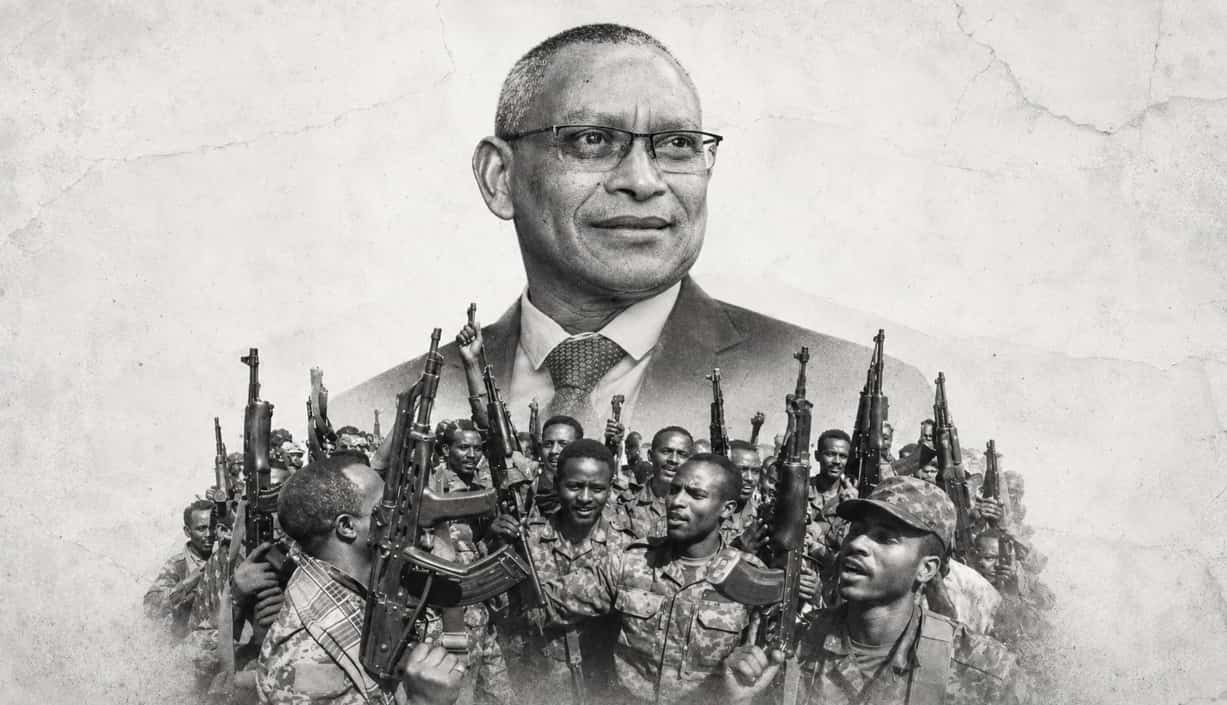
The TPLF's departure from Mekelle followed a familiar script. The movement has survived for half a century by trading territory for time, abandoning cities when holding them becomes costly and regrouping in the mountainous terrain it knows best. Its leadership is reported to have withdrawn to Adwa, and federal forces—having taken Agulae, north of the capital—now stand roughly 65 kilometers from Adigrat, a TPLF stronghold. Airstrikes have allegedly already hit both Adigrat and Adwa. Government-aligned accounts anticipate the next phase of operations moving toward Shire, Adwa, and Wukro, with Tigrayan resistance expected to coalesce along the Shire–Adwa–Adigrat line.
The messaging from the TPLF itself has been contradictory—one office acknowledging that the leadership had left the city, another declaring victory on social media but the operational logic is legible enough. The front has not conceded defeat; it has chosen its ground. Inside Mekelle, meanwhile, early reports describe a security vacuum and looting, with internet and telephone disruptions making independent verification difficult. Taking a city, as Ethiopia's recent history has demonstrated repeatedly, is not the same as governing it.
More troubling for Addis Ababa than anything the TPLF has done is what its own allies are doing to one another. In the Raya region of southern Tigray, fighting has erupted between the government-aligned Tigray Peace Forces—the Tigrayan faction that spearheaded the advance on Mekelle—and Amhara militias drawn from the Raya community, spreading from Alamata to Zata, Ofla, and Korem. Alamata's city communication office has accused the TPF of attacking militias and civilians who had gathered to receive displaced people.
The dispute is not incidental. Raya sits atop one of the oldest and most combustible fault lines in Ethiopian politics: the contested boundary between Tigray and Amhara, where questions of territory are inseparable from questions of identity. That two nominal partners in the federal campaign are now shooting at each other over this ground, even as their common adversary retreats, suggests that the government's coalition is held together less by shared purpose than by a shared enemy and that the enemy's weakening may loosen the glue.
The second front in Amhara makes the point starker still. Fano militias clashed with the federal army's 401st Corps around Gondar between October 1 and 3—Fano-aligned sources claim more than ninety soldiers killed, a figure that cannot be verified—and in Wollo, Fano fighters have concentrated on ambushing the supply convoys heading north to sustain the Tigray campaign. The army advancing on Adwa is thus fighting along lines of communication that run through actively hostile territory. Even the capital is not insulated: explosions were heard in Addis Ababa this week, possibly drone strikes, though details remain murky.
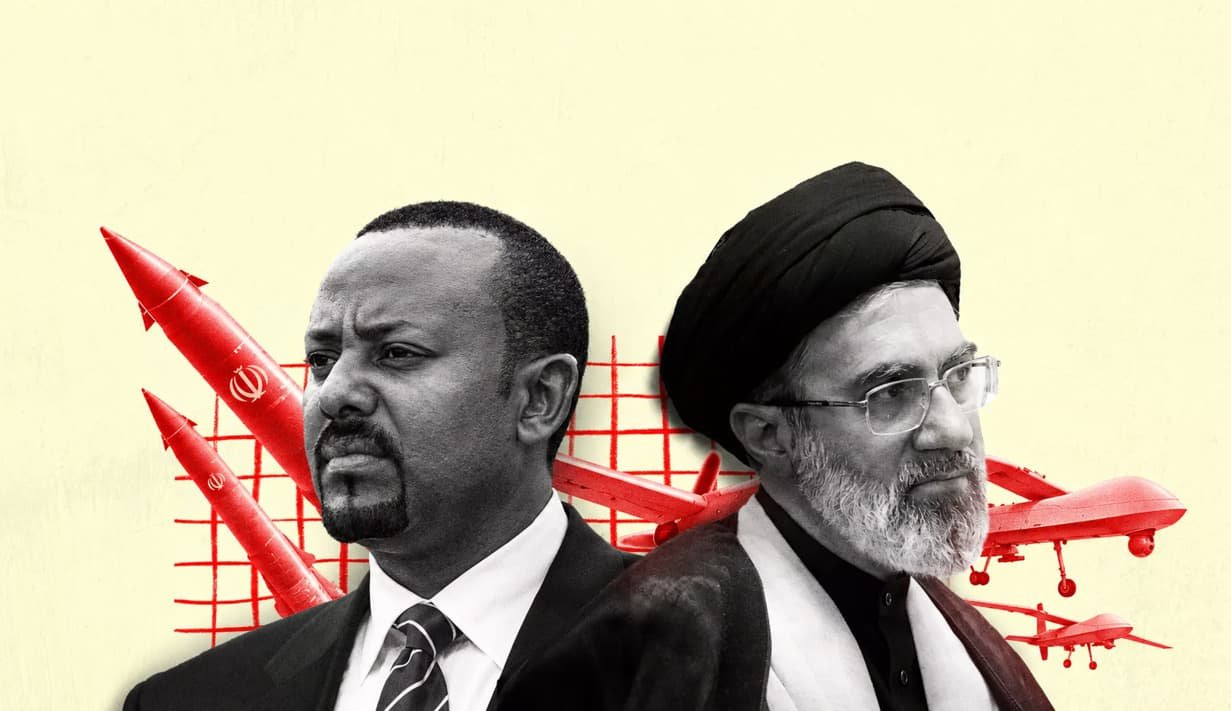
The gravest risk, however, lies to the north. Every kilometer the federal army advances toward Adwa and Adigrat brings it closer to Eritrea—at a moment when relations between the two states have collapsed. Addis Ababa accuses Eritrea, along with Egypt and Sudan, of backing the Tigray-led alliance; all three deny it. Ethiopia has closed its embassy in Asmara and expelled ten Eritrean diplomats, and on October 1, Eritrea severed diplomatic relations outright. Unverified claims that Eritrean forces have already deployed inside Tigray, at Farsi, hang over the battlefield. Whether or not they prove true, the geometry is unforgiving: a federal offensive pressing against the Eritrean border, conducted by a government that has named Eritrea an adversary, creates conditions in which a skirmish could become a war between states.
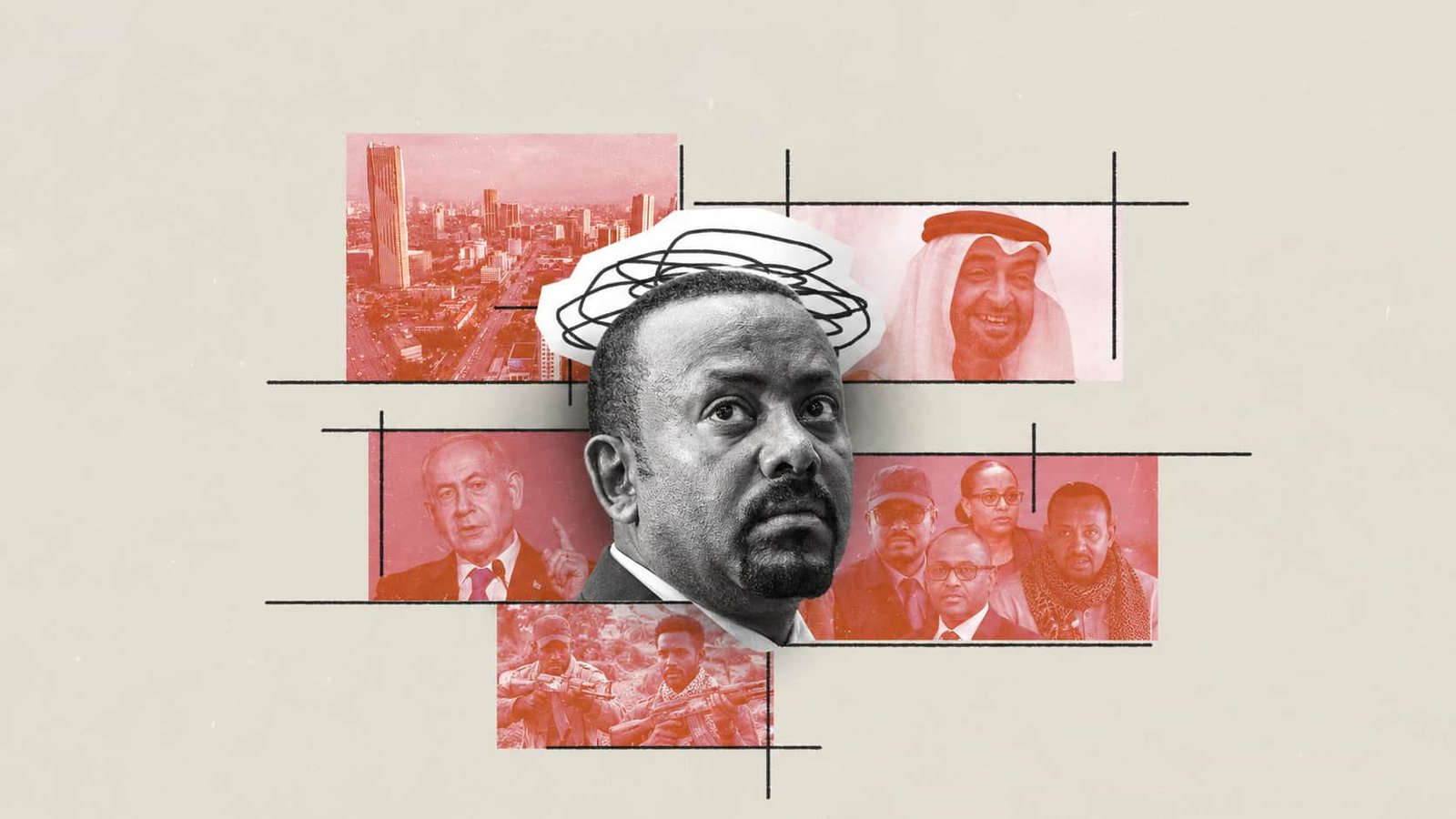
The diplomacy surrounding the conflict has taken on a correspondingly regional cast. On October 4, Egyptian President Abdel Fattah el-Sisi is hosting the leaders of Eritrea, Sudan, and Somalia at a four-way summit in El Alamein—a gathering of precisely the states Addis Ababa accuses of meddling, convened without Ethiopia. Cairo insists it has played no role in Ethiopia's turmoil; Foreign Minister Badr Abdelatty has called the blaming of external actors for the crisis unacceptable, and an official source dismissed the African Union's call for restraint directed at Ethiopia, Eritrea, and Egypt as incomprehensible. Sisi, for his part, has rejected any political exploitation of Nile waters—a reminder that the unresolved dispute over the Grand Ethiopian Renaissance Dam shadows every interaction between Cairo and Addis Ababa. Washington has confined itself to urging maximum restraint on Ethiopia and Eritrea and a return to dialogue, warning that cross-border tensions could engulf the region. On Ethiopia's western flank, the Sudanese army says it repelled an attack by the Rapid Support Forces and SPLM-N fighters in Blue Nile state, near the Ethiopian border a reminder that Sudan's own civil war laps at the same shores.
The next several weeks will reveal whether Mekelle's fall was a turning point or merely a change of scenery. The first test is military: whether the TPLF makes its stand along the Shire–Adwa–Adigrat line, and whether the federal army can sustain an offensive at the end of supply routes that Fano is actively cutting. The second is political: whether the fighting between the TPF and Amhara forces in Raya can be contained, or whether it unravels the coalition on which the entire campaign depends. The third, and most consequential, is international: whether verified Eritrean forces appear inside Tigray, and what common position toward Ethiopia emerges from the summit at El Alamein. Elsewhere, the federal counteroffensive in Afar is reported to have retaken Abala and Erebti—a reminder that this war is being fought on more fronts than any single headline can hold.
Ethiopia has been here before. In 2020, federal forces took Mekelle in weeks and declared the war over; two years and hundreds of thousands of deaths later, the government signed a peace it could have had at the start. The lesson of that war—that capturing the Tigrayan capital settles nothing—is the one Addis Ababa can least afford to forget, and the one it appears most determined to relearn. The flags are flying over Mekelle. The war has moved on.