Explore
Akıncı Gives Sudan’s Army Total Command of the Skies
Washington is trying to force a ceasefire on Sudan by keeping its head of state away from the UN General Assembly. The method will not bring peace; it only shows on whose behalf the mediator speaks.
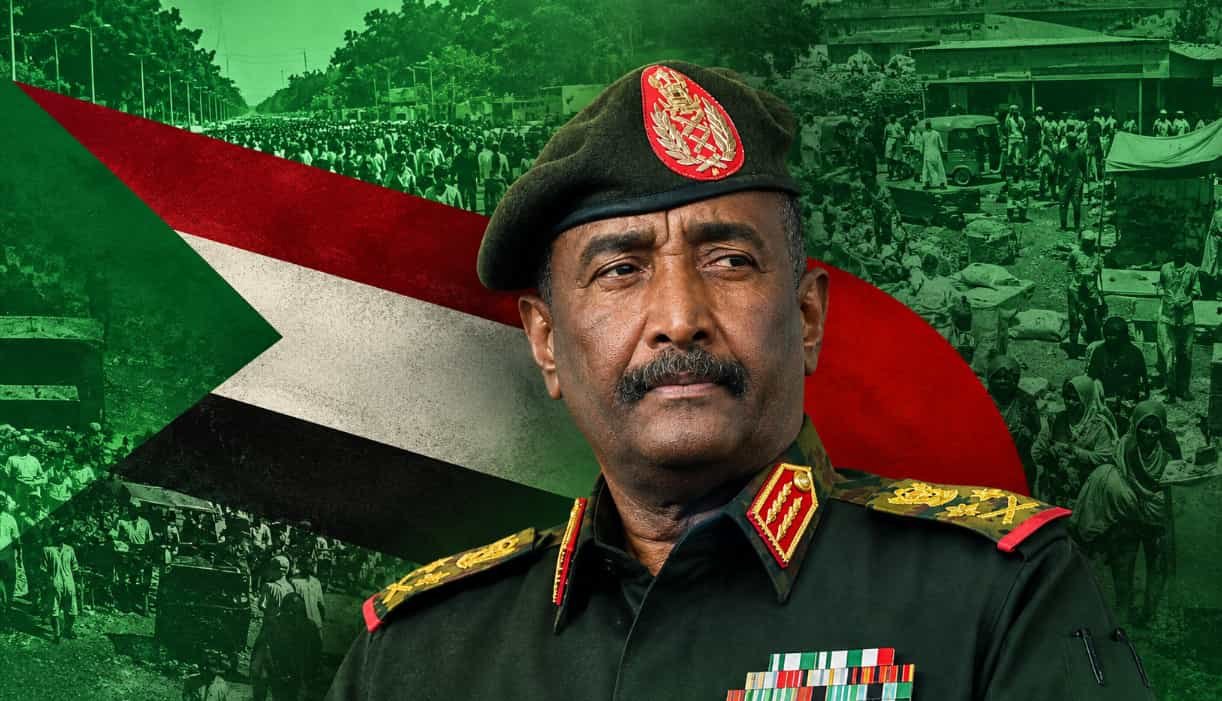
The man expected to address the United Nations General Assembly on Sudan's behalf on Thursday was Abdel Fattah al-Burhan. He will not. A senior Sudanese source told Reuters that Burhan had postponed his trip to New York, though he had yet to receive official notice that his visa had been denied. According to a Sudanese diplomatic source and a Western analyst close to American and Sudanese officials, US officials made Burhan's attendance contingent on his accepting a 90-day ceasefire proposed by Massad Boulos, the US Senior Advisor for Arab and African Affairs. Foreign Minister Mohieldin Salem will take the podium instead.
Making a head of state's entry to the UN conditional on signing a ceasefire text is not mediation; it is gatekeeping. And who is holding the gate explains why it is being held.
This is first of all a matter of law. Under the agreement for the United States to host the UN headquarters, Washington is not supposed to deny visas; it has nonetheless done so before, to the head of the Palestinian Authority. In a letter dated September 21 to Secretary-General António Guterres, Sudan's UN Ambassador Al-Harith Idriss Al-Harith wrote that, should the situation persist, it would effectively prevent the head of state of a UN member from participating in person in the work of the General Assembly, and asked for the UN's "immediate intervention" with US authorities. UN spokesperson Stéphane Dujarric said the Secretary-General was "deeply concerned" that a visa had reportedly not yet been issued to the President of Sudan's Transitional Sovereign Council and was engaging with the United States on the matter.
In the words of the Sudanese source, this is a violation of the UN Convention and of international law. The President of the Sovereign Council, like it or not, is the highest representative office of the Sudanese state recognised by the UN, and the man who has addressed the General Assembly on Sudan's behalf since 2021. Keeping him from the podium silences a nation of 50 million. Doing so in exchange for a signature turns diplomacy into bargaining, and bargaining into blackmail.
A single sentence from the Sudanese diplomatic source to Reuters sums up the process: Burhan rejects this take-it-or-leave-it approach; any proposal should be open to suggestions and changes. Sudan's army conveyed its reservations about the Boulos ceasefire in July. Those reservations were never negotiated. The visa card was placed on the table instead. According to the sources, if the visa is not granted, Burhan is unlikely to engage further with Boulos's efforts.
Boulos cannot be unaware of this. A mediator who uses a pressure tool he knows will drive his counterpart from the table reveals one of two things: either he does not understand mediation, or he does not regard the collapse of the table as a problem. The second possibility is more consistent with the rest of the process.
For more than a year, Sudan's army has retaken Khartoum, Gezira and the centre of the country from the RSF. The RSF is confined to Darfur, more dependent than ever on external supply, and, after the massacres in El Fasher, largely stripped of international legitimacy. The parallel government Hemedti has set up has struggled to gain recognition. What does a 90-day ceasefire mean at precisely this point? The winning side stops; the losing side regroups.
Burhan said as much in a piece published in Foreign Policy on Monday: he will refuse external directives about the war, because previous pauses in the fighting only allowed the RSF and its backers to regroup. From Jeddah to Geneva, the same script played out on every platform: the RSF signed, violated, and resupplied while violating. "It cannot always be the same thing" is no longer a slogan in Khartoum; it is military doctrine.
What does the other side say? Sending his soldiers off to battle, Hemedti declared that "it's time for the rifles to speak." In the very week the United States holds a head of state hostage to make him sign a ceasefire, the RSF leader announces an offensive. Boulos's pressure is not directed that way.
Washington's proposal in recent weeks to extend the Darfur arms embargo to the rest of Sudan points in the same direction; Burhan's backers say it would disproportionately punish the army. The RSF's weapons already arrive through channels outside the embargo, via neighbouring countries. Extending the embargo would penalise the side that arms itself through internationally lawful means: the state. Read together, the ceasefire, the embargo and the visa do not add up to impartial mediation but to an effort to reset the balance on the ground in the RSF's favour.
How Massad Boulos came to the Sudan file explains how he runs it. A Lebanese-American businessman, Boulos made his career in his family's company in Nigeria; he has no diplomatic background. His appointment rests on his son's marriage to Trump's daughter Tiffany. That is not a crime in itself. But in a file where the mediator's personal network and business ties translate directly onto the battlefield, this profile is decisive.
Boulos's remit covers Arab and African affairs, and at the intersection of these two geographies stands a single capital: Abu Dhabi. At the centre of the Trump administration's Gulf policy is a deepening commercial, technological and defence partnership with the UAE. That same UAE, as documented by the UN Panel of Experts and numerous independent investigations, is the RSF's principal source of weapons and funding. The United States runs its mediation through a "Quad" format that also includes the UAE, Egypt and Saudi Arabia. In other words, the country arming one side of the war sits at the mediation table, and the mediator's remit also covers relations with that country.
Within this structure, Boulos cannot be impartial, whatever his personal intentions, because the structure does not allow it. It was he who announced, before El Fasher fell, that the RSF would allow humanitarian access; the world saw what followed. It was he who described Sudan's foreign minister as the "army-appointed minister." Now he is turning a head of state's exclusion from the UN podium into a bargaining chip. These are not unrelated errors but a consistent line from the same address. The fate of the Sudanese people cannot be written as a by-product of the relationship between Washington and Abu Dhabi.
Boulos's process will not bring peace to Sudan, because it fails all three preconditions of peace.
First, legitimacy. The vast majority of Sudanese see the RSF not as a political party but as a force that burned their villages, looted their cities and killed thousands in El Fasher in three days. Any framework that seats that force at the table as the state's equal will not hold on Sudan's streets, even if signed.
Second, leverage. An effective mediator is one who can cut off the external flows that sustain the war. Boulos's only lever is a head of state's visa. He has no lever to stop the aircraft ferrying weapons to the RSF, because the country those aircraft depart from is Washington's closest Gulf partner and sits at the table.
Third, the reality on the ground. No ceasefire lasts if it does not reflect the balance of forces. A ceasefire that rescues the losing side does not end a war; it postpones it. Sudan has lived through this at least five times since 2023.
Boulos's method is pushing Sudan not toward a ceasefire but away from the very idea of one. A text signed under duress is read by the side winning on the ground not as a peace document but as an instrument of surrender, and instruments of surrender do not get signed. If Washington cannot see this, it does not understand the Sudan file; if it sees it and proceeds anyway, it already knows whom the ceasefire serves.
For Sudan, the path is clear. A ceasefire is meaningful only within a framework in which the RSF lays down its arms, its external supply is cut off, and the integrity of the Sudanese state is the precondition of the table. The mediator who can deliver that cannot be an adviser to a capital in partnership with the RSF's patron. Sudan's fate cannot be written as a by-product of the relationship between Abu Dhabi and Washington. The pressure tools in Boulos's hands do not change this; they only show, once again, who stands on which side.