Politics & Security
Tigray's Long Game Is Breaking the Ethiopian State
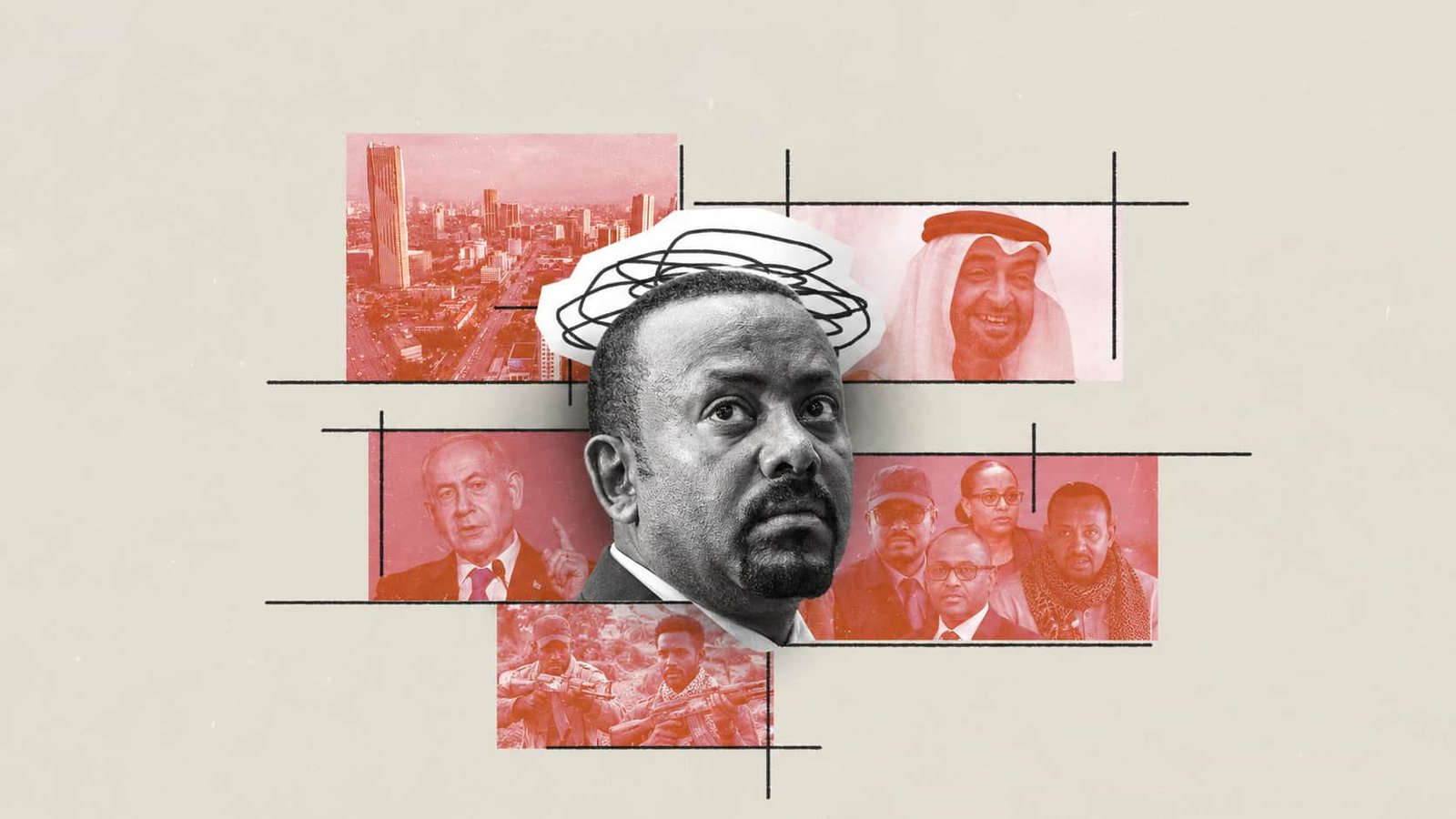
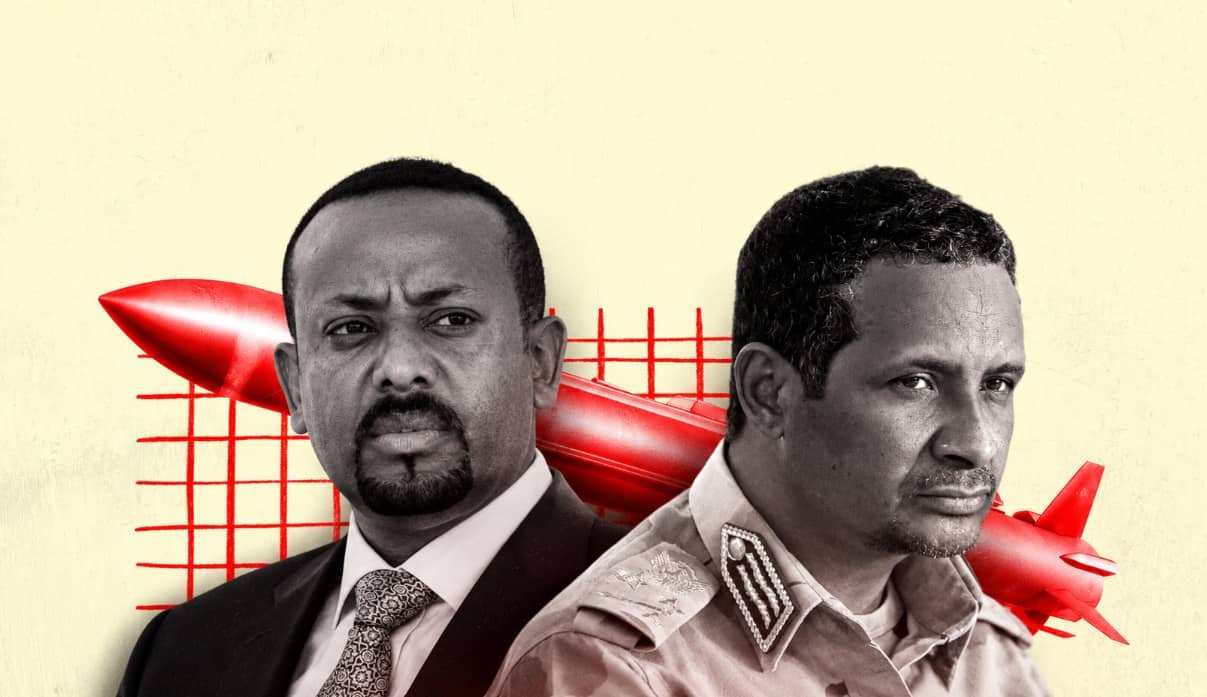
For three years, Addis Ababa has behaved like a power with reserves it did not have. It waged a proxy war against Sudan's army in all but name, opening supply lines through Assosa to the Rapid Support Forces and, by Khartoum's account, allowing drones to strike Sudanese territory from Ethiopian soil. It turned Eritrea from a wartime ally into an adversary by declaring that access to the Red Sea was a historical right, a claim Asmara could only read as a design on Assab. It signed a coastal deal with Somaliland that Mogadishu treated as an act of dismemberment and that brought Turkey, Egypt and the Arab League into a coalition against it. And it did all of this while its own house was on fire: an insurgency in Amhara, a war in Oromia that no ceasefire has ended, a Somali region split over a gas concession, and a Tigray that had signed a peace but never received one.
The bet behind this behavior was that Ethiopia could afford it. The Emirati money, drones and diplomatic cover that had carried Abiy Ahmed through the first Tigray war would carry him through the next confrontation too, and the Horn's other players, exhausted or divided, would not combine against him. This week that bet is being called.
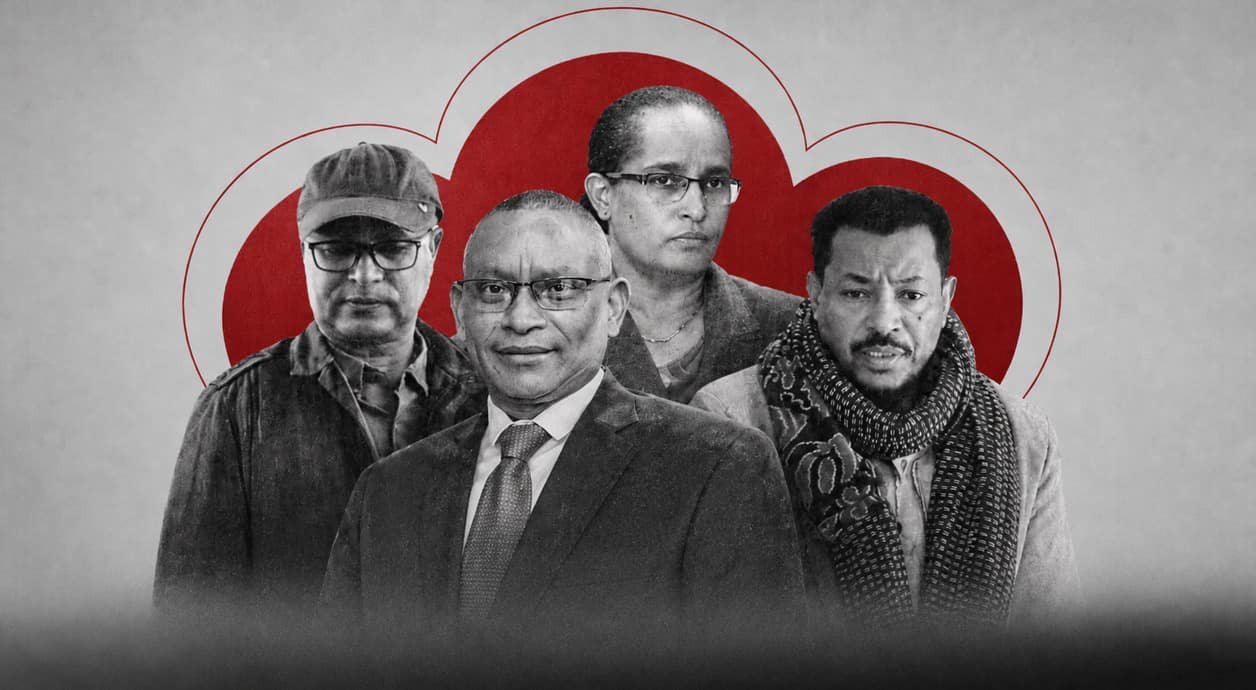
On September 21, seven armed movements announced the Ethiopian Peoples' Forces Alliance for Survival and pledged to remove the prime minister and install a transitional administration. The membership is the point. The Tigray People's Liberation Front and the Amhara Fano fought on opposite sides of the last war and still contest Western Tigray. The Oromo Liberation Army accuses Fano of killing Oromo civilians in Wollega. The Ogaden National Liberation Front and the Afar, Benishangul and Gumuz movements bring grievances from four more regions. These groups do not share a program, a command, or in several cases even a mutual tolerance. What they share is a conclusion: the federal government cannot be negotiated with, because it does not honor what it signs.
That conclusion did not come from nowhere. The Pretoria agreement of 2022 was a two-party deal that excluded Eritrea and Amhara, the forces that had done much of the killing, and it deferred the question of Western Tigray indefinitely. Addis Ababa then spent the peace maintaining what Tom Gardner calls a low-level conflict via drones, proxies and siege tactics. When the TPLF restored its pre-war council in May, federal and Tigrayan forces clashed at Shererina on the Sudanese border in August, with artillery and drones, and hundreds of fighters fled into Sudan. Drones hit Mekelle on August 20, a food aid truck on September 20, and two schools in Alamata on Tuesday, where the town's mayor counted 14 dead. Addis Ababa has acknowledged none of it. On Wednesday, Tigrayan forces took Mekelle's airport. The exit Abiy had kept open for those who wanted to leave is now closed, and the strategy of managed attrition has run out of room.
What makes this moment different from 2020 is that Ethiopia's external enemies are now the natural allies of its internal ones. Eritrea, which crushed the TPLF six years ago, has quietly reconciled with it since Abiy began speaking of the sea; Asmara's minimum aim, as Jawar Mohammed puts it, is to keep any war on the Ethiopian side of the border, and its maximum aim is a buffer zone that only a weakened Addis would concede. Sudan's army has fought alongside several thousand Tigrayans from Welkait against the RSF and has every reason, as the researcher Mohamed Torshin argues, to apply the principle of reciprocity: if Ethiopia supplied its enemies through Assosa, Khartoum can look the other way as wounded fighters and matériel cross into Tigray. Egypt, locked in the Nile dispute, is a close wartime ally of the Sudanese army and has drawn Eritrea into its orbit. Somalia and its partners have no interest in an Ethiopia strong enough to revive the Somaliland deal.
None of these states needs to send a battalion. They need only to stop containing what Ethiopia unleashed. Abiy's spokesperson has accused Eritrea of bankrolling the alliance; Asmara denies it, and the truth may matter less than the fact that Addis Ababa now perceives every border as a front.
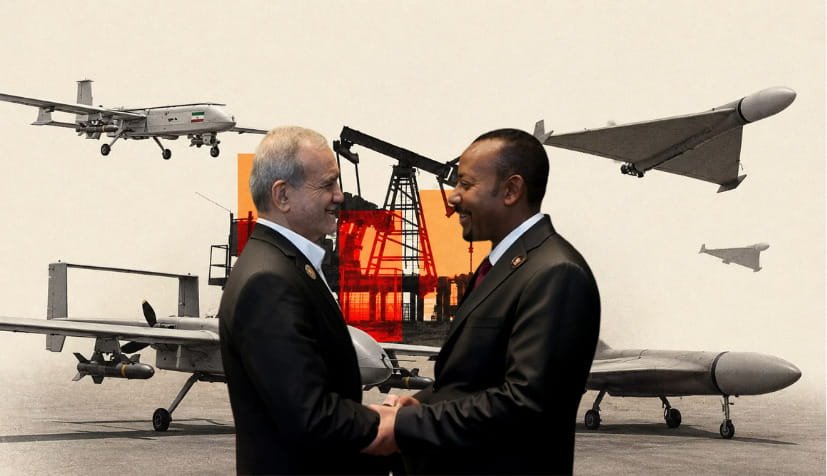
The deepest miscalculation was strategic dependence dressed up as strategic autonomy. The UAE's backing gave Abiy drones that decided the last war and financing that kept the state solvent. It also tied Ethiopia to Abu Dhabi's war in Sudan and to a Red Sea posture that alienated Egypt, Turkey and Saudi Arabia at once. A patron's interests are not a client's, and the Emirates have shown in Sudan that they will fund a war indefinitely without ever needing to win it. Ethiopia, unlike the RSF, has 120 million people to feed and a federation to hold together. The drones that struck Mekelle this summer bought Abiy months; they did not buy him a single ally among his own regions.
The alliance is not yet an army. Kjetil Tronvoll's question stands: if the line ever advanced on Addis Ababa, whose soldiers would go first, and would a Tigrayan general ordering Amharas into the breach not split the coalition on the spot? Magnus Taylor of the International Crisis Group is right that this remains substantially a domestic phenomenon, that the TPLF has come off worse against federal air power, and that the likelier course is slow deterioration with southern Tigray as the flashpoint. Abiy still holds the capital, the air force and a parliament in which his party won 438 of 486 contested seats. He may not, in Tronvoll's phrase, be skipping lunch.
But slow deterioration is precisely what a state cannot afford when it has spent its credit on every frontier. The Egyptian analyst Hamdi Abdel Rahman calls this a pre-war phase rather than an inevitable war, and identifies the real danger as the merging of separate conflicts into one system linking Tigray, Eritrea, Sudan and the Red Sea. That merger has already begun. Ethiopia set out to reshape the Horn's borders and ended up as the country whose borders every neighbor now has an interest in pressing. A government that could not implement a peace with one region is being asked to fight seven, with its former allies watching from across the frontier. The wars Abiy Ahmed exported are coming back through the same routes he opened for them.