Politics & Security
Tigray's Long Game Is Breaking the Ethiopian State
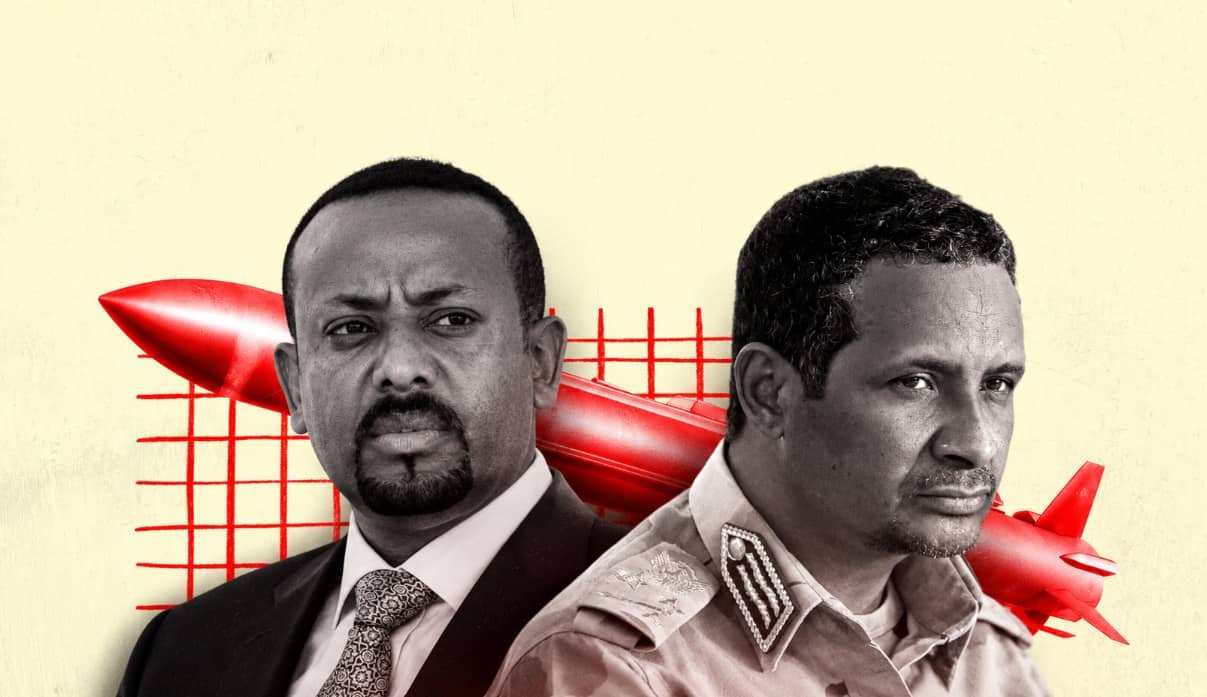
On the morning of October 1, the downing of suicide drones over Tor Hailoch, aimed at Ethiopia's military headquarters, announced the end of an era in the Horn of Africa. When Abiy Ahmed went to war in Tigray in 2020, he had the Eritrean army beside him, the United Arab Emirates' drones above him, and an indifferent Sudan behind him. Six years later, Eritrea is in the opposite trench, the Sudanese army is an adversary, and the UAE is a patron that has drawn Addis Ababa into Sudan's civil war. This is not a chain of misfortunes but the product of a strategy. Rather than resolving Ethiopia's deepest domestic crises, Abiy exported them into foreign policy. The neighbors declined the shipment.
To understand the course Abiy set after 2023, one must look at the vacuum on his home front. The Fano insurgency in Amhara, the years-long OLA war in Oromia, and the frozen clauses of the Pretoria Agreement in Tigray had left his government facing three separate regional legitimacy crises at once. In such circumstances leaders generally choose one of two paths: accommodation or distraction. Abiy chose the latter. With general elections scheduled for June 2026 and his legacy in question, he needed a unifying national cause, and he increasingly signaled that regaining access to the Red Sea could be it.
Sea access is a genuine economic problem for Ethiopia. The country has borne the costs of being landlocked since Eritrea's independence in 1993, paying roughly $1.5 billion a year to Djibouti for the use of its ports. But converting an economic problem into a political cause changed the nature of the solution. What Abiy sought was not a port contract but the correction of history.
Here lies the most overlooked part of the story: Abiy was offered sea access, and he found it insufficient. In January 2024 he attempted to diversify Ethiopia's maritime options by signing a memorandum of understanding with Somaliland for access to the port of Berbera; the move enraged Somalia, which threatened to expel Ethiopian peacekeepers from its territory. The crisis was defused through Turkish mediation. In December 2024 the Ankara Declaration reaffirmed Somalia's territorial integrity while granting Ethiopia access to Somali ports under Somalia's sovereign authority.
For a rational economic actor, this was a result won. Djibouti already carried nearly all of Ethiopia's trade; Somalia had now opened a door as well. But Abiy's eyes were elsewhere. He described Ethiopia's loss of sea access through Eritrea's secession as a "mistake" that "will be corrected." In October 2025 he openly questioned the legality of Eritrea's control over the port of Assab. This is not the language of a port-lease negotiation; it is the intimation of a border revision. And Asmara read it precisely that way.
Abiy's defense was consistent: Ethiopia had no intention of invading anyone but would not be ashamed to ask for a port; it would not fire a single bullet at Eritrea, Somalia, Djibouti, or Kenya. Yet in international politics intent is judged not by words but by the coincidence of repeated words with concentrations of force on the ground. Abiy's ambition for sovereign access to Assab was reported to have provoked a military buildup along the Eritrean border. When the army of a leader who promises not to fire a bullet marches to the frontier, the neighbor's security dilemma has already begun.
The result was that Abiy made his own narrative of encirclement come true. Egypt is now upgrading Djibouti's port of Doraleh and Eritrea's port of Assab, including berths for warships and the capacity to station small but elite military contingents. The old rival on the Nile walked through the door Abiy's maritime rhetoric had opened and settled on both shores of the Red Sea.
Abiy's Sudan policy is the most contested and morally freighted chapter of his foreign policy. Here it is essential to separate what is documented from what is alleged, because the difference between those two categories is the difference between analysis and propaganda.
What is documented amounts to a turning point. In February 2026 Reuters reported that a secret military camp had been built in Ethiopia's Benishangul-Gumuz region near the Sudanese border; an Ethiopian security document indicated that roughly 4,300 recruits were training there in January 2026. Eight sources, including a senior Ethiopian government official, confirmed that the UAE had helped fund the facility's construction and provided military trainers. Yale's Humanitarian Research Lab went a step further with satellite imagery, describing the first definitive visual evidence, over a five-month period, that Rapid Support Forces attacks on Sudan's Blue Nile State were being staged from inside Ethiopian sovereign territory.
What remains at the level of allegation is the claim that Ethiopia has conducted direct strikes. Sudan's accusations included the charge that drones were launched from Bahir Dar airport; the UAE dismissed these claims as propaganda, and Sudan subsequently recalled its ambassador. There is no independent confirmation of a direct Ethiopian attack on Khartoum; the perpetrator of civilian massacres in Sudan is the RSF. Ethiopia's responsibility, to the extent it can be proven, is to have provided that force with a rear base. That is a grave charge, but it is not the same as accusing a state of direct slaughter, and any analysis that wishes to be taken seriously must hold that line.
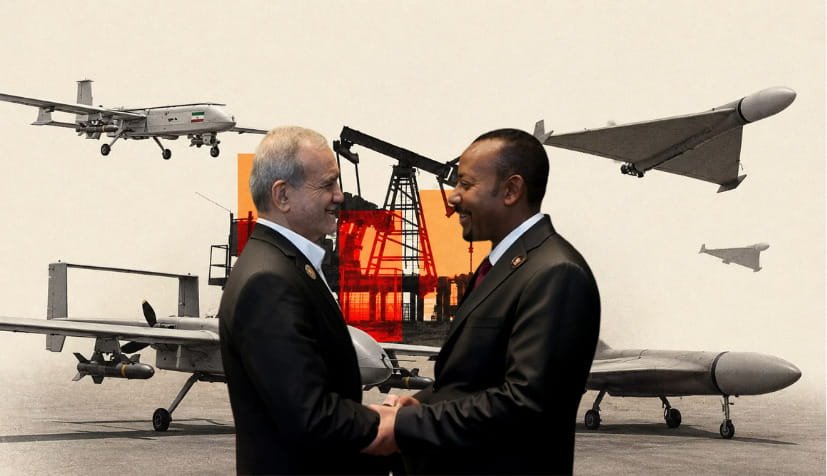
The real question is why Abiy accepted this risk. The answer lies less in Ethiopia's interests than in his dependence on Abu Dhabi. In the assessment of the Horn of Africa analyst Moustafa Ahmad, Ethiopia is acting here less out of incentive than under pressure from the UAE. That dependence has three layers. In the 2020–22 war, Emirati drones decided the outcome. During economic collapse and debt restructuring, Gulf capital was the only lifeline. And against the Egyptian-Saudi axis on the GERD and the Red Sea, the UAE is Addis Ababa's sole powerful backer. In such a structure, refusing Abu Dhabi's proxy in Sudan would have meant putting regime security at risk.
The bill did not take long to arrive. Sudan accuses Ethiopia of harboring RSF elements; Ethiopia accuses Sudan of giving space to Tigrayan and other hostile groups. Abiy dismissed the threat. In July 2026 he told parliament that concerns about a growing alliance among Eritrea, the TPLF, and Sudan were unfounded and that the country faced no threat to its sovereignty. Three months later, precisely that triangle furnished the infrastructure of the war.
To reduce the collapse of the Pretoria Agreement to a single moment of violation would absolve both Abiy and the TPLF. The agreement did not die in an instant but over four years, through the neglect of both parties; yet the first blow to its heart came from the federal side.
Tensions rose in May 2025 when Ethiopia's electoral board barred the TPLF from the June 2026 national elections. Removing the counterparty to a peace agreement from the electoral contest hollows out the political logic of that agreement. Military pressure followed: throughout August and September, Tigray was subjected to federal air and drone attacks. On September 22, Ethiopia carried out at least five drone strikes and more than 21 airstrikes; two of the drone strikes hit two schools in Alamata, killing at least 14 civilians.
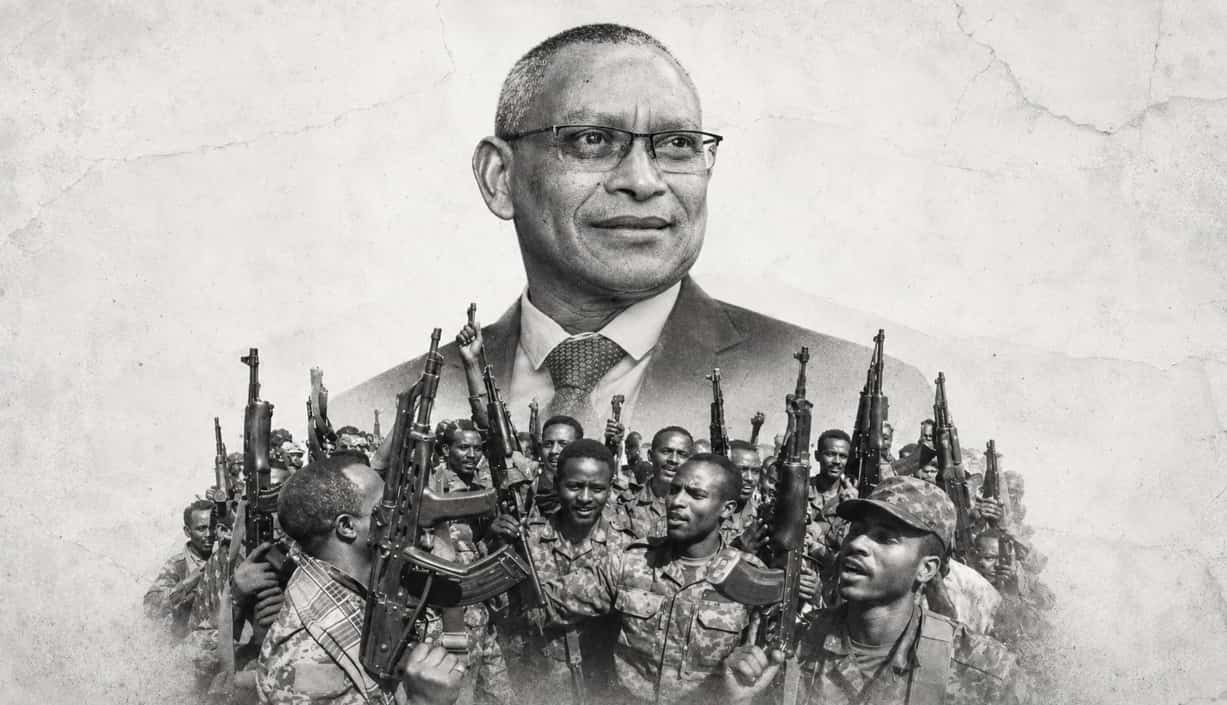
But the TPLF had long since abandoned the spirit of the agreement as well. Three days before launching its offensive, the TPLF announced a new alliance with six other armed groups aimed at overthrowing Abiy's government. A movement that is party to a peace agreement joining a national insurgent coalition dedicated to toppling the government is no more compatible with Pretoria. The agreement's political framework has been overtaken by events, and Ethiopia's conflicts are no longer confined to the relationship between Addis Ababa and Mekelle.
Abiy's fundamental error was not that he "violated" the agreement but that he treated it as a ceasefire rather than a political process. He left the hardest clauses, disarmament and Western Tigray, in suspension; he exploited the internal split in Tigray to his own advantage; and in the meantime he turned his attention to the sea. To build a regional ambition atop an unresolved civil war is to place dynamite in the foundation of a house while adding a floor to the roof.
The picture as of October 1 is the point at which these choices knot together. The three levels described by the security source in Addis Ababa, drone strikes reaching the outskirts of the capital, federal forces advancing from south of Mekelle, and Tigrayan pressure along the Djibouti axis through Afar, correspond to three distinct failures of Abiy's foreign policy.
The Afar front is the bitterest irony of the maritime policy. Tigrayan forces taking Eribti and approaching the Ethiopia-Djibouti highway means that a country chasing "sovereign access" has sacrificed its only reliable sea link to civil war. Ethiopia depends on Djibouti's port for roughly 97 percent of its cargo. The risk of losing the Djibouti road while debating Assab is the measure of how badly strategic priorities have been distorted.
The drone strikes on the capital show that the monopoly on air superiority is over. The former intelligence official's observation in the report is apt: the significance of these strikes lies not in casualties but in forcing the federal leadership to divide resources between protecting the capital and securing supply lines to Tigray. Army chief Field Marshal Birhanu Jula has accused Eritrea, Sudan, and Egypt of supporting armed groups fighting the government; he offered no evidence. The absence of evidence does not mean the accusation is false, but the fact that Addis Ababa now declares each of its neighbors an enemy simultaneously is the balance sheet of four years of foreign policy.
The third level shows that Abiy's calculation is not entirely irrational. The UAE condemned the attacks by the TPLF and its armed allies on federal forces and the seizure of airports in Tigray. Having stood beside Abu Dhabi in Sudan, Abiy appears to have purchased Abu Dhabi's support in Tigray. Where he pays the price of his Sudan policy, he also collects its returns. This is not a state strategy but a regime-security calculation; yet it is internally consistent.
To call Abiy's foreign policy "aggressive" is accurate but incomplete. This is not an expansionist project of conquest in the classical sense; it is the defensive aggression of a regime that feels besieged and makes preemptive moves on every front. The problem is that, from the neighbors' point of view, both forms of aggression produce the same result. In a security dilemma, what matters is not intent but perception; and Abiy has given each of his neighbors sufficient reason to perceive him as a threat.
The core contradiction of this strategy is as follows: a leader who seeks a cause abroad to close a legitimacy gap at home creates, through those very foreign moves, external allies for his domestic enemies. Maritime rhetoric pushed Eritrea toward the TPLF; alignment with the UAE in Sudan carried the Sudanese army and Egypt into the same camp. In four years the alliances have shifted: neighboring Eritrea is no longer on Abiy's side, and Addis Ababa accuses Egypt and Sudan of backing the TPLF rebels.
The fate of the Horn of Africa no longer hinges on a dispute between Addis Ababa and Mekelle. These overlapping geopolitical quarrels, combined with the maritime instability that the Iran war has brought to the Red Sea, make the escalation in Tigray a tinderbox for the entire region. The Nobel Prize Abiy received in 2018 was for peace with Eritrea. In 2026, that same leader's most urgent need is for Eritrea to stay out of the war. The distance between those two points is the measure not of a foreign policy's failure, but of a political project's bankruptcy.