Politics & Security
Is Ethiopia Now Fighting Alongside Al-Shabaab in Somalia?
The cheapest way to wreck a country’s foreign policy is to sow doubt between it and its friends. Tanks, missiles, and diplomatic notes are expensive. A news website, a handful of “independent analysts,” and a well-built social media network cost far less, and the results are often more lasting.
Turkey is facing exactly this kind of struggle today, and in the two places Ankara least expected: Somalia and Azerbaijan. Public opinion in both countries has historically been warm toward Turkey. One is a people that found Turkey at its side in the darkest days of famine. The other is a society that lives the phrase “one nation, two states” not as a slogan but as an identity. That is precisely why they are being targeted. The target is not Turkey’s power but Turkey’s reputation.
In Turkish foreign policy, Somalia and Azerbaijan sit in different geographies but serve the same purpose. Each is living proof of Ankara’s claim that “we don’t just talk, we show up.”
Since the 2020 Karabakh War and the Shusha Declaration that followed, Azerbaijan has been Turkey’s gateway to the Caucasus and Central Asia, the backbone of its vision for the Turkic world. Somalia, meanwhile, is the flagship of Turkey’s Africa policy. What began with the first major leader to land in Mogadishu during the 2011 famine has since grown into something entirely different: hospitals, schools, airport and port management, a military training base, and aid and investment exceeding a billion dollars.
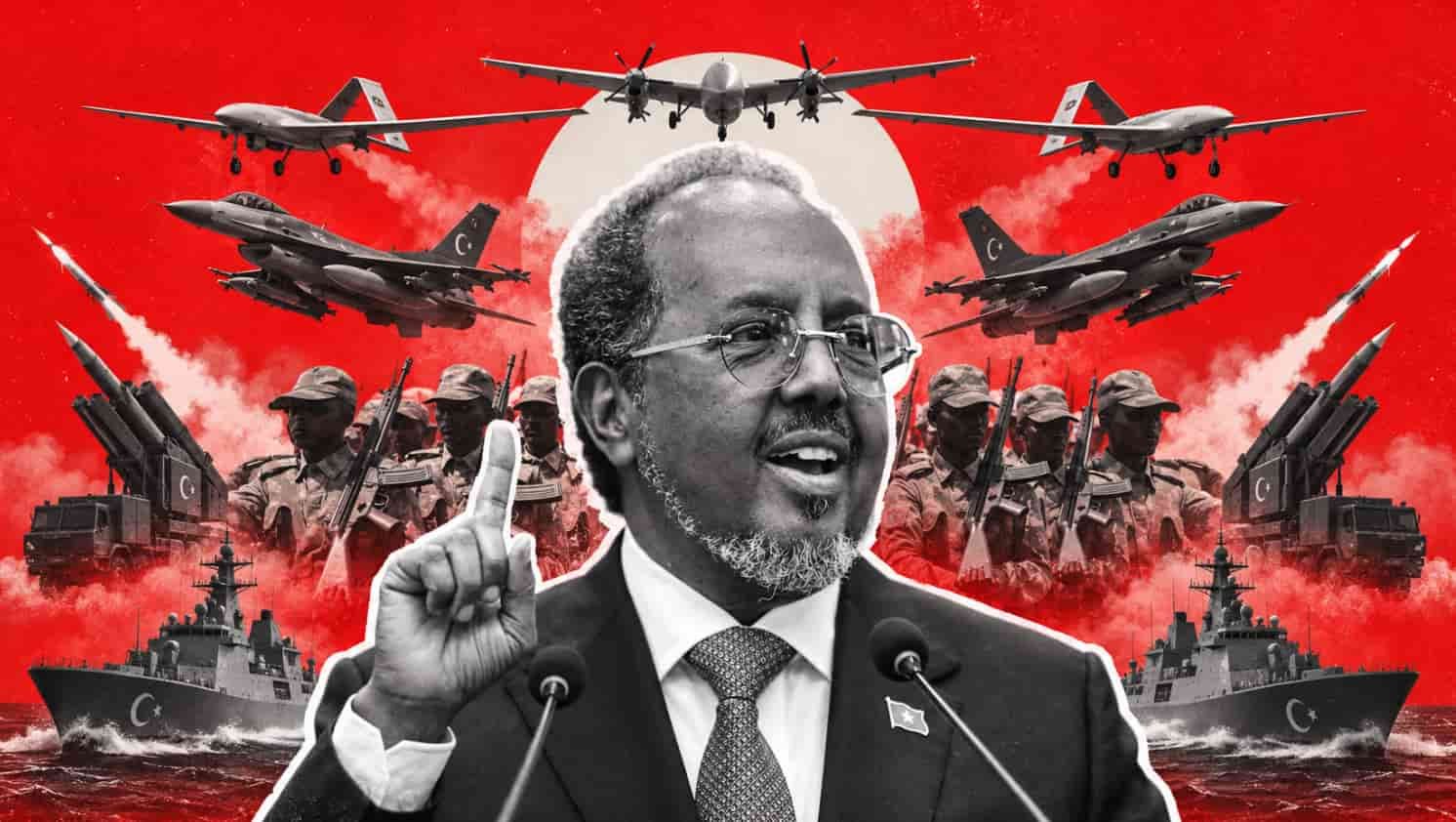
Over the past year, the relationship has moved far beyond humanitarian assistance. The deployment of Turkish F-16s to Somalia was completed on January 28, 2026, and in February the vessel Çağrı Bey set sail from Mersin to search for oil off Somalia. Turkey completed the feasibility and design work for a spaceport in Somalia, with Somalia allocating land for the project. Fighter jets, an energy exploration vessel, and a launch pad, all at the point where the Red Sea meets the Indian Ocean in the Horn of Africa. It was never going to be watched with indifference from Abu Dhabi and Tel Aviv.
In Somalia, the game is now being played openly. In December 2025, Israel became the first country to recognize Somaliland as an independent state. Somalia, the African Union, and Turkey reacted sharply. But the more telling reaction came from those who stayed silent: the UAE, which has been developing ties with Somaliland, did not join the widespread Arab condemnation, and it operates a military base in Berbera on the Gulf of Aden coast. Mogadishu understood exactly what this meant. Somalia accused the UAE of facilitating Israel’s recognition decision and cancelled all its agreements with the UAE, from ports to defense.
This picture offers a key to understanding what is happening in Somalia’s information space. Ground lost in the field is being fought for in the narrative. And this is nothing new. As early as 2022, Marc Owen Jones, an academic who studies disinformation in the Gulf, identified a Somalia-focused network of fake accounts spreading pro-UAE, anti-Qatar, and anti-Turkey propaganda. Two themes dominated that network’s messaging: that Turkey supports terrorism or that it seeks to control Somalia.
Today the same themes are returning in a more refined form. Turkey’s military presence is framed as “occupation,” its oil exploration agreements as “exploitation,” and its humanitarian aid as “buying influence.” Somalia’s fragmented political landscape, with tensions between the federal government and Puntland, Jubaland, and Somaliland, provides ready ground for this narrative. Articles in regional outlets portraying Turkey as an actor trying to divide Somalia have become routine.
Here, Turkey’s own mistakes must also be acknowledged. The removal of reports claiming that a massive oil reserve had been discovered off Somalia handed Turkey’s critics a powerful card. Every exaggerated headline fuels the opposing side’s narrative that “Turkey cannot be trusted.” The first rule of countering disinformation is not to supply it with material.
In Somalia the rupture is visible; in Azerbaijan it is almost invisible. Here the goal is not to turn Baku against Ankara. That is not a realistic objective at the state level. The goal is to slowly cool the spontaneous warmth, the sense of “brotherhood,” between the two societies.
To understand this, one must first grasp the weight of Azerbaijan’s relationship with Israel. Azerbaijan supplies roughly 65 percent of Israel’s oil, and over the same period Israeli arms exports to Azerbaijan have grown. Ties with the UAE have also deepened markedly in recent years; Sheikh Mohamed bin Zayed’s 2024 visit was the first official visit to Azerbaijan by a UAE head of state. Articles in American and Israeli media now regularly argue for bringing Azerbaijan into an expanded Abraham Accords framework.
In this equation, Turkey is seen as an obstacle. Ankara’s hardening stance toward Israel since the Gaza war has complicated Baku’s balancing act. Turkish pressure led Azerbaijan in 2025 to remove Israel from customs records of its energy shipments. For Tel Aviv, this was a small but symbolic warning: the anger of Turkish public opinion could reach all the way to Baku.
This is exactly where the information space comes into play. A narrative is growing ever more visible in Azerbaijani media: Turkey interferes in Azerbaijan’s sovereign foreign policy choices, and Turkish media is waging a systematic campaign against Azerbaijan. The pro-government APA agency published a lengthy article claiming that a deliberate, targeted fake news campaign about Azerbaijan was being carried out across Turkish media, and it concluded by urging Turkish media to respect red lines in both state and media policy.
To be honest, this narrative was not born in a vacuum. In Turkey, too, a segment of social media has attacked Aliyev and Azerbaijan in harsh terms over the Israel relationship. These negative comments grew to the point of requiring intervention from the Turkish Presidential Administration. So the crack is real. But the question is not whether the crack exists; it is who is driving a wedge into it. When every angry tweet and every touchy column between the two societies is amplified on the other side and served up as “the true face of the Turks,” an ordinary argument turns into a strategic wound.
Observations from the ground point to a notable recent increase in new digital platforms and “expert” figures feeding anti-Turkey narratives in Azerbaijan. The funding and connections behind these structures should be among the most important questions for regional journalists and researchers in the period ahead.
Mentioning Somalia and Azerbaijan in the same sentence may seem odd at first glance. But open the map and the logic becomes clear. The regional vision of Israel and the UAE rests on a chain of partnerships stretching from the Red Sea to the Caspian. The base in Berbera, the recognition of Somaliland, energy and defense ties with Azerbaijan, the idea of extending the Abraham Accords to the Caucasus: all are pieces of the same picture.
In this picture, Turkey is the only rival actor that has put down both physical and emotional roots at two critical nodes, Mogadishu and Baku. Turkey filled the ground the UAE lost in Mogadishu. The only power that could call into question Israel’s privileged position in Baku is Turkey, the “elder brother” in the eyes of the Azerbaijani people. Those roots cannot be pulled out directly. But the soil can be poisoned.
For a long time, Turkey treated its friendship with Somalia and Azerbaijan as a given. The aid during the famine or the support in Karabakh seemed like a promissory note valid forever. But publics are not without memory; they are, however, impatient. Today’s young people do not remember 2011; they believe what they see on their screens.
Israel and the UAE realized this before Ankara did. Turkey’s answer should not be to shout louder, but to speak more accurately, more locally, and more patiently. Because brotherhood is not an inheritance won once and locked in a vault. It is a labor that must be earned anew every day.