Opinion
UAE's RSF Model Comes to Somalia: Abu Dhabi's Proxy Turn
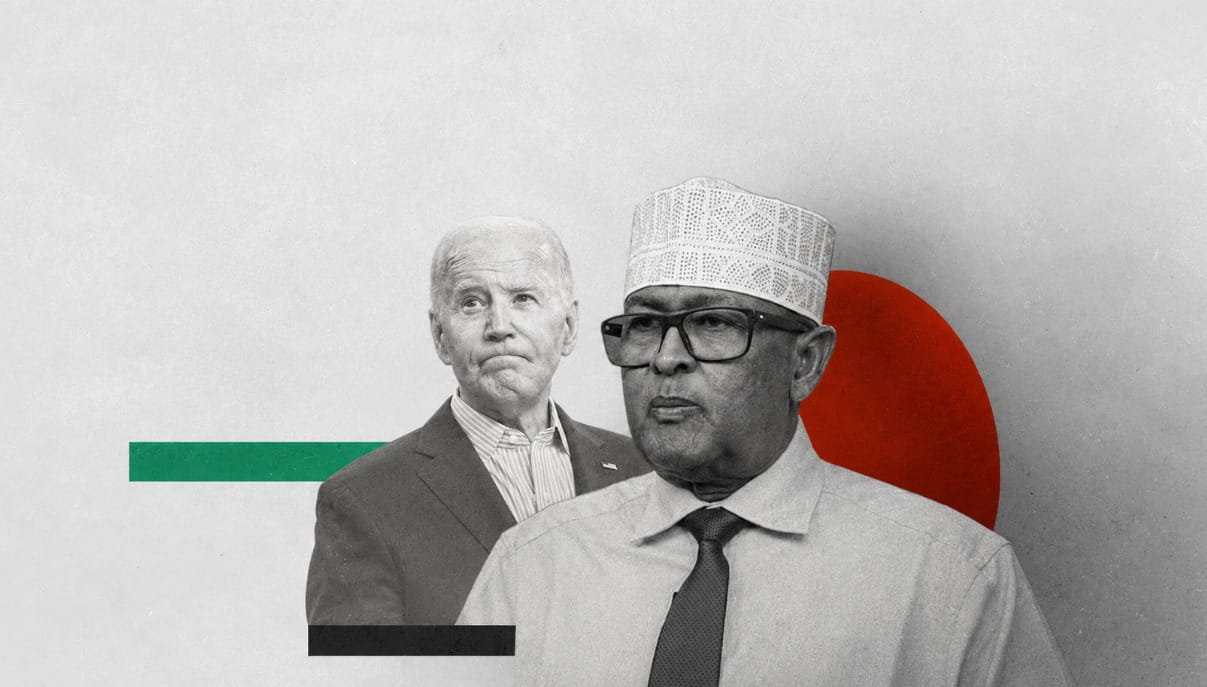
Abdirahman Mohamed Abdullahi "Irro", the leader of internationally unrecognized Somaliland, has been in Washington since September 6. He is accompanied by his wife, his ministers of foreign affairs, defense and civil aviation, and a large team of advisers. Hargeisa is presenting the trip as "historic." The photographs released from the visit, however, tell an entirely different story.
The images share a common feature: a member of Congress or a think tank executive seated at a desk, and beside them Irro, standing and posing for a souvenir photo. There is no welcoming ceremony, no formal meeting setup with flags, none of the classic state protocol in which two equal counterparts sit across from each other. A head of state does not pose standing at the edge of his host's desk; that is the photograph of a petitioner paying a courtesy call. The images show that the Americans are hosting Irro not as a president, but as an ordinary visitor who has secured an appointment.
So why? Let us go through the reasons.
The most basic reason is legal. Official US policy has not changed: Washington recognizes the sovereignty and territorial integrity of the Federal Republic of Somalia. The State Department report submitted to Congress in June, even while listing areas where engagement could be improved, stated plainly that Somaliland is part of Somalia. Sources who spoke to Politico said the same thing while the visit was under way: there is no change in policy. Trump, too, said last December that he was not ready to extend recognition.
Within this framework, Irro's status in Washington is not that of a "head of state" but of a "visitor." Protocol is not a matter of courtesy; it is a declaration of recognition. The Americans are deliberately withholding protocol precisely in order not to make that declaration.
In the United States, the authority to recognize a state rests not with Congress but with the executive; that is, with the President. Irro's schedule, however, is weighted toward members of Congress, think tanks, lobbying circles, a reception at the Israeli ambassador's residence, and Taiwan's representative office.
A significant share of the politicians he has met are names who have for years been speaking in favor of Somaliland in return for payment from lobbying firms. In other words, Irro is re-persuading the already persuaded. There has been no meeting that produced results with a single figure who carries real weight in the White House's decision-making. Plenty of photographs, no decision-makers.
Israel's recognition of Somaliland in December 2025 put the file in front of the Americans at a time and in a manner not of their choosing. Nine months have passed, and Washington has not followed suit. The reason is that the bill is steep: relations with Mogadishu, the African Union's firm objection, relations with the Arab world, Türkiye, Egypt and Saudi Arabia, and a growing Houthi threat in the Red Sea.
The cost is already visible. In April, Maersk suspended new cargo bookings to Berbera, citing tensions in the Red Sea and Houthi warnings about Israeli influence in the region. Irro's remarks on Taiwan in Washington, meanwhile, drew a sharp reaction from Beijing. In American eyes, Somaliland is not a solved problem; it is a headache that someone else created and that they have been left to manage.
Camp Lemonnier, America's largest permanent military base on the African continent, is in Djibouti. The counterpart in operations against al-Shabaab is the federal government in Mogadishu. Washington's security architecture in the region is built on these two capitals. Berbera may look like an attractive alternative on paper; but jeopardizing a functioning arrangement for the sake of an unrecognized entity serves the interests of neither the Pentagon nor the State Department.
There is also an Ankara dimension to the equation. Somalia today is not alone; it has powerful partners behind it, Türkiye foremost among them. Türkiye's largest overseas military training base is in Mogadishu. The defense and maritime security agreement between the two countries, their energy partnership, and Ankara's mediation in the Somalia-Ethiopia crisis show that this relationship is not an ordinary friendship but a strategic investment. Somalia is the crown jewel of Erdoğan's Africa policy.
Türkiye-US relations, meanwhile, are enjoying their warmest period in years. The personal rapport between Erdoğan and Trump has become the driving force of cooperation between the two capitals. Against this backdrop, it is not realistic to expect Washington to take a step that would set it against Türkiye on an issue Ankara cares about this deeply. Trump will not put the relationship he has built with Erdoğan at risk for the sake of a photo opportunity for Irro. Seen from this angle, the Erdoğan-Trump friendship stands as one of the de facto guarantees of Somalia's unity and territorial integrity.
Hargeisa is signing contracts with American lobbying firms to reach Republican circles; the latest example is a deal with a Dallas-based firm. For some lobbying firms and consultants in Washington, Somaliland is not a foreign policy priority but a client that pays regularly. And the product being sold is not recognition but the hope of recognition: a meeting, a panel, a photograph. The resources of an impoverished people are being converted into souvenir photographs that yield no results. Those standing poses look like the receipts of this trade.
The most important public stop of the visit was the September 14 speech at the Hudson Institute. In my view, Irro failed to project the image of a strong, persuasive statesman there; he delivered a low-energy performance with a scattered message. The image of a "stable, democratic, ready state," painstakingly built over the years, found no echo at the podium at the very moment it was needed most. Had the government in Mogadishu spent millions of dollars, it could not have done this much damage to Somaliland's image in Washington.
The most striking assessment, however, came from the man who hosted Irro. Hudson Senior Fellow Joshua Meservey said: "The Somalilanders have not been able to consistently make the case for why recognition is necessary." Considering that Meservey, going back to his years at the Heritage Foundation, has been one of the most outspoken advocates of Somaliland's recognition in Washington, this sentence is not the verdict of an adversary but the admission of a friend. If your closest advocate is saying this, it is not hard to guess what the unpersuaded think.
Irro himself acknowledged, in an interview given during the visit, that he has received no promise of recognition from Washington.
Irro came to power in the November 2024 election; Israel's recognition decision, his visit to Israel in June, the request to join the Abraham Accords, and the offer to send 2,000 troops to Gaza all took place on his watch. That last offer drew a backlash from the opposition at home: the Kah party said those soldiers were needed in Las Anod.
The picture in Washington is this: Irro is seen not as a leader knocking on doors on the strength of his own standing, but as one arriving on Israel's reference. An administration that has pegged its foreign policy to a single capital, and has nothing concrete to show for it in return, is in American eyes not an equal counterpart but a file to be managed.
The photographs coming out of Washington are not a protocol lapse; they are a statement of policy. The United States gives Irro appointments but not status; it listens but makes no promises. The balance sheet of the two-week visit, for now, is this: a great many souvenir photographs, zero commitments, and the words "you are not making your case" from the mouth of the closest friend. The narrative Somaliland has built over decades met the cold reality of Washington, and it did not emerge from that encounter any stronger.