Politics & Security
Closing the Blue Nile Border Will End the War in Sudan
Drone and missile fragments recovered from the wreckage of the renewed war in Tigray have brought back the least discussed partner of Abiy Ahmed's war machine: Iran. This is not a surprise but a continuity. In August 2021, satellite imagery analyzed by Oryx caught Iranian-made armed Mohajer-6 drones at Semera airbase in the Afar region, equipped with Qaem guided bombs and just minutes of flight time from Tigray. In the same period, flight tracking data documented Il-76 cargo planes of Pouya Air, an Iranian carrier linked to the Revolutionary Guards, shuttling between Tehran and Ethiopia. A sanctioned regime was being armed through an air bridge in plain sight of the international community.
What did Abiy use this arsenal for? The answer is written across Tigray's map of ruins. In June 2021, an airstrike on a market in Togoga killed more than 60 civilians. On January 8, 2022, the strike on the Dedebit camp for displaced people, an operation Human Rights Watch called a likely war crime, slaughtered around 60 people in their sleep, most of them women and children. The same scenario repeated in Alamata, in the Mai Aini refugee camp, and in the neighborhoods of Mekelle. The fleet running this campaign was a full collection of sanctions arbitrage: Iranian Mohajer-6s at Semera, Chinese Wing Loongs flying with UAE logistics through Assab. Denied Western arms, Abiy bought his air power piece by piece from suppliers who asked no questions, and he directed that power not at frontlines but at marketplaces, camps and civilian infrastructure.
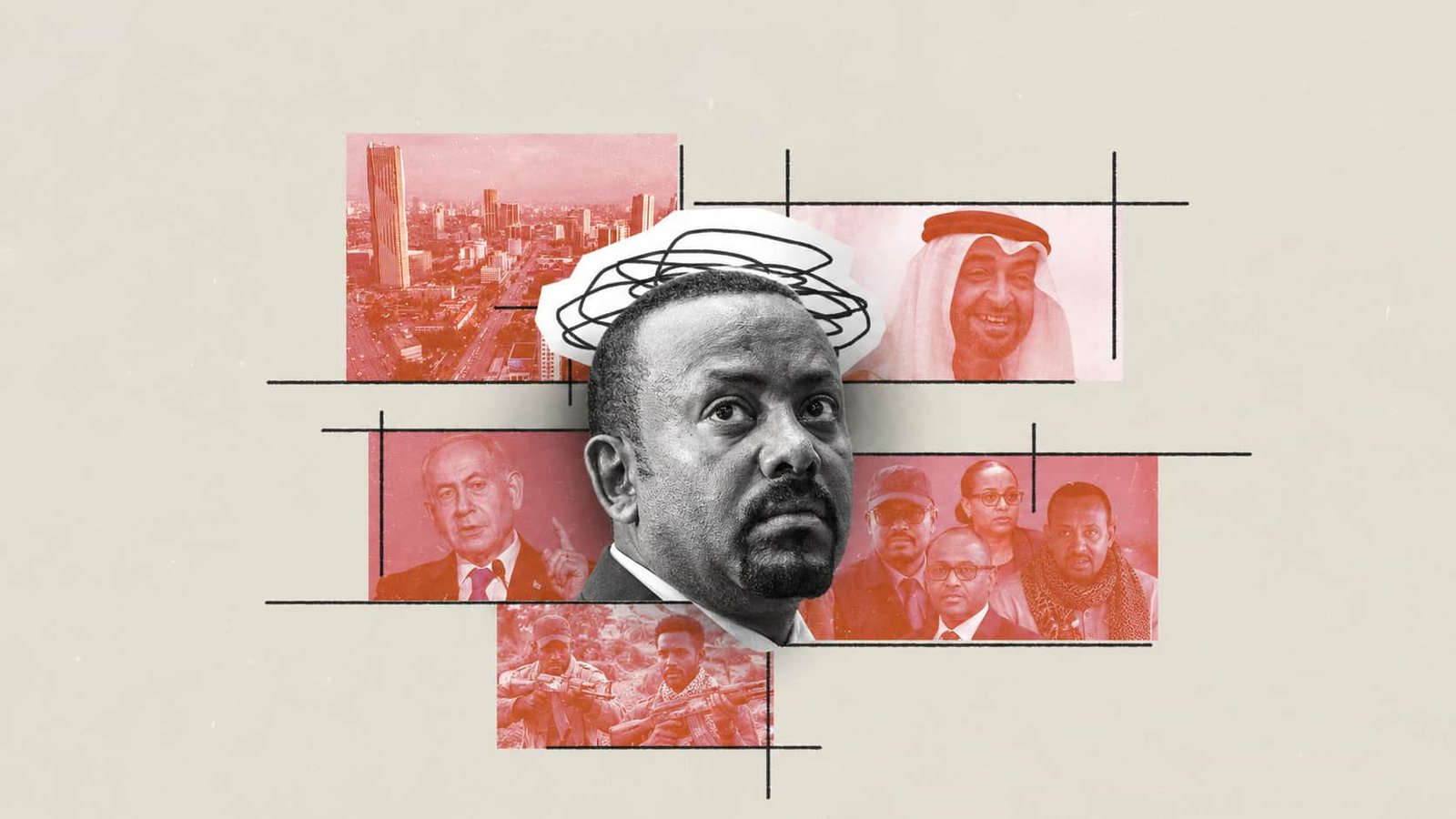
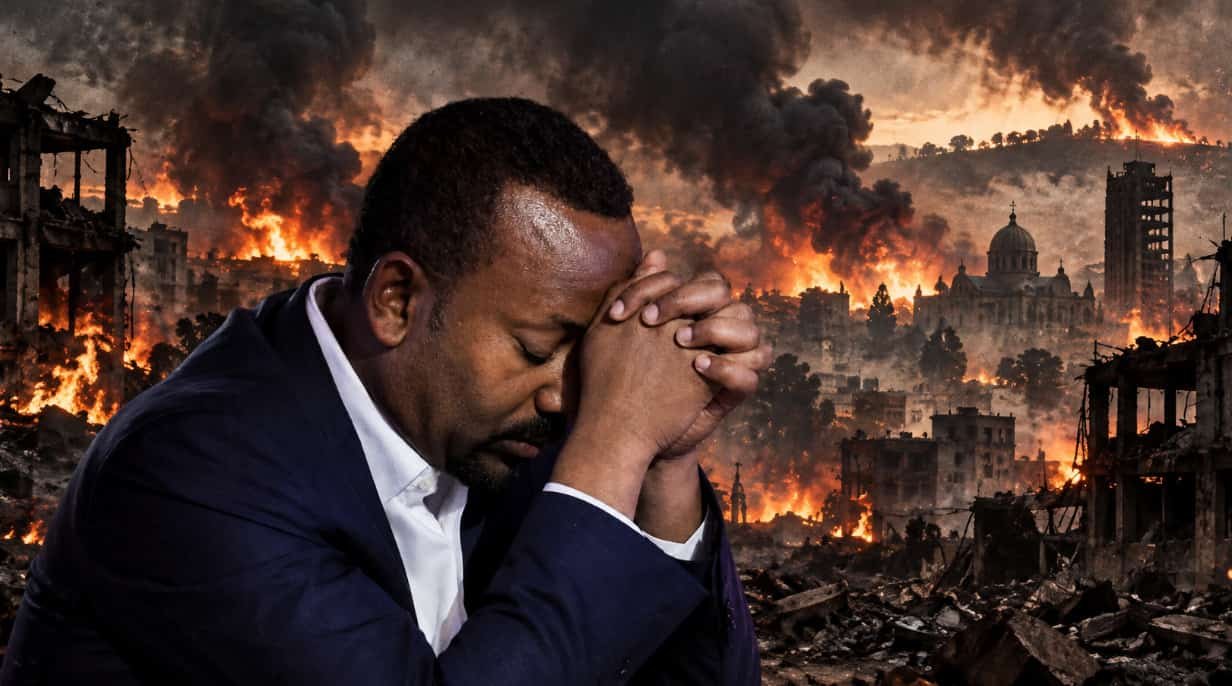
Today the same film is playing again. Drone strikes on Tigray's cities have continued since January 2026; a missile that hit the heart of Mekelle on August 21 wounded 13 civilians. And now remnants of Iranian-made munitions are once again being found on the ground. This is proof that the 2021 supply line never closed: Tehran is complementing the influence it built on the western shore of the Red Sea through the Houthis by quietly funneling weapons into the army of East Africa's most populous country. Abiy, meanwhile, feeds simultaneously on the UAE's cargo bridge, Israel's intelligence, and the drones of their chief enemy Iran, running a war economy that flies everyone's weapons against everyone in the name of regime survival.
This is the record of a Nobel Peace Prize laureate: smuggled air power from sanctioned states, systematic drone terror against his own citizens, and hundreds of thousands of civilians paying the bill. The regime the IMF and the World Bank fund as a "reform partner" is Iran's most valuable customer in the Horn of Africa. The fragments are on the ground; the question is no longer what Abiy is doing, but how much longer the world will finance it.