Opinion
How Abiy Ahmed Turned Every Neighbor Into an Enemy
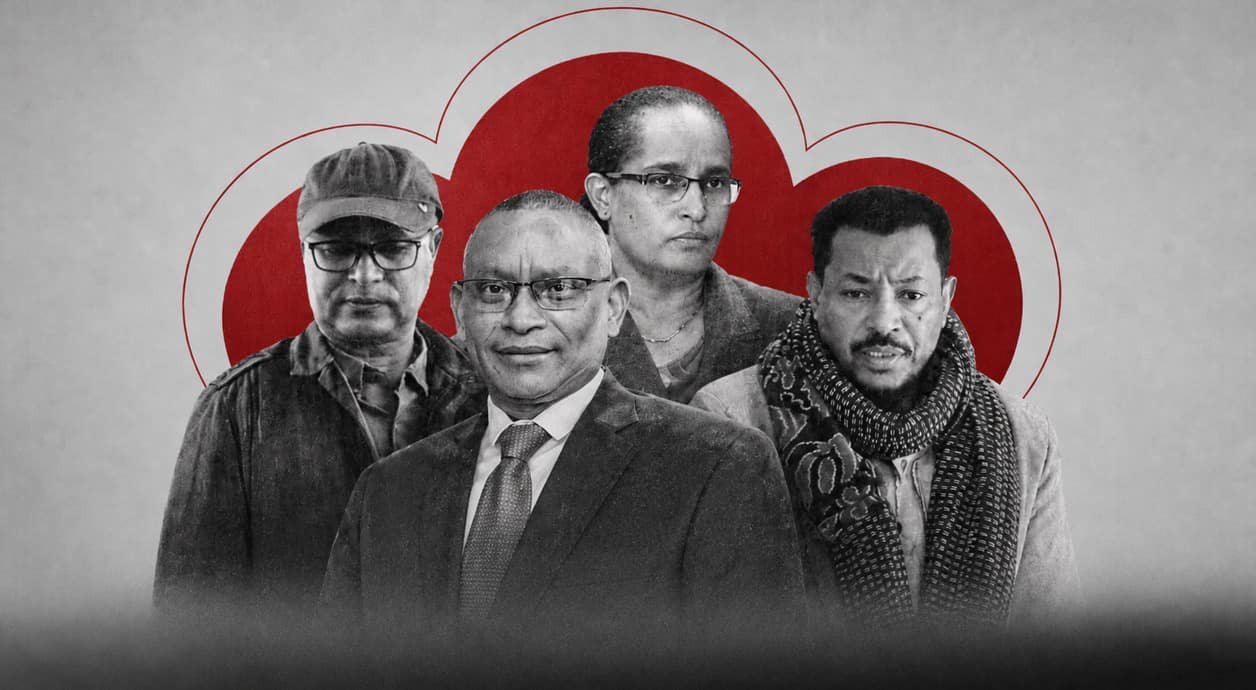
On October 1, Debretsion Gebremichael did something Ethiopian wartime leaders rarely do: he admitted the fighting had been hard. The chairman of the Tigray People's Liberation Front described the Tigray Defense Forces as fighting a defensive war, prepared for a long struggle, and under sustained pressure from federal aircraft, drones, and artillery. Only three days earlier, government-aligned forces had taken Alamata, the gateway to southern Tigray and the first stop on the road to Mekelle.
Yet the same statement carried a warning that Addis Ababa would be wise to take seriously. The war, Debretsion said, would be fought where Tigray chooses; the TPLF's allies would fill the ground that federal forces vacate as they redeploy north. Read together, the two halves of the statement are not a confession of weakness but a doctrine. The TPLF does not intend to hold Mekelle in the way a conventional army holds a capital. It intends to make Ethiopia fight for Mekelle while six other movements make Ethiopia fight everywhere else, until the state that is besieging Tigray is itself too stretched, too indebted, and too divided to continue.
This is the central paradox of Ethiopia's second Tigray war. Mekelle is the political prize that gives the conflict its name, the seat of the region's government and the symbol of Tigrayan autonomy. It is also, for its defenders, a lure: a city Abiy Ahmed must be seen to retake, and one he cannot retake without pulling divisions from Amhara, Oromia, Afar, Benishangul, and the Somali region, where the Alliance for Survival is waiting for exactly that. In 2021 the TPLF retook Mekelle in a single week after federal forces abandoned it. In 2026 the more likely outcome is not that Mekelle falls but that the Ethiopian National Defense Force, pulled toward it, gives ground on every other front. The battle for Mekelle will be decided in Afar, in Amhara, in Oromia, and in the capitals of Asmara, Khartoum, and Cairo, and the balance there favors the TPLF.
The fighting that erupted on September 23 has not produced a single battlefield but four, and each bears on Mekelle differently.
The southern front is the one Addis Ababa wants the world to watch. Alamata, 120 kilometers south of Mekelle, fell to the ENDF and allied militia on September 28, after a week of drone strikes that the conflict monitor ACLED says hit schools and a hospital. Alamata is a logistics hub for fuel and food at the Tigray–Amhara boundary, and its loss cuts the TPLF's shortest supply line to the south. But from here the road to Mekelle runs through Korem, Maychew, and the Alaje pass, terrain that favors the defender and that the ENDF knows well, having lost it in reverse in 2021. Alamata is as far as a road-bound army gets cheaply.
The western front, near the Tekeze River, is about territory rather than the capital. Western Tigray has been administered by Amhara since 2020 and is the single issue on which the TPLF cannot compromise without losing its own base. Fighting here ties down federal and Amhara forces that would otherwise reinforce the south, and it is the front on which Addis Ababa most fears Sudanese involvement.
The Amhara front, around Kobo, Gidan, and Sekota, is where the alliance's logic is already working. Federal forces retook Sekota on September 27, but every brigade sent north to Tigray is a brigade removed from the fight against Fano, which has contested most of rural Amhara since 2023. The Fano factions that joined the Alliance for Survival on September 20 do not need to win pitched battles; they need only to ensure that the ENDF cannot leave. So far they are succeeding.
The eastern front is the one that matters most to Abiy. Tigrayan forces and the Afar rebel group Ugugumo have pushed toward Erebti and Abala, within reach of the Semera–Djibouti corridor that carries the overwhelming majority of Ethiopia's imports, including nearly all of its fuel. This is the TPLF's answer to the siege of Mekelle: a counter-siege of the Ethiopian economy. If the corridor is cut, Abiy faces a choice between defending the lifeline and taking the city. He cannot do both at once, and the TPLF has arranged the war so that he must try.
Meanwhile telecommunications across most of Tigray have been cut and commercial flights suspended, the same information blackout that preceded the worst atrocities of 2020–22. Tigrayan forces hold the airports at Mekelle, Axum, and Shire, which denies the government a landing strip and forces any ground campaign to come up the roads the TDF has spent four years preparing to defend.
Abiy's army is not the one that marched into Mekelle in November 2020 and marched out again seven months later. It has spent four years fighting Fano in Amhara and the Oromo Liberation Army in Oromia, and it has learned the lesson of 2021: holding a hostile city with infantry is a trap. But four years of counterinsurgency have also left it thinner, more dependent on drones and regional militias, and committed on more fronts than at any point since the Derg. Its approach to Mekelle rests on three elements, and each has a limit.
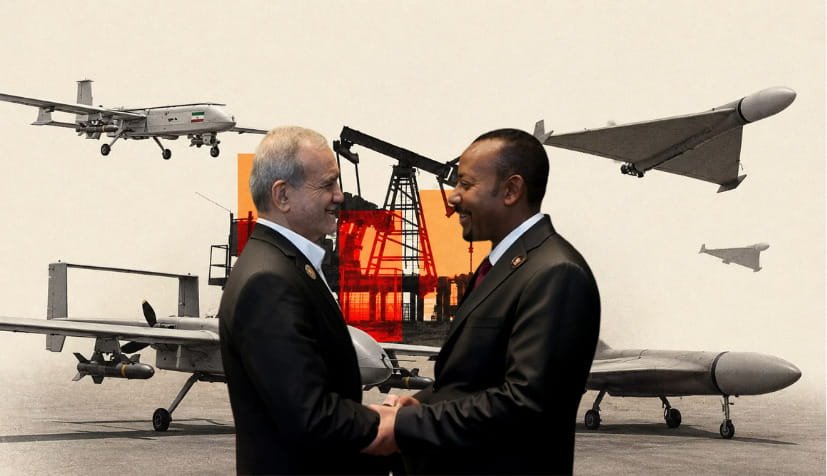
The first is the drone campaign, and it has already begun. The strikes on Alamata on September 22 were not preparation for an assault; they were the assault. Ethiopia's fleet of Turkish, Iranian, and Emirati drones can hit anything that moves on Tigray's roads and strike Mekelle itself without putting a soldier within range of a TDF ambush. The limit is that drones take no ground. They drove the TDF out of Amhara in 2021 only because the TDF was in the open; they did not prevent it from retaking Tigray, and they cannot garrison Kobo, Sekota, or the Afar road while the ENDF is elsewhere.
The second is strangulation. The information blackout and the suspension of flights are the opening moves of a siege that need not involve encirclement. Tigray imports its food and fuel through Alamata from the south, through Afar from the east, and through Sudan from the west. Alamata is gone, the eastern route is a battlefield, and the Sudanese route is why the ENDF's chief of staff has accused Khartoum's army of backing the TPLF. The limit is that a siege is a bet on time, and time is the one commodity the Alliance for Survival is taking from Addis Ababa. A government fighting in six regions at once cannot wait out a seventh.
The third element is the one Abiy will neither confirm nor fully control: Eritrea. In 2020 Eritrean troops did much of the fighting in Tigray and committed many of its worst crimes. Since the 2022 Pretoria agreement, Asmara and Addis Ababa have fallen out spectacularly, culminating this week in Eritrea severing diplomatic relations. Isaias Afwerki hates the TPLF more than he distrusts Abiy, and Eritrean forces remain within marching distance of Shire and Axum. But the two men are no longer allies, and an Eritrean army in Tigray in 2026 would be fighting for Isaias, not for Abiy. His accusations this week against Eritrea, Sudan, and Egypt are a signal that the prime minister knows his neighbors now see Ethiopia's distraction as an opportunity rather than a cause.
What Abiy cannot do is the one thing the war now requires: concentrate. Taking a city of 500,000 that has had four years to prepare would cost thousands of ENDF casualties and tie down divisions that are needed in Afar, Amhara, and Oromia at the same moment. The lesson of 2021 is not that Mekelle cannot be taken. It is that an army which reaches for Mekelle loses its grip on everything else, and in 2026 everything else is organized against it.
To understand why Abiy hesitates before Mekelle, it helps to remember who is defending it. The Tigray People's Liberation Front is, by any fair measure, the most accomplished insurgent army Africa has produced in the past half-century. It has fought three wars against three of the largest militaries on the continent and has never been defeated on its own ground. Its commanders are the men who wrote the Ethiopian army's doctrine, and they now face that army across the Alaje pass.
The TPLF began in February 1975 as a handful of university students in the Dedebit lowlands, armed with a few rifles against the Derg, a Soviet-backed military junta with the largest army in sub-Saharan Africa. Mengistu Haile Mariam threw everything at Tigray: conscript armies in the hundreds of thousands, Soviet and Cuban advisers, MiG fighters, and a famine in 1984–85 that the regime used as a weapon. The TPLF survived all of it by inverting the Derg's strengths. Where Mengistu's army was road-bound, heavy, and dependent on garrisons, the TPLF was light, mobile, and lived among the peasantry whose land it redistributed. It fought at night, in the rains, and in the escarpments where armor could not follow, and it treated every captured weapon as a recruit.
The turning point came at Shire in February 1989. In three days the TPLF destroyed the Derg's 604th Corps, more than 20,000 troops, capturing enough tanks and artillery to transform itself from a guerrilla force into a conventional army. It had learned the art of encirclement from its Eritrean allies' victory at Afabet the year before and improved on it, striking with concentrated force at a single point and then exploiting the breach faster than the Derg's commanders could react. Within two years the TPLF-led coalition had marched 800 kilometers south and entered Addis Ababa on May 28, 1991. Mengistu had fled a week earlier. Seventeen years after Dedebit, a movement that had begun with fewer than a hundred fighters governed Africa's second most populous country.
The war with Eritrea tested whether the TPLF's generals could fight a conventional war of position, and they could. After Eritrea seized Badme in May 1998 and dug in behind trench lines modeled on the Western Front, the Ethiopian army, commanded by Tigrayan veterans of the Derg war such as Samora Yunis and Tsadkan Gebretensae, spent nine months rebuilding itself. In February 1999, Operation Sunset broke through at Badme in five days. In May 2000, Operation Westwind did something more ambitious: instead of attacking the strongest Eritrean positions head-on, Ethiopian forces swung west through terrain the Eritreans had judged impassable, took Barentu, and collapsed the entire front from behind. Eritrea, a nation that had itself defeated the Derg, was forced to sue for peace within three weeks. The TPLF generation had shown that it could plan at the level of corps and armies, not only ambushes.
The 2020–22 war was the TPLF's greatest trial and its most remarkable comeback. In November 2020 the federal army, Eritrean forces, and Amhara militia attacked from three directions at once, with drones, and took Mekelle in three weeks. Most observers, including Abiy, assumed the TPLF was finished. Instead it did what it had done in 1975: it dissolved into the mountains, reconstituted itself as the Tigray Defense Forces, and let the occupiers bleed. For seven months the ENDF held the towns and the TDF held everything else. Eritrean massacres at Axum and elsewhere, far from breaking Tigray, delivered it a mass mobilization that no recruitment drive could have produced.
In June 2021 the TDF launched Operation Alula and in ten days retook Mekelle, capturing an estimated 7,000 federal soldiers and parading them through the capital. It was one of the most complete reversals in modern African warfare. The TDF then turned south and east, took Dessie and Kombolcha in Amhara in October, and by early November stood at Shewa Robit, barely 200 kilometers from Addis Ababa. Only the arrival of Turkish, Emirati, and Iranian drones, which turned the open plains of Amhara into a killing ground for TDF columns, forced a withdrawal in December. The retreat was conducted in good order, with the force intact, which is why Abiy agreed to negotiate at Pretoria a year later rather than press for a decision in the field.
Three lessons run through all three wars. The TPLF never defends ground it cannot hold; it retreats early, keeps its army whole, and returns. It never fights the enemy's war; against armor it goes to the mountains, against trenches it goes around, against drones it disperses and waits. And it converts every enemy offensive into a recruitment drive, because an army that lives among its people cannot be destroyed without destroying them. These are the habits that carried a student movement from Dedebit to the Grand Palace, that broke Eritrea's trench lines, and that recovered Mekelle from a force that had taken it with drones. Abiy's generals know this history better than anyone. It is the reason the war has so far been fought from the air.
Debretsion's phrase, that the war will be fought where Tigray chooses, is the oldest idea in the TPLF's repertoire. The movement spent seventeen years in the mountains before it took Addis Ababa in 1991, and its generation of commanders, many now in their sixties, were trained by that war. Its doctrine has always been the same: never defend terrain for its own sake, trade space for time, and strike where the enemy is stretched thinnest. In 2021 it abandoned Mekelle to the ENDF, bled the occupying force for seven months, and walked back in when the ENDF withdrew.
The 2026 version of that doctrine has three moving parts, and for the first time the TPLF is not the only one moving them.
First, the TDF has gone on the defensive in Tigray proper. This is a choice, not only a necessity. Every TDF column that moves in daylight is a drone target; the loss of Alamata showed what happens when the TDF tries to hold a town at the end of a long road. Falling back toward the highlands around Mekelle and the Alaje pass shortens the TDF's own lines, lengthens the ENDF's, and forces the government to come to it, through terrain where drones matter less and infantry matters more.
Second, the TDF has gone on the offensive outside Tigray, in Afar. This is the move that reveals the strategy. The thrust toward the Semera–Djibouti corridor is not an attempt to seize territory the TPLF could hold; it is a threat aimed at Addis Ababa's fuel supply, its import economy, and its creditors. The TPLF is betting that Abiy cannot sustain a siege of Mekelle while his own country is being besieged. It is the same calculation the TDF made in 2021 when it marched toward Addis Ababa through Amhara: the war is won or lost by what the government cannot afford, not by what the TDF can capture. Ethiopia enters this war already in default, already rationing fuel, and already dependent on IMF disbursements. The TPLF has chosen the one target the state cannot absorb.
Third, and this is what makes 2026 different from 2021, the TPLF is no longer fighting alone. The Alliance for Survival, declared on September 20, brings together six other movements with the TPLF: the Amhara Fano National Movement, the Oromo Liberation Army, the Afar Revolutionary Democratic Unity Front known as Ugugumo, the Ogaden National Liberation Front, the Benishangul Peoples' Liberation Movement, and the Gumuz Peoples' Democratic Movement, with the Sidama National Liberation Front joining on September 25. Skeptics note that only three were actively engaging federal forces by September 26 and that the alliance's membership is contested at the margins. They miss the point. The alliance does not need to fight as one army. It needs only to ensure that the ENDF cannot fight as one either. Fano holds the ENDF in Amhara; the OLA holds it in Oromia, the region that surrounds the capital; Ugugumo turns Afar from a rear area into a front; the ONLF and the Benishangul movements open flanks a thousand kilometers apart. Six fronts, each too small to win, together make the seventh, Tigray, unwinnable for Addis Ababa. In 2021 the TDF reached Shewa Robit alone and was stopped by drones in open country. In 2026 the ENDF cannot send its divisions to meet the TDF in the north without the alliance taking the ground behind them, and it cannot hold the ground behind them without leaving Tigray to the TDF. Every redeployment is a retreat somewhere.
The strategy's cost is time, and Debretsion's talk of a long struggle is an honest statement of it. Tigray will suffer under siege before Addis Ababa breaks under dispersion, and reports of forced recruitment suggest the TDF's manpower is thinner than in 2021. But the arithmetic favors the alliance. Ethiopia cannot hold Alamata, retake Sekota, defend the Djibouti road, pacify Oromia, and besiege Mekelle with the same army. Something must give, and the TPLF has arranged for everything to give at once.
The most likely outcome over the coming months is not the fall of Mekelle but the slow retreat of the state around it. In this scenario the ENDF holds Alamata and keeps the city under drone and blockade pressure, but every attempt to push north through the Alaje pass costs it ground elsewhere: Fano retakes the North Wello towns the ENDF cleared in September, the OLA tightens its hold on the Oromia countryside around Addis Ababa, and the Afar corridor becomes a running fight that interrupts fuel deliveries without ever quite severing them. Mekelle endures a hard winter. Addis Ababa endures something worse, a government that controls its airports and highways and progressively little else, and that must explain to its creditors why the war it chose to resume cannot be finished. Abiy's bet is that the TPLF's leadership fractures first, as it did between Debretsion's faction and Getachew Reda's interim administration in 2024–25. The TPLF's bet is that a state fighting in seven regions fractures faster than a people fighting in one. The record of the past half-century says the TPLF's bet is the better one.
The second scenario is a negotiated settlement that ratifies that retreat. The war widens enough in Afar to threaten the Djibouti corridor, Gulf and Western creditors grow alarmed, and the African Union convenes talks in which Addis Ababa, unable to win in Tigray and losing in Amhara and Oromia, accepts the alliance's demand for a transitional government or something close to it. This is not the Pretoria outcome of 2022, in which the TPLF disarmed and gained nothing; it is its reverse. Abiy would survive it only in the way Mengistu survived 1989, for a while. Most outside actors would push for a version of this, because it is the only outcome they know how to broker, but the terms would be set by the balance on the ground, and that balance is moving against the government.
The third scenario is the one that gives the war its regional stakes and the only one in which Mekelle itself falls. The ENDF, unable to crack the city, invites or tolerates Eritrean forces entering northern Tigray; Sudan's army, already accused by Addis Ababa, openly supplies the TPLF through the west; Egypt, with its own grievance over the Nile dam, finds in Ethiopia's distraction an opportunity. Mekelle in this scenario becomes what Aleppo was in Syria: the city where a civil war turned into a proxy war. But even here the arithmetic does not rescue Abiy. An Eritrean army in Tigray would fight for Isaias, not for Ethiopia; it would hand the TPLF the mass mobilization that Eritrean massacres produced in 2021; and it would leave the alliance's six other fronts exactly where they are. A wider war would destroy Tigray. It would not save the Ethiopian state.
Which future arrives depends on two variables, and both are trending the TPLF's way. The first is whether the alliance holds. It has every incentive to: none of its members can defeat the ENDF alone, and each gains more from the others' fronts than it risks on its own. The second is whether the Djibouti corridor is actually cut. It need not be. A corridor that is merely unsafe, with tankers delayed and insurance withdrawn, forces Abiy to choose between Mekelle and the economy, and every Ethiopian prime minister who has faced that choice has chosen the economy.
Outside powers have less leverage over this war than they did in 2022, and most of them have less interest. Washington, which brokered the Pretoria deal through its Horn of Africa envoy, has spent the intervening years with its attention on Ukraine, Gaza, and the Gulf; its aid budget for Ethiopia has shrunk, and with it the one instrument that moved Abiy in 2022. The Gulf states that sell Ethiopia its drones have no reason to stop. The African Union, whose headquarters sit in Addis Ababa, has never managed to be a neutral broker in a war fought by its host.
That leaves three pressure points that still work, and all three bear on Addis Ababa rather than Mekelle. The first is the Djibouti corridor itself. Djibouti, France, the United States, and China all have bases there and an interest in keeping the road open; a credible threat to it is the one development that would bring them into the room, and they would come to end the war, not to win it for Abiy. The second is Ethiopia's debt. Addis Ababa is still restructuring under the G20 Common Framework and depends on IMF disbursements; the creditors who hold that leverage will not fund a seven-front war indefinitely. The third is Eritrea. A second Eritrean intervention would cross the line that even Abiy's patrons in the Gulf have been reluctant to see crossed, and the diplomatic rupture this week gives Washington and Abu Dhabi a reason to say so now, before Eritrean troops are in Shire.
None of this will spare Mekelle a hard winter. What it can do is shorten it. The 2020–22 war killed, by most estimates, several hundred thousand people, most of them from hunger and the collapse of health care rather than combat. It ended not because either side won but because both ran out of the means to continue and outside actors supplied a face-saving exit. In 2026 the side running out of means first is the state, and the exit that outside actors supply will have to reflect that.
Debretsion says the war will be fought where Tigray chooses. Abiy says it will end where the constitution requires. Only one of them commands an army that can be in seven places at once, and it is not the prime minister. The TPLF has fought the Derg, Eritrea, and Abiy himself, and it has outlasted all three. The question in the Horn of Africa this autumn is not whether Mekelle will fall. It is how much of Ethiopia Abiy will lose trying to make it.On October 1, Debretsion Gebremichael did something Ethiopian wartime leaders rarely do: he admitted the fighting had been hard. The chairman of the Tigray People's Liberation Front described the Tigray Defense Forces as fighting a defensive war, prepared for a long struggle, and under sustained pressure from federal aircraft, drones, and artillery. Only three days earlier, government-aligned forces had taken Alamata, the gateway to southern Tigray and the first stop on the road to Mekelle.