Politics & Security
Closing the Blue Nile Border Will End the War in Sudan
For most of the past three years, Ethiopia's armed oppositions have fought separate wars. Fano militias have battled federal forces across Amhara; the Oromo Liberation Army has waged a long rural insurgency in Oromia; and the Tigray People's Liberation Front, though formally bound by the 2022 Pretoria Agreement, has neither fully disarmed nor been reintegrated into national politics. Each conflict has had its own grievances, its own geography, and its own logic. What has changed is that their leaderships have begun to talk to one another, and in some cases to act in loose concert.
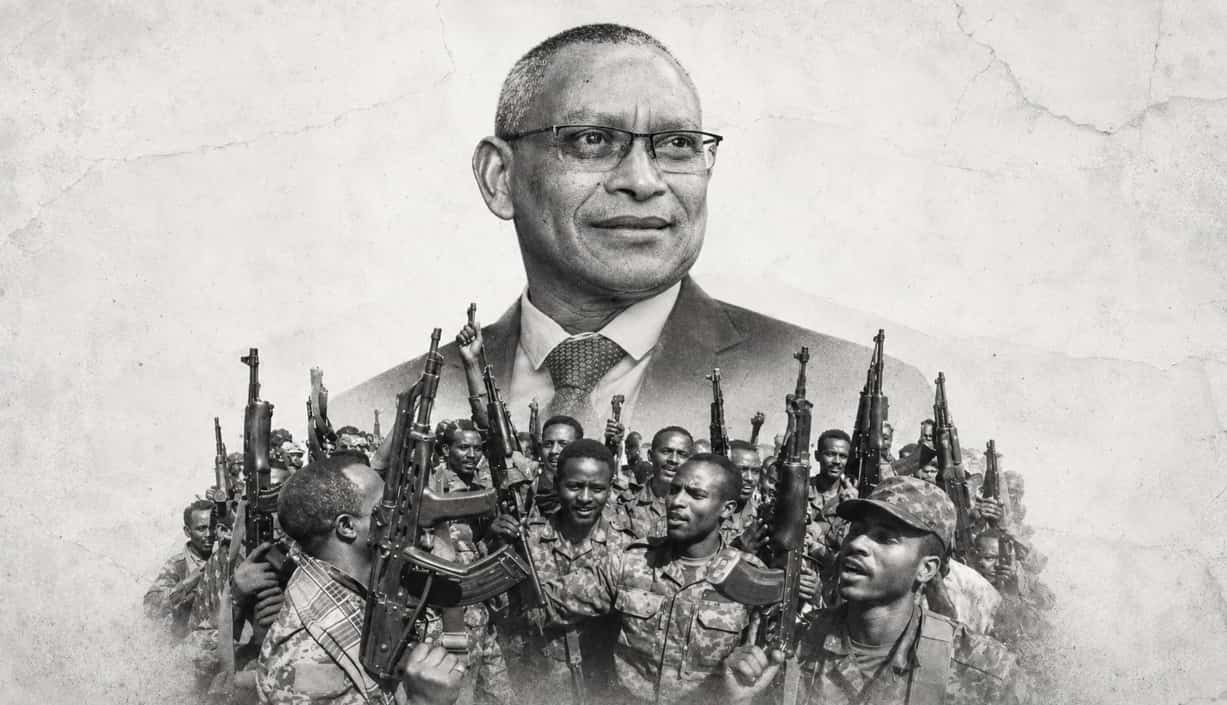
Reports of a transitional council bringing together regional opposition groups with prominent Fano commanders, including Zemene Kassie, among the most visible figures — reflect a genuine shift. The stated ambition is to replace Prime Minister Abiy Ahmed's government while preserving state institutions rather than dismantling them. That formulation is deliberate: it signals to foreign governments and to Ethiopia's civil service that this is not a program of state collapse.
But the gap between coordination and unification is wide, and Ethiopia's opposition has not crossed it. Fano is not a single army. It is a constellation of factions with competing commanders, uneven discipline, and no agreed political program. Its origins lie in Amhara self-defense mobilization against the TPLF, and the two movements remain divided by the unresolved status of Western Tigray, a dispute that has displaced hundreds of thousands and that no transitional council has yet found a formula to settle. The OLA's territorial and political aims in Oromia are not obviously compatible with Amhara nationalist objectives. An alliance built on a shared enemy is not the same as a coalition built on a shared state.
Claims that insurgents control the overwhelming majority of Ethiopian territory should be treated with caution. Insurgencies in Amhara and Oromia have demonstrated real reach — closing roads, taking district towns, and forcing the federal government into repeated states of emergency — but rural presence is not the same as administration, and independent verification in both regions is severely constrained by communications blackouts and restricted access. What is better established is that the federal army is under strain: casualties have mounted, recruitment has become more coercive, and the government's ability to hold territory outside major urban centers has visibly eroded.
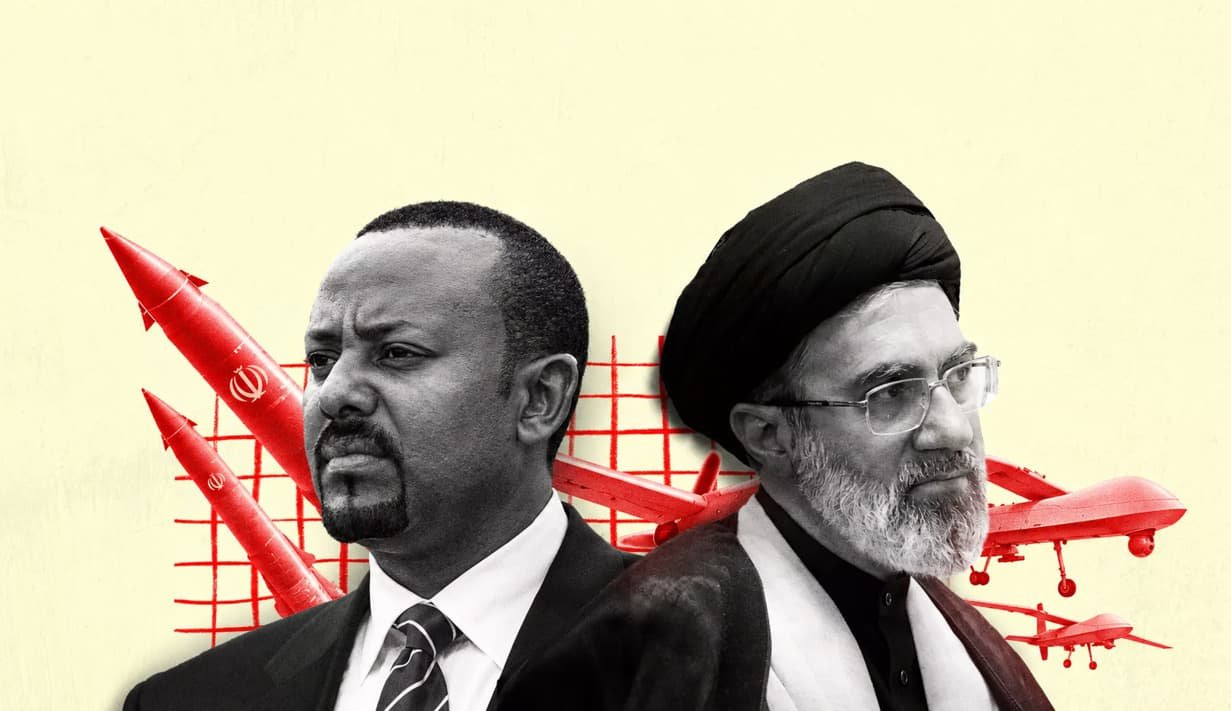
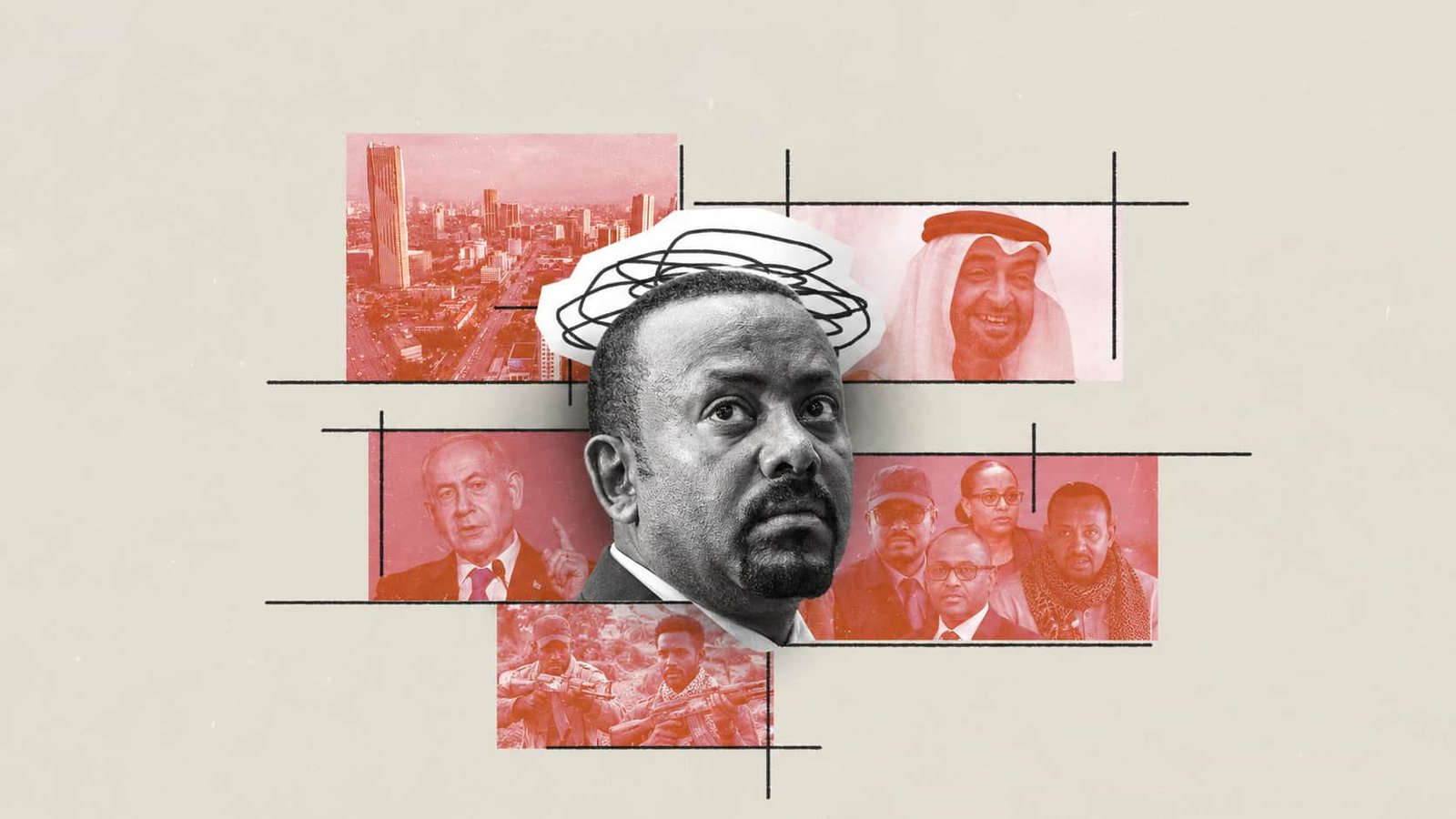
The external dimension is equally contested. Abiy's critics describe his government as dependent on Gulf patronage, particularly from the United Arab Emirates, whose drones and financing have been reported as decisive in earlier phases of the northern war. Abu Dhabi's role in the Horn of Africa is real and expanding, and its logistical footprint including air corridors and port investments — gives it leverage in Addis Ababa. But calling a government of 130 million people a proxy overstates the case. Abiy has his own project, and his pursuit of Red Sea access has at times cut against his partners' preferences rather than following them.
That project is now the central variable. Ethiopia's rivalry with Eritrea over sea access has entangled itself with every internal conflict in the north. It gives Asmara reason to prefer a distracted Ethiopian government, gives Tigrayan forces reason to retain their weapons, and gives Addis Ababa a sovereignty argument it can deploy against domestic and foreign adversaries alike. Any insurgent coalition that captures the capital would inherit this dispute intact.
Which points to the question that matters more than the battlefield map. Ethiopia's opposition movements have shown they can strain the state. They have not shown they can agree on what replaces it. The country's post-1991 constitutional order ethnic federalism, regional self-determination, contested internal boundaries — is precisely what Amhara, Oromo, and Tigrayan movements disagree about most fundamentally. A transition negotiated among them would have to resolve, under conditions of armed competition, the questions that two previous governments failed to settle in three decades of relative peace.
The end of Abiy's government, if it comes, would therefore not be the end of Ethiopia's crisis. It would be the beginning of a harder one.