Explore
Somali Sources Reject Claims of Turkish Airstrikes
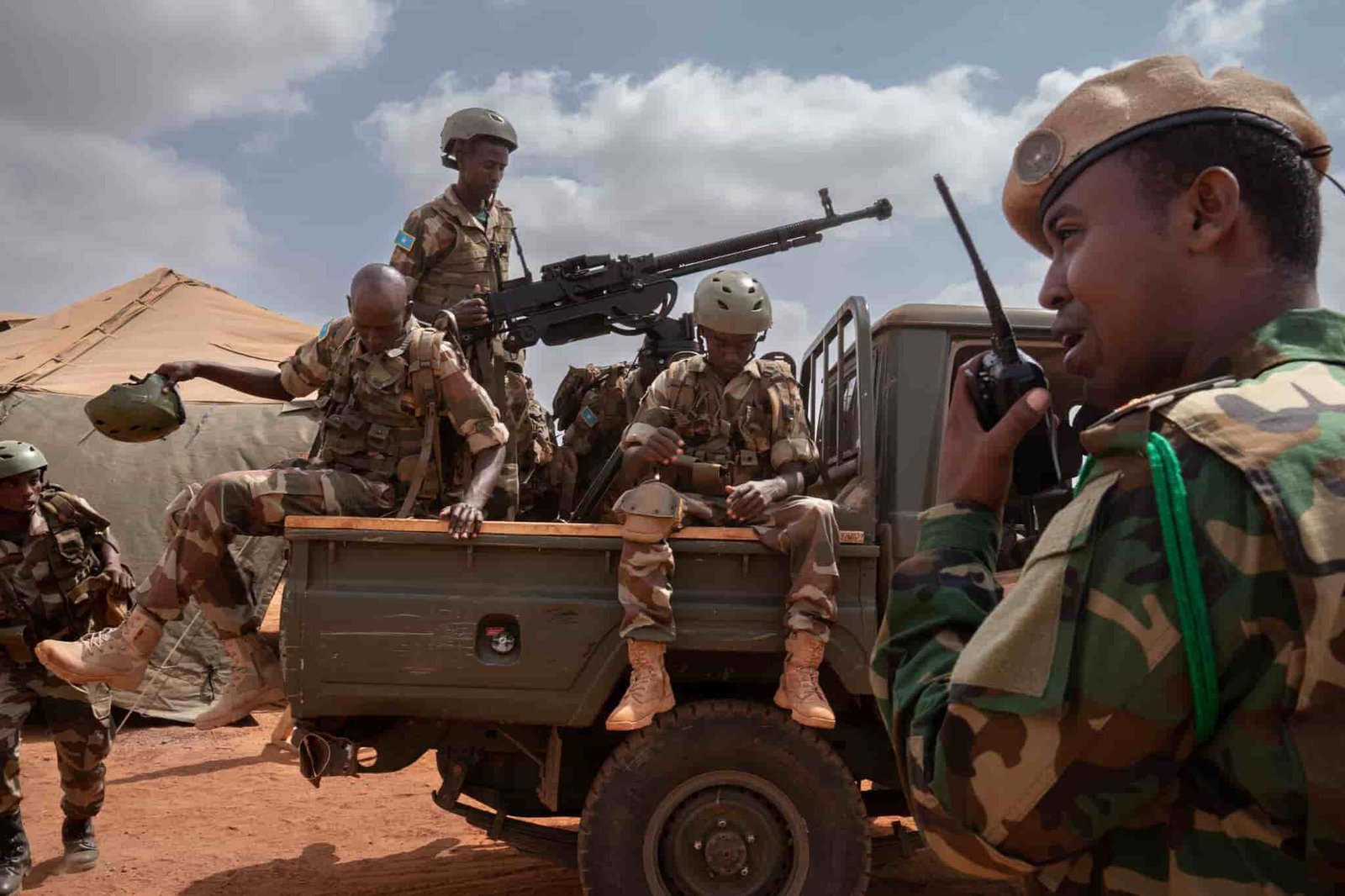
The anti-Türkiye campaign that has spread through Somali political discourse in 2026 is not a Somali phenomenon. It is the response of a regional axis, Ethiopia, the United Arab Emirates and Israel, with Kenya attached to it financially, to a change in the balance of power inside Somalia that the axis did not anticipate and cannot reverse by conventional means. That change is the transformation of the Somali National Army, over fifteen years of Turkish training and equipment, into the strongest armed force in the country.
The axis built its position in Somalia on a weak center and strong peripheries: Ethiopia in South West, Kenya in Jubaland, the UAE in Puntland, and Israel and the UAE together in Hargeisa. A federal army able to remove state presidents, control the airspace and, since August 2026, act at sea with Turkish naval support, dismantles that architecture piece by piece. In 2026 the first piece fell in South West, the second is falling in Jubaland, and the third is contested in Puntland. The campaign against Türkiye is the axis attacking the guarantor because it can no longer attack the state.
The alignment is not a theory; its components are public.
Israel recognized the Hargeisa administration in December 2025, and Israeli officials themselves credited the UAE with facilitating the step. Abu Dhabi's DP World has spent roughly 400 million dollars on Berbera port, and satellite imagery analyzed by Le Monde shows military construction at Berbera airport well beyond any commercial requirement. Israeli commentary treats the Turkish presence in Mogadishu, from the training base to the planned spaceport at Warsheikh, as a strategic threat. Analysts at the American Enterprise Institute and the Critical Threats Project describe an Israel-UAE line of containment against Turkish reach running from the eastern Mediterranean to the Indian Ocean. When Mogadishu cancelled every agreement with the UAE in January 2026, the volume of anti-Türkiye messaging did not fall; it rose.
Ethiopia is the axis's continental anchor. Its January 2024 memorandum with Hargeisa, trading recognition for coastline, was the most direct challenge to Somali territorial integrity in a generation, and it was the Ankara process that killed it. Addis Ababa has since maintained its presence in Somalia through the member states, above all in South West and Jubaland, and through its open support for the opposition coalition.
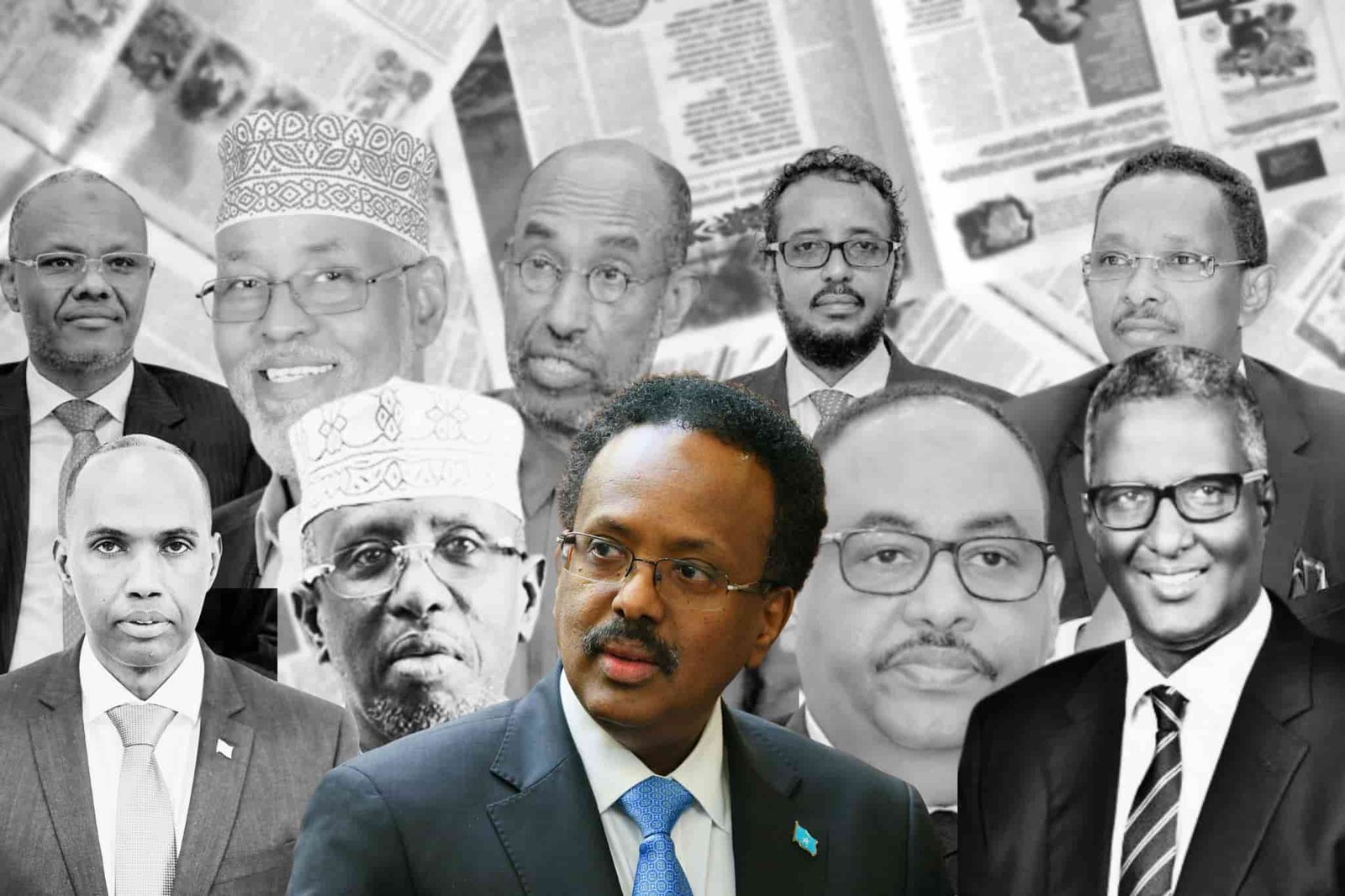
Kenya's position is different in kind and needs to be stated precisely. Kenya is not an ideological member of the axis. The Kenyan state's security relationship with Türkiye is close; in October 2024 Nairobi seized four FETÖ-linked individuals and transferred them to Türkiye the same day, and Kenya's foreign ministry, in a statement carried by the Daily Nation, defended the decision on the basis of what it called the robust historical and strategic relations between the two countries. What binds Kenya to the axis is money and hosting. Nairobi is where the Somali opposition lives, organizes and raises funds: the Somali Future Council is administered from there, Laftagareen fled there, and, as the Somali Guardian reported, Madobe announced his presidential ambitions there in front of Kenyan legislators and business figures. The political and commercial networks in Nairobi that service the opposition are the axis's Kenyan branch, whatever the Kenyan state's own preferences.
The axis therefore has three tiers: a strategic core in Abu Dhabi and Tel Aviv, with its lobbying capacity in Washington; an operational partner in Addis Ababa; and a financial and logistical hinterland in Nairobi. Its Somali instruments are the member state leaders it has protected and the media ecosystem it funds.
The axis's Somali strategy required a federal government too weak to enforce its writ beyond Mogadishu. Turkish assistance has removed that condition.
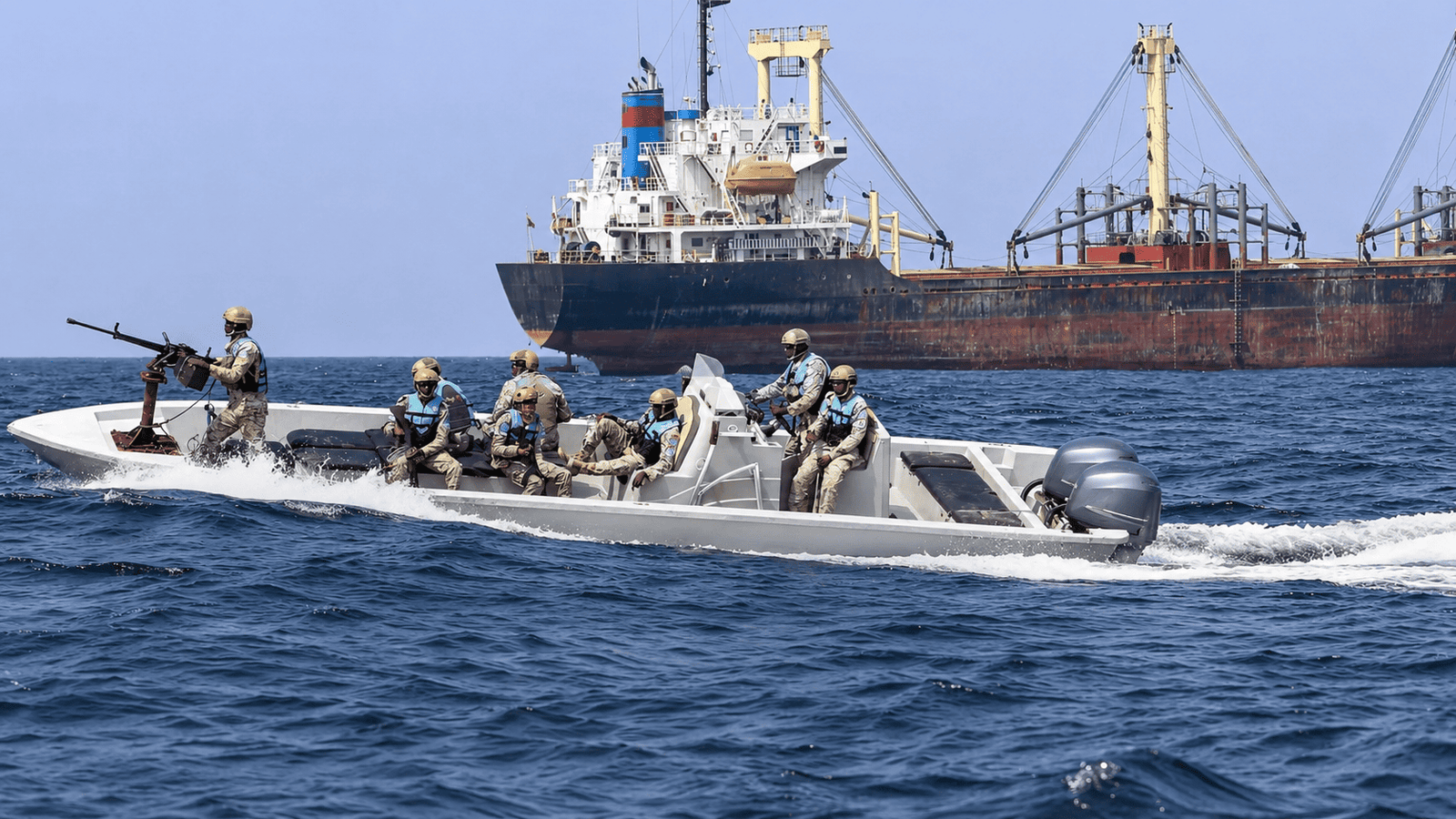
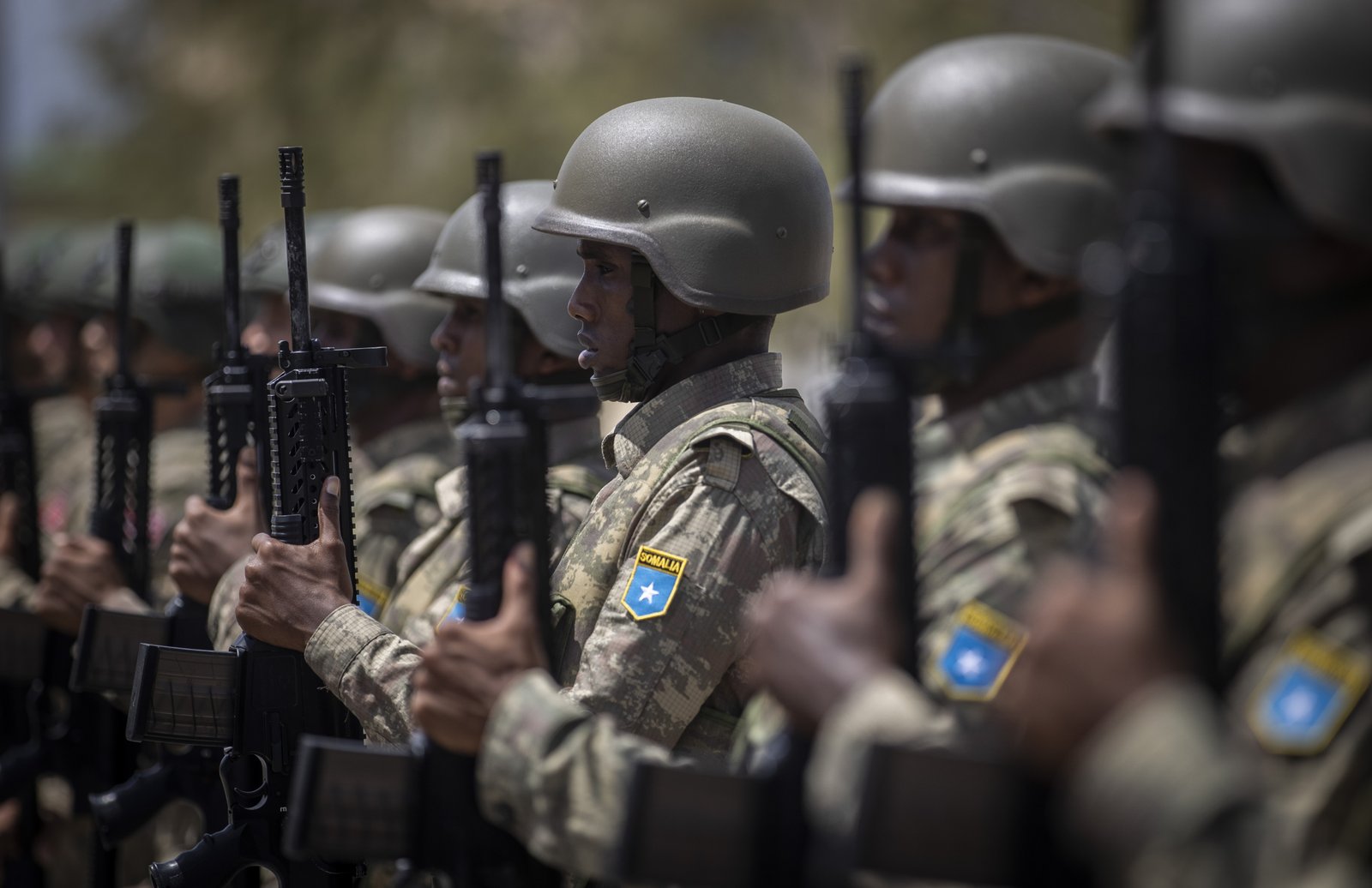
The numbers describe the change. The training base opened in Mogadishu in 2017 has graduated more than 6,000 Gorgor commandos, alongside the Haramcad police units; Anadolu Agency has put the share of Turkish-trained soldiers in the Somali army at one in three, a figure Middle East Eye repeated when it reported the arrival of Turkish drones, and Somali units also train at commando schools in Türkiye. Somali army received its first fully armored vehicles in 2020, with at least twenty Kirpi mine-resistant carriers delivered by 2021, and its standard infantry rifle is Turkish. Armed Bayraktar TB2 drones have flown in support of operations since 2022, when Middle East Eye reported that the Somali government had confirmed their deployment against Al-Shabaab. In February 2026, according to Military Africa and Defence Security Asia, a Turkish landing ship offloaded the first main battle tanks in Somali service since the state collapsed. In January 2026 Turkish F-16s were reported in Mogadishu, a claim that remains unconfirmed but that the axis's commentators treated as fact. The ten-year defense framework agreement of February 2024, ratified 213 to 3, assigns Türkiye the building of a Somali navy, and in August 2026 Turkish and Somali forces freed a hijacked supply ship in a ten-day joint operation that destroyed four pirate boats. The UN arms embargo was lifted in December 2023.
The result is a federal government that holds the air over every member state, can move heavy forces to any state capital, and now has a naval partner willing to act along the coast. No regional force in Somalia can contest any of these three domains.
South West was the axis's Ethiopian province. Abdiaziz Laftagareen governed it from 2018 with Ethiopian troops at Baidoa airport and Ethiopian backing in every dispute with Mogadishu.
In March 2026 Laftagareen rejected the new federal constitution and had himself re-elected in a single day. Federal forces entered Baidoa on March 30 and held the city within 48 hours. Laftagareen resigned and left for Nairobi. In June a new state president was elected in Baidoa, 88 to 2, under federal auspices. Laftagareen's forces have since attacked the city three times, in May, in August and on September 3; the Ministry of Defence describes each attack as a joint operation with Al-Shabaab, and each has been repelled. The Associated Press reported 71 wounded and one civilian killed in the September attack.
The significant development is not Laftagareen's fate but Ethiopia's. The Hangool Institute reports that Ethiopian troops are withdrawing from Baidoa airport, with Egyptian forces taking their place. The federal army's entry into Baidoa did not only remove a state president; it removed the axis's operational partner from a province it had held for over a decade. Laftagareen's insurgency from Nairobi is the axis attempting to contest the loss through its Kenyan hinterland, and it is failing.
Jubaland was the axis's Kenyan province, with Ethiopian reinforcement. Ahmed Madobe has survived every federal attempt to remove him since 2013 by combining control of the entry points to Kismayo with support from across the Kenyan border and from Addis Ababa. When federal forces moved against him at Ras Kamboni in December 2024, the attempt failed and several hundred federal soldiers withdrew into Kenya, where the Kenya Defence Forces disarmed them.
That outcome is the last success the axis has had in Jubaland. Since then Mogadishu has issued a treason warrant for Madobe, accusing him of sharing classified information with a foreign power, and has documented what it describes as his passage arrangements with Al-Shabaab. More importantly, the military balance has shifted to a domain Madobe cannot enter. Jubaland's own deputy security minister told reporters in Kismayo, in remarks carried by AFP, that the federal operation at Ras Kamboni opened with a drone strike. With armed drones, reported fighter aircraft and Turkish naval patrols off Kismayo, the federal government now holds the air and the sea around Jubaland. It does not need to take Kismayo by land to make Madobe's position untenable; it needs only to make clear that it could neutralize him from the air whenever it chose, and there is no military obstacle to that.
Madobe has understood this. His response has been to turn to the axis's Kenyan branch: a two-week visit to Nairobi at the start of 2025, an announcement there that he would run for the Somali presidency, and a place in the Nairobi-based opposition coalition. The axis, for its part, is discovering the limits of its hinterland. Kenya can host Madobe, fund his network and shelter his fighters; it cannot give him an air force.
Puntland is the axis's Emirati province and the one it will fight hardest to keep. UAE's investment in Bosaso port, its training of Puntland's maritime and security forces, and its air links through Bosaso form the northern leg of the Berbera-Bosaso line that gives Abu Dhabi its position on the Gulf of Aden.
In January 2026 the federal government cancelled all agreements with the UAE, including those covering Bosaso. Puntland refused to recognize the cancellation, cited the constitution, and reaffirmed its cooperation with Abu Dhabi; Said Deni travelled to Addis Ababa and then to the UAE within the week. The federal government responded by establishing an army unit in Bosaso reporting directly to Mogadishu. In August, Puntland forces seized a federal camp in Galkayo in what Deni, speaking to reporters in Garowe according to Al Jazeera, called a planned security operation, and during the August rescue of the hijacked supply ship, Puntland accused Türkiye and Mogadishu of air strikes near the vessel.
The Puntland front differs from the other two because the axis's core member is directly engaged. The UAE has more at stake in Bosaso than Deni does, and Puntland's forces are better organized than Jubaland's. This is where the axis will attempt to hold the line, and where the confrontation between a Turkish-built Somali navy and the Emirati coastal network will be decided.
Unable to reverse the federal advance by force, the axis has turned on the actor that made it possible. The logic is straightforward. Every federal success accrues to the government in Mogadishu and to its Turkish partner; attacking the government for restoring the state is a losing argument; therefore attack the partner, in the hope that Ankara can be made to distance itself and the government left exposed.
The campaign has two visible layers.
The first is a commentariat that produces, on cue, the same framing: Türkiye as a colonial power, the defense agreements as a sellout, the oil agreements as theft, the training base as a threat to the region. The most prominent example is the analyst Rashid Abdi, whose output from December 2025 to July 2026 included the claim that Türkiye now "owns" Somalia, the first report of F-16s in Mogadishu framed as a dangerous escalation against Israeli and Emirati flights, a thread placing Somalia at the center of a Turkish nuclear strategy with the Warsheikh spaceport as a possible covert nuclear site, a description of Hobyo port as a forward base for Turkish military intelligence, and a recommendation that Somalia recognize Somaliland. Whatever the motive, the framing serves the axis's interests with precision: it recasts Somali state capacity as a threat to Israel and the UAE and normalizes Hargeisa's recognition. The tweet he posted yesterday belongs to the same series.
The second layer is the account base. Reviews of the coordinated anti-Türkiye hashtag surges, cited by Red Sea Axis, have found that as many as 87 percent of participating accounts show the markers of inauthenticity: newly created profiles, stock or stolen images, no organic history, synchronized posting windows. Many are run from outside Somalia. Some are careless enough to post generated images without removing the "AI" watermark. Strip out the fabricated layer and what remains is a small number of professional operators and their patrons.
The offline record confirms the reading. In fifteen years there has not been a single anti-Türkiye demonstration in Somalia. The fifteenth anniversary of the 2011 visit was publicly commemorated in Mogadishu in August 2026. When two senior opposition figures took the confrontation from social media to the streets of Mogadishu in June 2026, the public stayed home. The campaign exists on servers, not in streets, because it has no Somali constituency; it has a regional one.
The axis retains real assets. It can fund insurgency from Nairobi, as it is doing in South West. It can sustain Madobe politically for a time. It can hold Puntland through Emirati investment and direct engagement. It can flood the information space and lobby in Washington and European capitals. It can, through Hargeisa's recognition, create a permanent diplomatic sore.
What it cannot do is reverse the military facts. It cannot give Jubaland or Puntland an air force, a navy or armor. It cannot return Ethiopian troops to Baidoa. It cannot produce a Somali crowd. And it cannot, on the evidence of fifteen years and four administrations, detach Türkiye from Somalia, because Ankara's engagement was never with a faction and every attempt to portray it as one has collapsed on contact with the record.
Two vulnerabilities should be noted. The federal government's habit of attaching the Al-Shabaab label to every armed rival hands the axis's commentators material, even where the label is accurate. And any substantiated civilian casualties from Turkish-supported operations, such as the claims Puntland has made about the August rescue, would give the campaign the first genuine grievance it has had. The axis will look for both.
The trajectory runs against the axis. Jubaland is likely to be settled on Mogadishu's terms before the electoral cycle closes, whether by negotiation under air and naval pressure or by a South West-style intervention. Puntland will be harder and longer, because the UAE is present in person. The information campaign will intensify with each federal success and peak around the elections, and it will increasingly be run from outside the country as its Somali base shrinks.
For Türkiye, the implication is that its Somalia policy has passed from state-building to state-defending. The August naval operation showed that Ankara will act at sea for its partner. The next year will show whether the axis escalates in Puntland to test that commitment, and whether Kenya, faced with a choice between its state relationship with Ankara and its hinterland relationship with the opposition, decides which of the two it values more.