Politics & Security
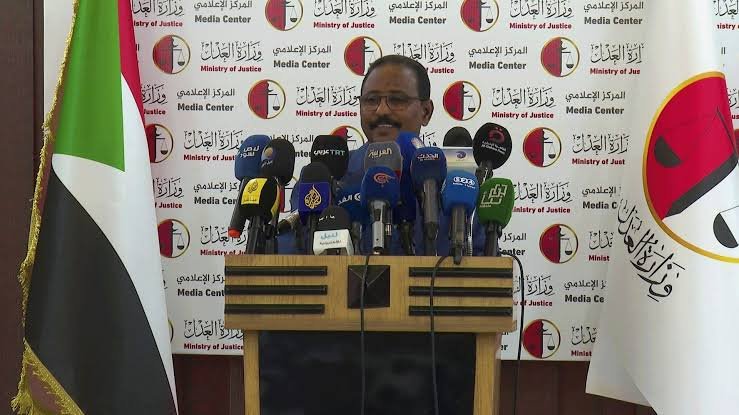
UAE-Armed RSF Drone Hits Sudan Courthouse Crowd: 13 Dead
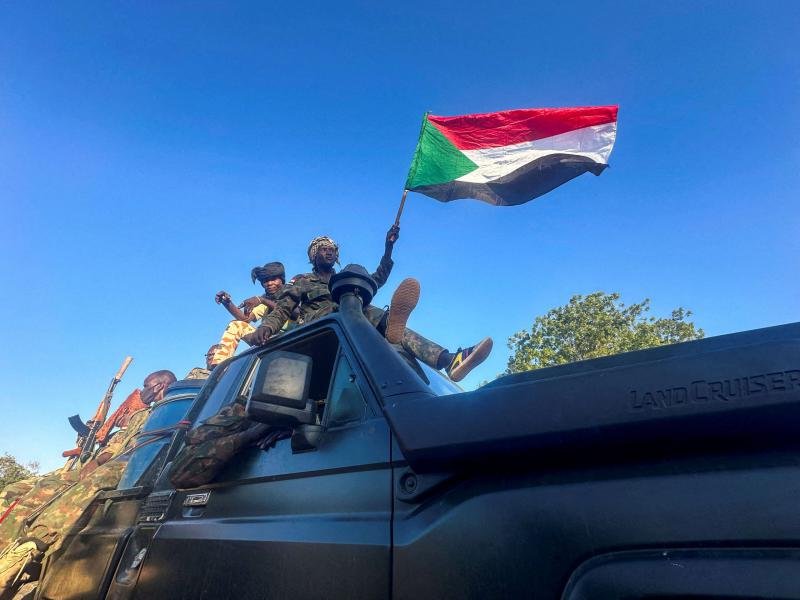
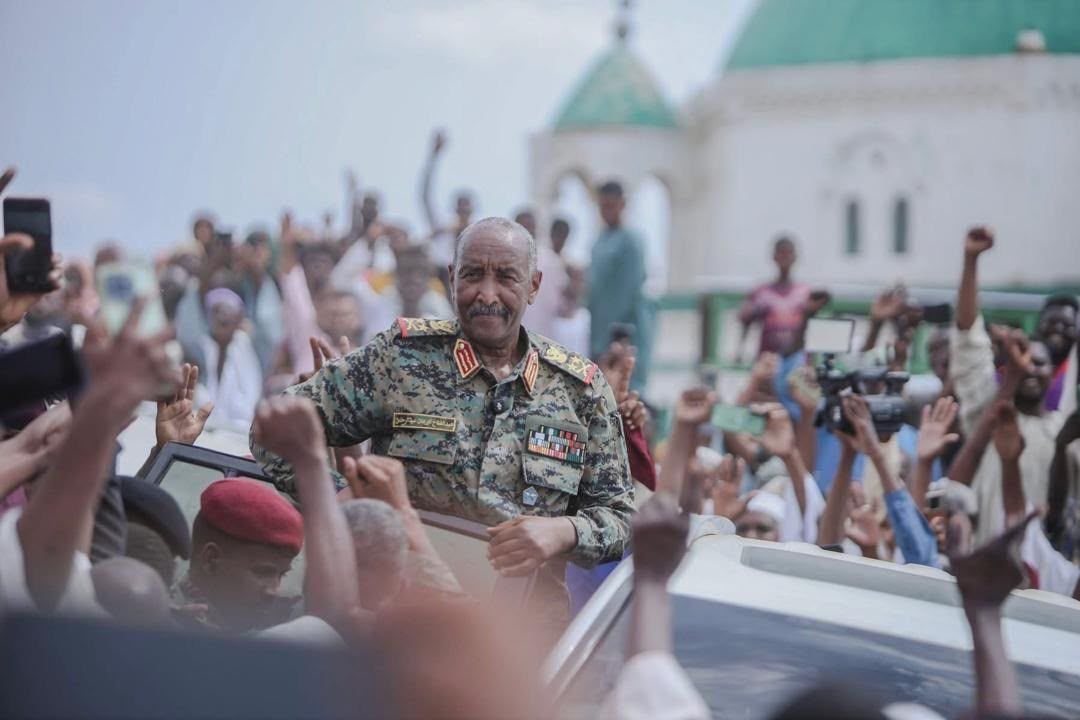
What changed the course of Sudan's war was neither a new weapon nor a diplomatic breakthrough. It was the convergence of the army and the people. After the catastrophic months that followed the fall of Khartoum in 2023, the Rapid Support Forces' (RSF) occupation—synonymous with looting, rape, and ethnic massacres—drove broad segments of Sudanese society into volunteer resistance units and into the ranks of the army. The picture today is unambiguous: the army retook the capital in March 2025; throughout 2026 it opened the strategic Export Road securing El Obeid in Kordofan, liberated Kurmuk in Blue Nile, twice repelled RSF offensives at Bir Saliba in West Darfur, and moved to sever the resupply corridors along the Chadian border. In the same months, the army's air defenses shot down RSF drones one after another over the skies of Kordofan; fuel tankers and armored convoys were struck and destroyed. Perhaps the most striking indicator came from within the RSF itself: senior commanders such as al-Nur Ahmed Adam defected with dozens of combat vehicles, followed by hundreds of fighters switching sides in waves. A mercenary militia structure is unraveling, while facing it a national army—and the society behind it—is consolidating.
This picture reveals the limits of a force kept on its feet by an unlimited flow of external resources. And it is precisely here that the war's second front comes into play.
In early September, roughly two weeks before the high-level week of the UN General Assembly, the report of the UN Independent International Fact-Finding Mission translated what Port Sudan had been saying for years into the language of international law. The report found "reasonable grounds" to conclude that a transnational network has been supplying the RSF with weapons, logistics, training, and foreign fighters—and placed on the record that this network operates through the United Arab Emirates, via countries including Chad, Libya, and Somalia. In other words, not only Abu Dhabi but Sudan's neighboring geography appears in the report as links in the supply chain. This came on top of earlier findings: the UN Panel of Experts had pointed to "credible" evidence of arms shipments several times a week along Chad's Amdjarass corridor; Amnesty International had documented in RSF hands GB50A guided bombs and AH-4 howitzers known to have been imported from China only by the UAE; and independent investigations had established the presence of UAE-linked Colombian mercenaries on the ground during the El Fasher massacre. Human rights organizations are now demanding that the UN General Assembly impose an arms embargo directly on the UAE; bills to block US arms sales to the UAE are on the table in Congress; and referrals concerning senior Emirati officials have been submitted to the International Criminal Court. The burden of evidence has evolved from isolated incidents into a picture of systematic sponsorship.
The UAE, for its part, maintains its standard defense: the flights carried humanitarian aid, we take no sides, the reports contain no findings against us. Its $500 million aid pledge announced in February 2026 was likewise read by critics as an attempt to launder the bill for a devastation it had itself financed—"aid-washing," in a word.
At precisely this critical juncture—days before Burhan takes the podium at the UN General Assembly on September 22–28—two major dossiers detonated simultaneously in the Western press. The New York Times published an intelligence dossier alleging that Sudan's army produced chlorine-based munitions in 2024; The Washington Post, drawing on similar documents, spoke of 290 chlorine munitions. Viewed from Port Sudan, this is the replay of a familiar script: whenever the army begins to break the RSF on the battlefield and dismantle the UAE's regional project, the same file lands on the table; ceasefire calls intensify, and purchased diplomatic and media weight swings into action. When the US chemical weapons determination was announced in April 2025, a Sudanese diplomatic source summed up this reading in a single sentence: the intention was to distract from the mounting campaign against the UAE in Congress.
It must be acknowledged that this skepticism is not mere conspiratorial reflex, because the dossier's own provenance is riddled with question marks. The New York Times wrote that the documents were provided to it by an unnamed "Middle Eastern intelligence agency"—that is, a state actor whose stake in the war cannot be ruled out. The paper's own text concedes that independent investigators could not access the named facilities and that the alleged program could not be fully verified. As for the official US determination of 2025, it has never been substantiated with publicly disclosed evidence; Washington has never specified which weapon was used, where, or when, and rather than activating the mechanism of the Organisation for the Prohibition of Chemical Weapons (OPCW)—to which Sudan is also a party—it opted for unilateral sanctions. Khartoum's call to "take the allegations to the OPCW" went unanswered. Recent history offers painful examples of intelligence services constructing narratives through selective leaks; the peoples of the region have not forgotten that the road to Iraq was paved with "evidence dossiers." Read together, the timing, the sourcing, and the procedure make Port Sudan's thesis—that this is an information operation—at the very least worthy of serious consideration.
An honest analysis, however, must also record the other side of the coin: the chlorine allegations do not rest on this dossier alone. A months-long independent investigation by France 24, conducted with C4ADS, published strong findings of chlorine use around the al-Jaili refinery in September 2024, and even Sudan's pro-democracy civilian coalition demanded an inquiry. The question, then, comes down to this: is it a complete fabrication, or the strategic weaponization of a real incident through timing? The latter is the most effective form of information warfare—not manufacturing a lie from scratch, but landing an existing file at the moment of an adversary's greatest strength. This is also why the smartest move available to the Sudanese government is not to persist in denial but to throw the ball to the OPCW and demand the international verification process itself; for if the dossier truly is commissioned work, nothing will refute it faster than independent scrutiny.
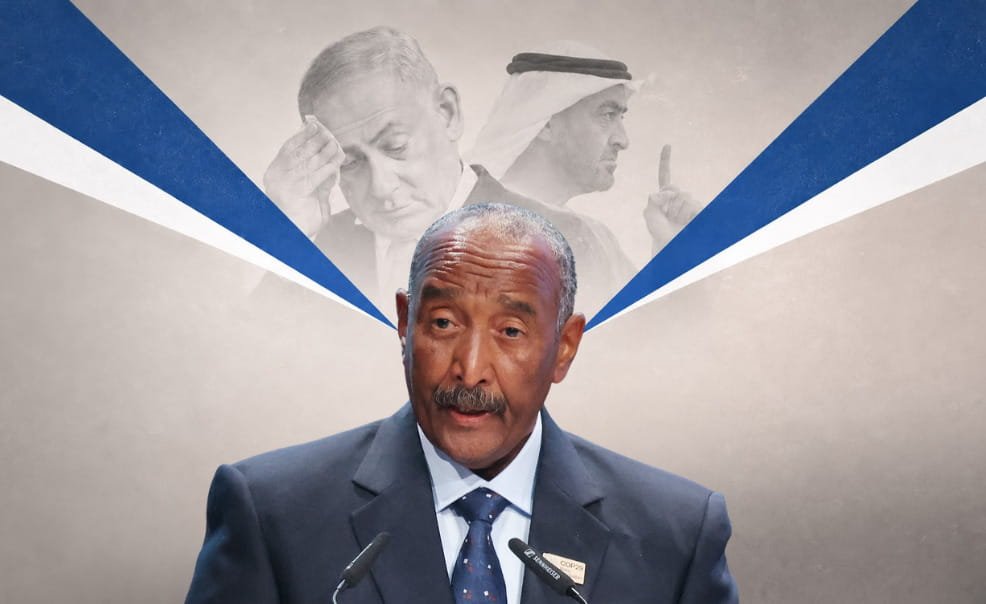
There is a structural asymmetry at work. On one side stands one of the wealthiest states on earth in per capita terms; a lobbying and public relations machine that has operated in Washington, London, and Brussels for decades; funds flowing into think tanks, media partnerships, and strategic communications. The intelligence and technology partnership deepened with Israel after the Abraham Accords is one of the levers of this network. On the other side stands a Sudanese state under sanctions, cut off from international finance, able to make its voice heard only through a limited set of capitals such as Türkiye and Qatar. Burhan's proposal of Ankara and Doha as mediators—rather than the Washington–Abu Dhabi axis—is symbolic for precisely this reason: Port Sudan believes the tables offered as neutral ground were set by its adversary's own sponsors. That ceasefire diplomacy stayed silent through the long months of the El Fasher siege, only to spring to life the moment the city fell and the army began advancing, deepened this distrust; in Burhan's words, the calls multiplied because the RSF was meant to hold more ground.
In this asymmetry, Sudan's only real capital is an army that keeps winning on the battlefield and the popular support behind it. But history shows that those who win on the ground and lose the narrative also lose at the table. The momentum created by the UN report has opened a rare window for Sudanese diplomacy: for the first time, the UAE's sponsorship has entered an international document of this weight. Even if the thesis is correct that the chemical weapons dossier was deployed to slam that window shut, the answer should be not furious statements but a cold-blooded counter-strategy: initiating the OPCW process itself, opening the recovered territories to independent observers, and cleaning up its own record on the protection of civilians. For what Abu Dhabi can buy is influence; the one thing it cannot buy is verifiable fact. It is only on that ground that Sudan can win the second front of this war.