Explore
Akıncı Gives Sudan’s Army Total Command of the Skies
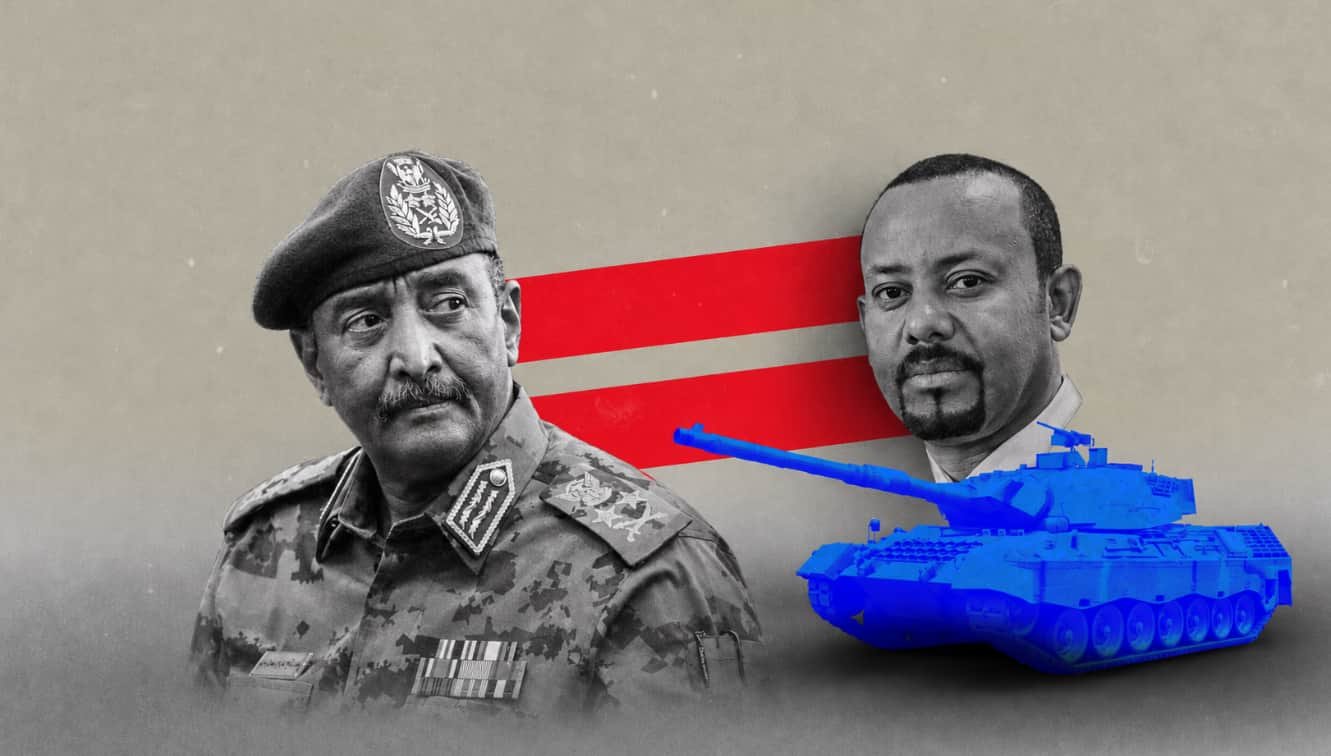
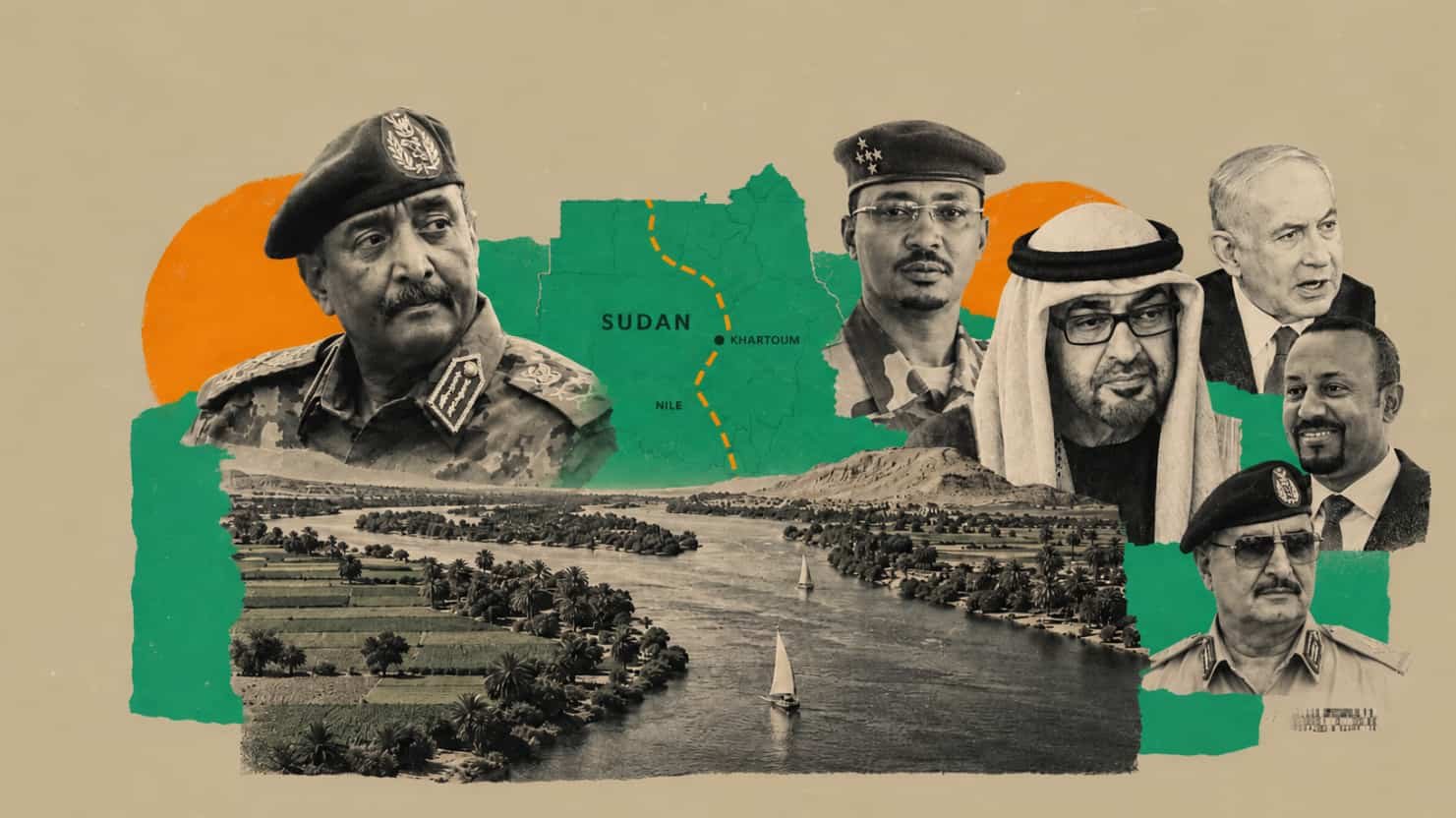
For three years, the war in Sudan was described in Western capitals as a senseless contest between two generals. That framing was always a convenience. What has been fought over Sudan since April 2023 is not personal ambition but the map itself: whether Sudan remains one state or becomes the first domino in a chain of partitions running from the Nile to the Indian Ocean. Behind that chain stands a specific alignment of three capitals that this analysis will name plainly and repeatedly, because naming it is half the battle: Abu Dhabi, Addis Ababa, and Tel Aviv. The UAE finances fragmentation, Ethiopia provides the territory and the appetite for it, and Israel supplies the strategic canopy of bases, intelligence, and political cover under which the whole enterprise operates. Call it what it is: the UAE-Ethiopia-Israel axis, the axis of partition.
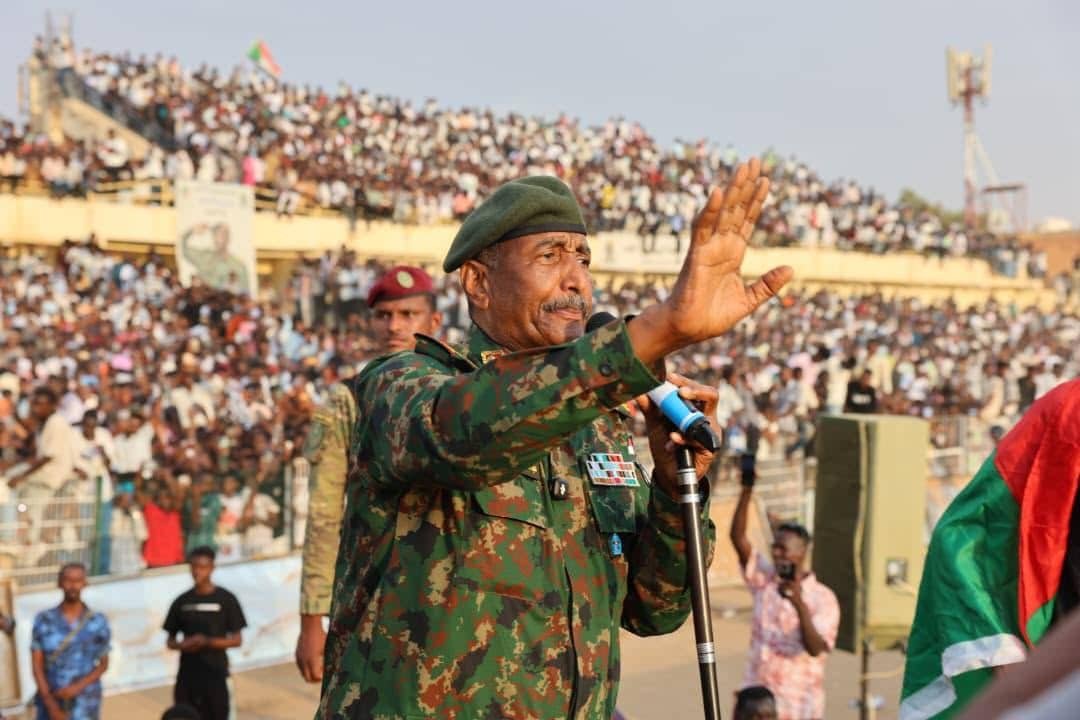
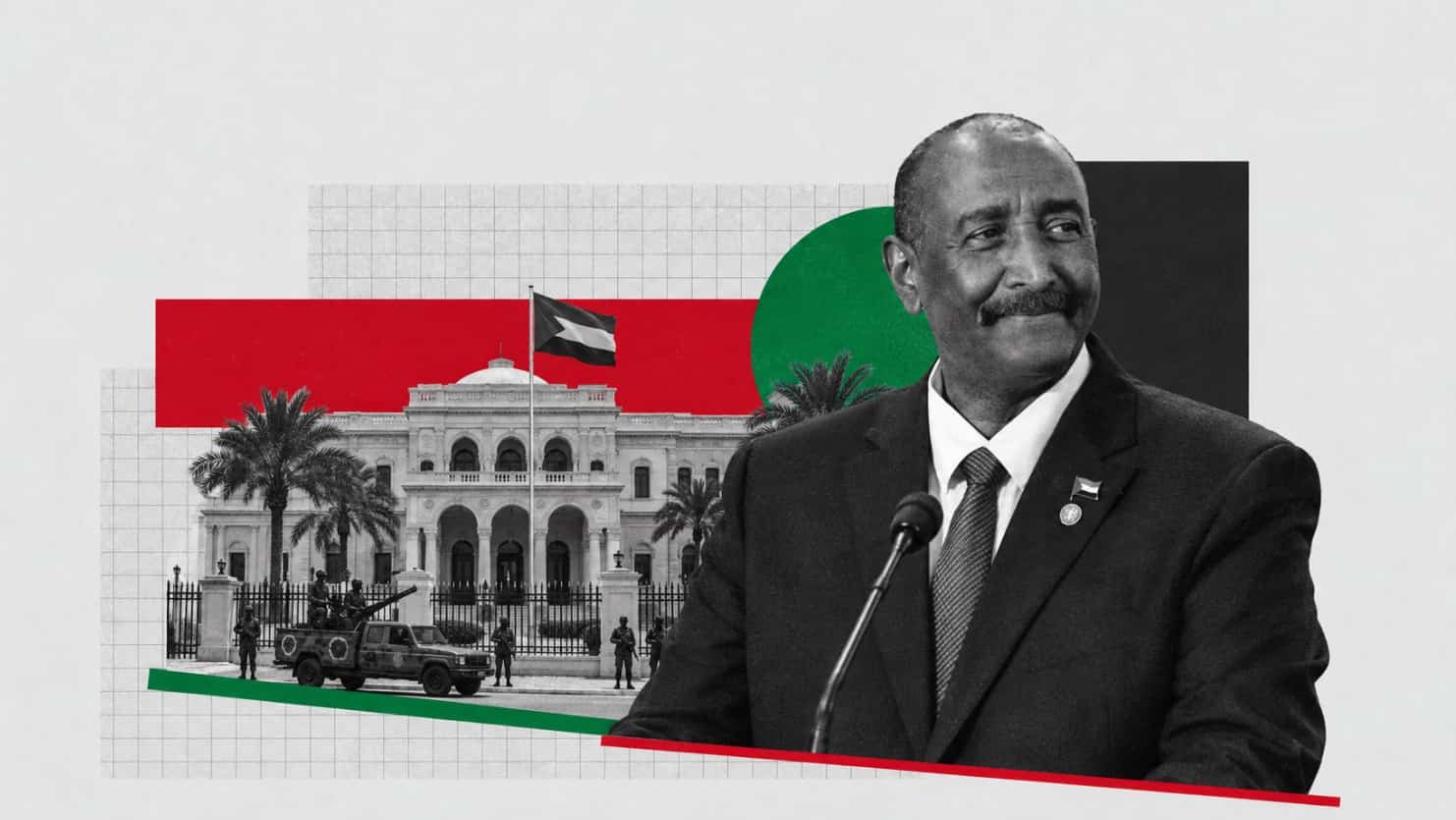
By mid-2026, the contest between that axis and the states it targets is coming into focus. General Abdel Fattah al-Burhan, Chairman of Sudan's Sovereignty Council, has not merely pulled his country back from dismemberment. He is fighting, whether the world has noticed or not, for the entire region between the Nile and the Indian Ocean, and he has inflicted on the axis of partition its first serious defeat anywhere. If his war ends in full victory, the damage to the axis will not be partial. Its model, its corridors, and its credibility will break together.
Recall where Sudan stood eighteen months ago. The Rapid Support Forces held the capital, the Gezira breadbasket, and nearly all of Darfur. Foreign analysts spoke openly of a "Libya scenario": two governments, two currencies, a partitioned Sudan with the RSF ruling a western statelet built on gold and ethnic cleansing. In February 2025, the RSF and its allies duly signed a charter in Nairobi announcing a parallel government. Partition was no longer a risk to be managed. It was a program being executed, and its budget, logistics, and sanctuary were supplied by the UAE-Ethiopia-Israel axis, not generated in Darfur.
The program failed on the battlefield. The Sudanese Armed Forces retook Khartoum in March 2025 and spent 2026 methodically dismantling the RSF's position in the center of the country. This summer the army recaptured the towns along the strategic Export Road, the Sadirat corridor linking the Nile valley to the west, and pushed the paramilitary into a defensive posture across central Sudan. In early August, government-aligned forces repelled successive RSF assaults at Bir Saliba, north of el-Geneina, and began squeezing the desert supply crossings along the Chadian border that have sustained the RSF since the war's first months. Columns of RSF defectors surrendering outside Omdurman in August 2026 told their own story. Armies do not bleed men to the enemy when they believe they are winning.
None of this was supposed to happen. It happened because Burhan treated the war as what it was: a war of national survival against an externally financed partition project. A state that knows what it is fighting for tends to outlast a militia that is fighting for someone else's invoice.
Here a definitional point must be made without apology. The RSF is not a rebel movement with a political program. It is a terrorist organization, designated as such by the Sudanese state, found by the United States to have committed genocide in Darfur, and defined in practice by the massacre of patients in hospital beds. But it is a terrorist organization of a particular kind: a rented one. The RSF has never been a self-sustaining force and was never meant to become one. It is the instrument of the axis, and the axis has a clear division of labor: Emirati money and weapons, Ethiopian territory and depth, Israeli cover and architecture. Strip any one of the three away and the militia's war becomes unsustainable. Its war economy runs on Sudanese gold and foreign logistics, and both roads lead to the United Arab Emirates. The UN Panel of Experts, Chatham House, and SWISSAID have all documented the pattern: the UAE is the dominant destination for Sudan's licit and illicit gold, absorbing around 90 percent of official exports and the great bulk of smuggled output routed through Chad, Libya, and Egypt. Sudanese officials estimate that gold moved by the RSF from Darfur and Kordofan exceeded 850 million dollars in 2024 and early 2025 alone. The Sentry has traced Dubai-based companies laundering this conflict gold for RSF financiers, and the EU responded in July 2026 with a total ban on Sudanese-origin gold. Sudan's wealth has been extracted to pay for Sudan's destruction. It is difficult to design a more cynical circuit.
The manpower side of the ledger is equally documented. Investigations by AFP, the Financial Times, and Human Rights Watch have exposed an Abu Dhabi-based firm, Global Security Services Group, with reported links to the Emirati Presidential Court, recruiting hundreds of Colombian ex-soldiers through WhatsApp messages and front agencies. The recruits trained at camps inside the UAE, then moved along two corridors into Darfur: one through Haftar-controlled eastern Libya, the other through the Emirati-run military section of Bosaso airport in Somalia's Puntland region. Somalia's own Defense Minister, Ahmed Moalim Fiqi, confirmed to parliament that aircraft were ferrying personnel from Bosaso toward Chad and Niger for onward entry into Darfur. Satellite imagery shows the same Ilyushin IL-76 cargo aircraft rotating between Bosaso, Emirati airbases, and eastern Libya. The US Treasury has sanctioned the Colombian recruiters as a transnational network, and researchers geolocated Spanish-language devices from Abu Dhabi training camps to El Fasher during the worst of the killing. Human Rights Watch concluded in May 2026 that this support may amount to aiding and abetting war crimes and crimes against humanity.
What those crimes look like is no longer a matter of dispute. When the RSF finally overran El Fasher on October 26, 2025 after an eighteen-month starvation siege, its fighters filmed themselves at work. The World Health Organization reported some 460 patients and companions killed at the Saudi Maternity Hospital. Yale's Humanitarian Research Lab identified kill sites from satellite imagery, including blood-stained ground beside the hospital walls and the berm the RSF had built around the city to trap the fleeing. Amnesty International, after interviewing seventy survivors, described executions, mass rape, and children shot at the berm, and called El Fasher a stain on the conscience of humanity. Sudan's government put the death toll above two thousand in the first days alone. This is the terrorist organization the axis chose as its instrument, knowing exactly what it was. The choice of instrument reveals the nature of the project.
Through 2026 a new front confirmed the regional character of the conspiracy. In March, the RSF and Abdelaziz al-Hilu's SPLM-N seized the border town of Kurmuk in Blue Nile state after moving in from Ethiopian territory. The army recaptured it in July. In mid-August the RSF took it back, along with Geisan, in a cross-border offensive that Sudanese military sources, Mada Masr, and the Critical Threats Project all traced to rear bases inside Ethiopia's Benishangul-Gumuz region. A local administrator in Asosa described waves of RSF vehicles mounted with artillery rolling from a base inside Ethiopia toward the Sudanese border before the attack. The RSF established a training camp near Asosa, the regional capital, in late 2025. Khartoum has formally accused Ethiopia and the UAE of facilitating drone operations launched from Ethiopian soil against Sudanese cities, including strikes on Khartoum and its airport, and in late August Sudan announced it had downed a hostile drone over Kurmuk that entered from Ethiopian airspace. Middle East Eye's reporting went further, documenting an Ethiopian army base covertly supporting the RSF and Emirati-procured vehicles arriving through Berbera port before appearing in combat footage around Kurmuk. Addis Ababa denies everything. The berms of Blue Nile are less diplomatic.
Why would Ethiopia host the destroyers of a neighboring state? Because fragmentation is the currency of the entire axis. The same Addis Ababa government signed a memorandum with Somaliland on January 1, 2024, offering recognition of a secessionist entity in exchange for a naval foothold, a direct assault on Somalia's sovereignty. The same Abu Dhabi that arms the RSF operates the base at Bosaso in Puntland, holds Berbera through DP World, and has cultivated Puntland, Jubaland, and Somaliland as counterweights to Mogadishu, feeding the centrifugal politics that keep Somalia weak. Middle East Eye described Berbera and Bosaso as parts of a network of Emirati bases, developed with Israel and the United States, forming a ring of control around the Red Sea and the Gulf of Aden, the same network that doubles as the RSF's supply line. Israel's role is quieter but structural: it is the strategic partner and normalization patron of this Emirati architecture, and Hemedti's own outreach toward Israeli channels early in the war was widely reported. A divided Sudan, a divided Somalia, a permanently distracted Horn: each fragment is easier to purchase, garrison, and instruct than a sovereign state would be. That is the entire logic of the UAE-Ethiopia-Israel axis. Weak states make obedient coastlines.
Seen from this angle, Sudan and Somalia are two theaters of one contest, and Burhan is fighting in both at once whether he chose to or not. In Sudan the axis fields a militia; in Somalia it fields memoranda and port concessions. The method differs, the objective does not, and neither does the enemy.
Burhan's achievement is not his alone, and he would be the first to say so. The Sudanese state's recovery rests on a command group that has proven unusually cohesive for a country at war. General Yasser al-Atta, Burhan's battlefield deputy, drove the offensives that broke the sieges of the general commands and restored the army's confidence after the catastrophic first year. Lieutenant General Ahmed Ibrahim Mufaddal rebuilt the General Intelligence Service into an instrument that penetrated RSF networks, tracked the mercenary pipelines, and furnished the documentation that has steadily shifted international opinion; the exposure of the Bosaso and Amdjarass corridors owes much to Sudanese intelligence work later corroborated by UN experts and Western journalists. Lieutenant General Mirghani Idris Suleiman, the army's veteran procurement chief, kept an embargoed, blockaded state supplied and simultaneously expanded domestic defense production, so that by 2026 Sudan was fielding locally assembled systems alongside imported ones. States survive sieges when their institutions hold. Sudan's held.
The decisive external factor, however, was Ankara. Persuading Türkiye to commit was perhaps the finest diplomatic achievement of Burhan's circle, because Türkiye brought two things the axis could not match: capable systems and a principled position.
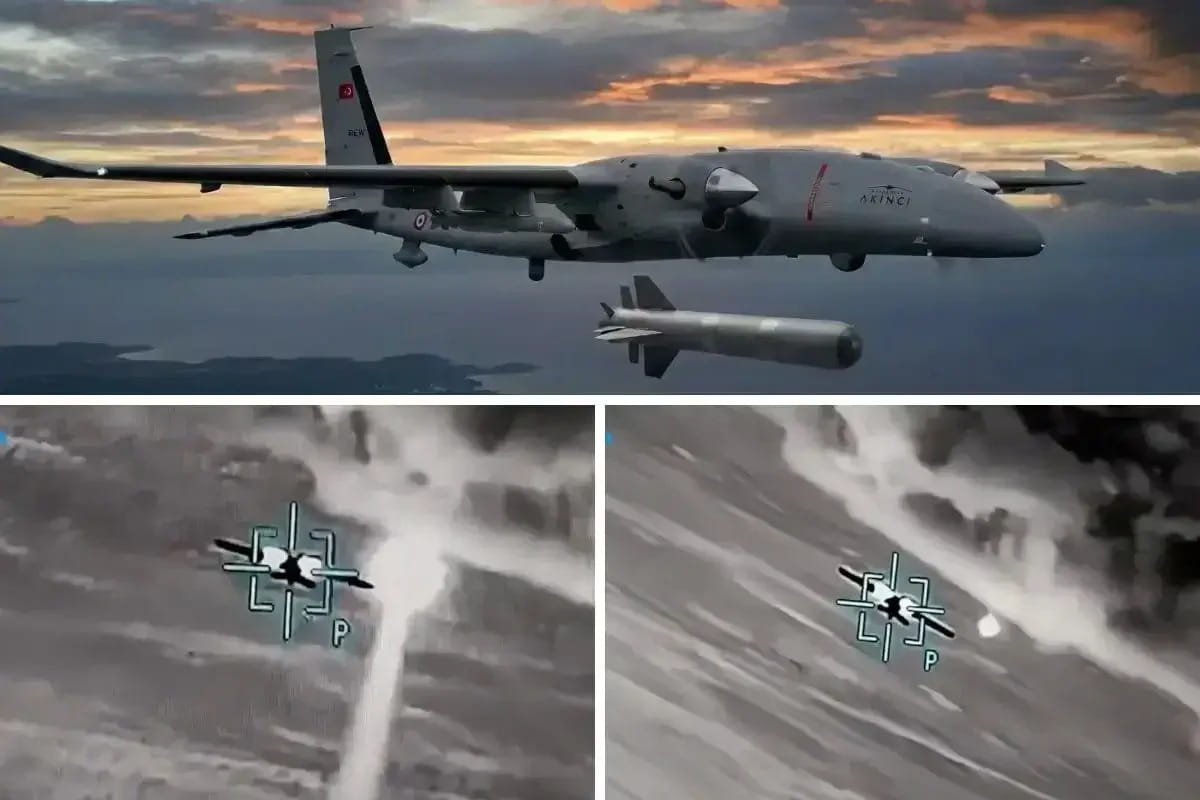
The systems came first. Baykar's agreement to supply the Sudanese army, reported at some 120 million dollars for Bayraktar TB2s, Akıncı platforms, munitions, and ground stations, translated into combat power from late 2024 onward. Turkish drones interdicted RSF supply columns, covered the Gezira battles, and proved central to the recapture of Khartoum in March 2025. By 2026 the Akıncı was doing things no one had seen in this war: in July, one intercepted and destroyed an RSF-operated Chinese-made drone northwest of El Obeid with an air-to-air munition, establishing a protective umbrella over the army's central logistics hub. The Emirati-supplied drone fleet that had terrorized Sudanese cities met, for the first time, a superior system flown by a state with the will to use it. Technology did not win the war by itself, but it removed the asymmetry on which the RSF's momentum depended.
The principle matters more in the long run. Türkiye's position in East Africa has been consistent where the axis has been predatory: the unity and territorial integrity of states comes first. In Somalia, Ankara answered the Ethiopia-Somaliland memorandum with the February 2024 defense framework, put its navy on Somalia's coast, set its drones against Al-Shabaab, and then brokered the Ankara Declaration of December 11, 2024, in which Ethiopia was walked back from the recognition threat and obliged to deal with Mogadishu on the basis of Somali sovereignty. The same logic now operates in Sudan: support the state, not the militia; the map, not the fragment. Türkiye is proving that an outside power can be present in Africa without dismembering it. That contrast, more than any single weapons delivery, is what changed the game.
It must be understood clearly: Burhan is not fighting a local war with regional side effects. He is fighting the region's war on Sudanese soil, and the arithmetic of his victory extends far beyond Sudan's borders.
Consider what a full Sudanese victory would dismantle, piece by piece. The RSF, the axis's only serious military instrument on the continent, would cease to exist as a fighting force, and with it the demonstration that a purchased militia can carve a state out of a state. Nobody should mourn it, least of all its own fighters, because the axis never intended to keep it. A mercenary instrument that has burned every bridge to its own society has no future except the one its sponsors assign to it, and sponsors of this kind assign only two: continued use, or disposal. The Colombians flown home in coffins, the defectors surrendering outside Omdurman, the commanders discovering that Abu Dhabi's generosity ends where its interests do, all of them are learning the oldest rule of proxy warfare. The tool is discarded the moment the job is done or the job fails, and this job is failing. The Bosaso corridor would lose its purpose, leaving an exposed Emirati military presence on Somali soil with no war to feed and a Mogadishu government newly emboldened to ask why it is there at all. The Ethiopian sanctuary in Benishangul-Gumuz would become a liability rather than an asset, documented, protested, and diplomatically costly, with nothing to show for it. The gold circuit through Dubai would remain under tightening EU, UK, and US sanctions with its Sudanese source restored to state control. And the political lesson would radiate outward: Somaliland's recognition project, Puntland's and Jubaland's flirtations with autonomy under Emirati patronage, every secessionist file the axis keeps in its drawer would lose the precedent it was waiting for. Fragmentation projects live on momentum. Sudan is where the momentum dies.
This is why the axis has escalated rather than retreated as Burhan advanced: the Ethiopian bases activated in 2025, the Blue Nile offensives of 2026, the drones crossing the border. The axis understands what is at stake in Sudan better than many of Sudan's friends do. It is not defending a militia. It is defending its entire model, and it is losing.
One side of this war seeks to keep Sudan whole; the other was assembled, financed, and supplied by the UAE-Ethiopia-Israel axis to break it. When El Fasher's berm was filled with bodies, the gold that paid for the bullets was being assayed in Dubai, the mercenaries had transited a runway in Bosaso, and the drones flew from the territory of a neighbor that simultaneously demands a port from Somalia at the price of partition. Every thread of the crime runs back to the same three capitals. Burhan's armies did not only recover Sudanese towns. They stood, in practice, as the shield of every state in the region that the axis has marked for fragmentation, from Mogadishu to N'Djamena.
The Horn of Africa has been offered two futures: a region of client fragments ringing a controlled sea, built by Abu Dhabi, staged from Addis Ababa, and covered by Tel Aviv, or a region of sovereign states choosing their own partners. Burhan is fighting for the second future on behalf of countries that have never sent him a soldier. If he completes his victory, the axis of partition does not merely lose a war in Sudan. It loses the war, everywhere it planned to fight it. History will record who tried to erase the map of the Horn, and who refused.