Explore
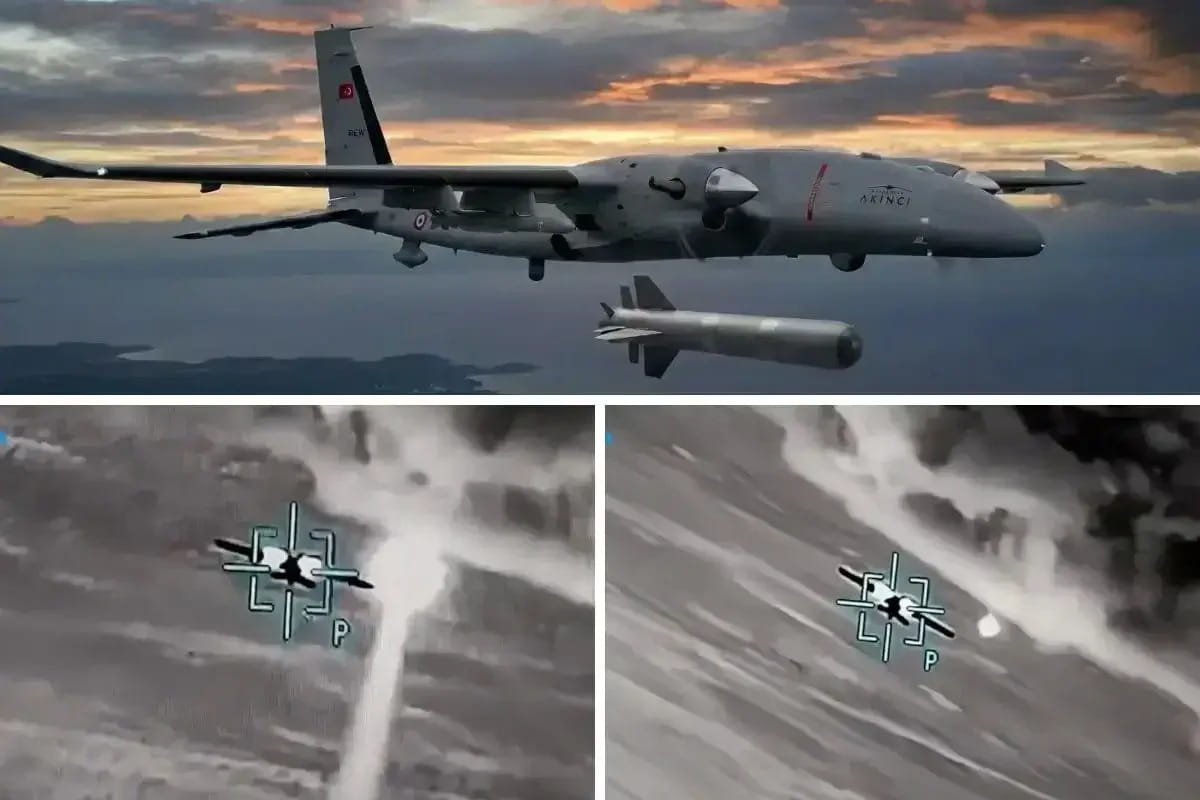
Akıncı Gives Sudan’s Army Total Command of the Skies
In a wide-ranging interview in Khartoum, Chief of Staff Yasser al-Atta lays out a panorama stretching from the Darfur campaign to state-building, from regional alliances to the price his own family has paid. What emerges is a survival doctrine that cannot easily be dismissed.
Political transitions most often fail not for lack of elections but for lack of a state in which to hold them. That is the premise underlying the picture drawn by Lieutenant General Yasser al-Atta, chief of staff of the Sudanese Armed Forces and member of the Sovereignty Council, in his first interview with an Egyptian newspaper since his appointment as chief of staff in April. Speaking to Al-Shorouk in Khartoum, the soldier who commanded the liberation of Khartoum and Gezira speaks in the vocabulary not of personal ambition but of an institution that has watched the state nearly die.
Darfur as the "head of the snake" and the momentum on the ground
Al-Atta's military assessment is confident but not baseless. His priority is clear: the main cities of Darfur, which he calls the head of the snake, namely El Fasher, Nyala, El Geneina, Ed Daein, and Zalingei, and the army's pledge to enter them soon. Behind this confidence stands a concrete record. Recalling that more than 146,000 militiamen and roughly 12,000 combat vehicles were present in Khartoum on the day the war erupted, al-Atta recounts how the capital was nonetheless liberated, followed by the recovery of Gezira state and every axis of the central belt. In Kordofan, the threat to El Obeid has been lifted; the Kosti to El Obeid artery that the militia threatened to sever months ago, along with the roads to Er Rahad, Ed Dilling, and Kadugli, has been opened and fortified. Kordofan has become the springboard to Darfur. He reads the front the RSF opened in Blue Nile as a maneuver designed to distract the army, and he adds a cold calculation: if necessary, one or two million of Sudan's 48 million people can be called to arms, and every vehicle the militia shifts to Blue Nile is subtracted from the force that must face the army in Darfur. His answer to the question of separatism is a single sentence: Darfur will not secede, and no part of Sudan will secede.
The moral ground of this resolve is also plainly stated in the interview. Al-Atta says the Janjaweed, while acknowledging that many of them come from Sudan's own deep-rooted tribes, killed, looted, raped, and displaced the population out of ethnic hatred, and he defines refusing to abandon the people of Darfur to this crime as a historic responsibility. The raison d'etre of a national army is built on precisely such sentences.
The foreign support file: intelligence, not allegation
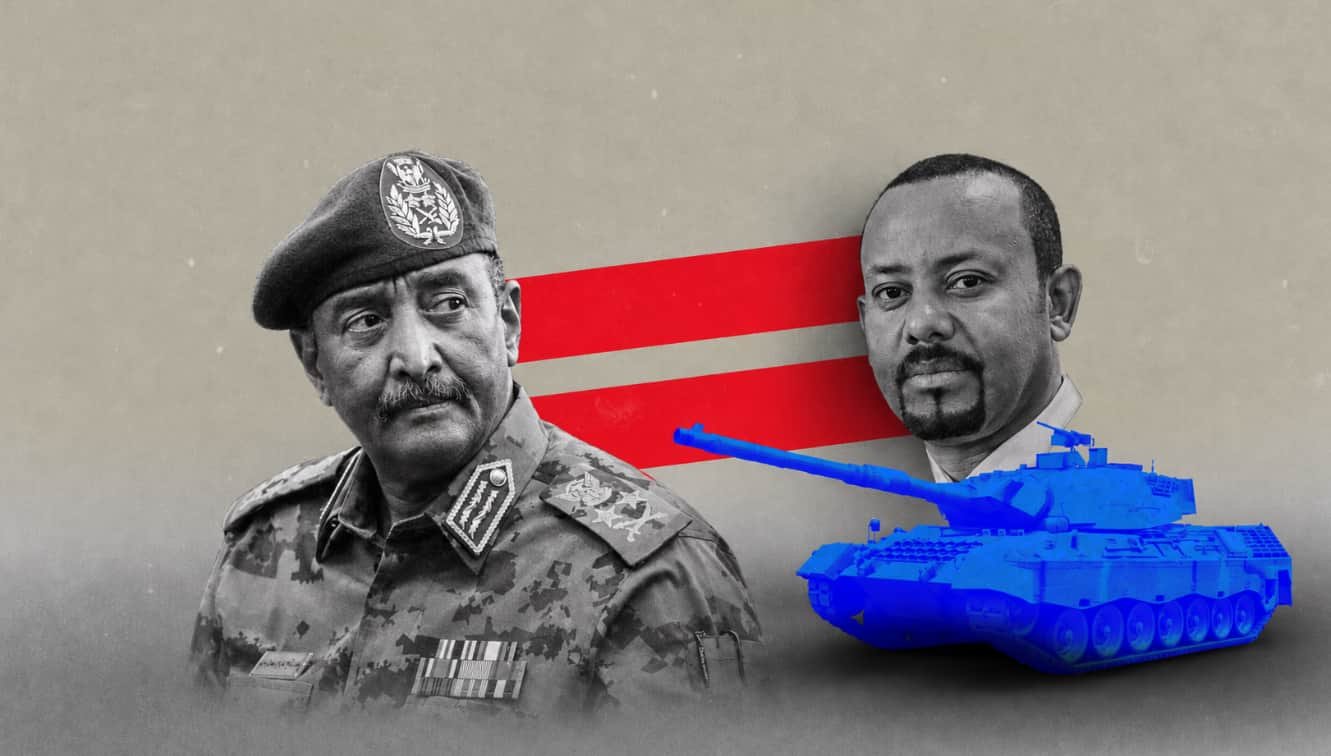
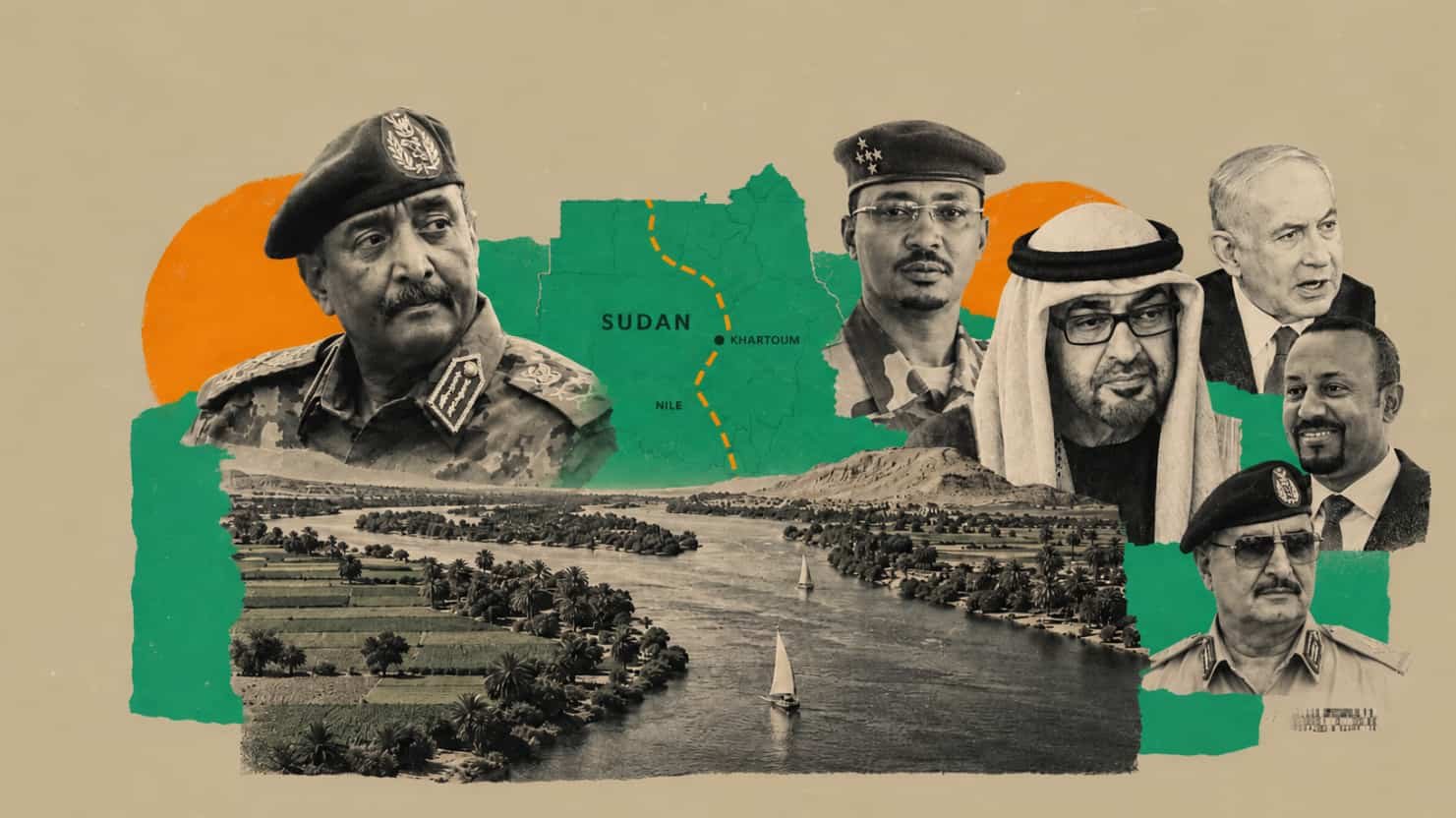
One of the most striking sections of the interview is the exposure of the external network behind the RSF. Al-Atta says the army has obtained satellite imagery and intelligence showing RSF drones taking off toward Sudanese territory from several Ethiopian airports, including Asosa; that devices recovered from downed drones revealed their launch points; and that correspondence with manufacturing countries confirmed the aircraft were purchased by the armies of regional states allied with the RSF and Ethiopia. He recounts that a combat convoy of 250 to 300 vehicles coming from Libya through Chad was destroyed at the Sudanese border line, and that officials in Chad and Libya were warned repeatedly, to no avail. His reading of Ethiopia's intent is strategic: he argues that Prime Minister Abiy Ahmed's government has designs on the fertile farmland stretching from al-Fashaga to Damazin and, ultimately, on access to the Red Sea, treating Sudan's current circumstances as an opportunity. The mercenary inventory is equally striking: he says that once the militia's hard power was exhausted, more than 40,000 fighters were brought in from South Sudan, tens of thousands from Chad, Libya, Ethiopia, and West Africa, roughly two thousand from Colombia and Ukraine, along with remnants of Wagner. Against this backdrop, the army's definition of the war as national resistance to an attempted colonization stands not as rhetorical excess but as a frame derived from the battlefield.
The transparency test: come and investigate
His response to the chemical weapons allegations contains a challenge rarely seen in propaganda wars. Al-Atta recounts that at the alleged time and place, in Mogran, he himself was stationed less than 600 meters from the supposed point of use, and that not a single case of exposure was recorded among the densely populated Tuti Island nearby, the general command, or the thousands of troops in the area. He then turns the question around: the West, watching everything through its satellites, already knows the army used no chemical weapons. But the stronger move is this: we have no objection whatsoever to an international commission of inquiry visiting Sudan. Recalling the invasion of Iraq on the pretext of weapons of mass destruction, he adds that even falsified reports eventually collapse. Armies with something to hide do not invite international inspectors onto their soil.
A documented answer to the Islamism charge
His reply to the accusation that the army is controlled by the Islamic Movement also proceeds on factual ground. He recalls that it was the army itself that arrested the Islamist leaders after the revolution and put them in prison; that these figures were behind bars before the Forces of Freedom and Change came to power; that the man who broke open the prisons and released them when the war erupted was Hemedti; and that Bashir and the symbols of his regime remain in prison to this day. He then turns the mirror: the deputy head of the Islamic Movement serves as a commander in the RSF, and Hemedti and his brother are members of the movement's Shura Council. Beyond the charge rebounding on its authors, the standing fact is this: the party that has actually kept the old regime in prison is the army.
The postwar vision: not tutelage but a term-limited trust
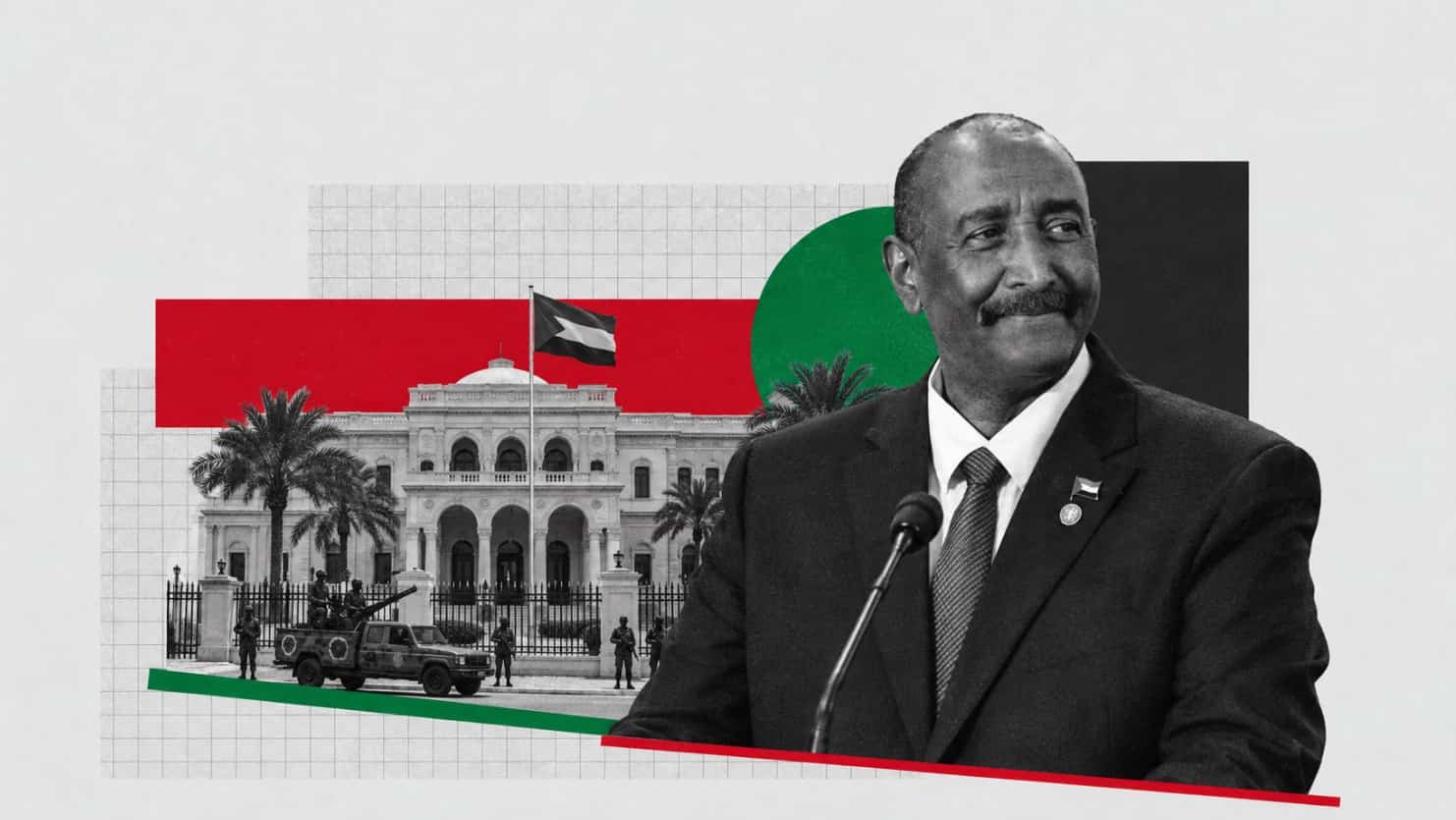
The political architecture at the heart of the interview is built on this stage. "We fear for our country's collapse; we fear for the very entity of the state," says al-Atta, diagnosing that thirty years of Islamic Movement rule left the political parties weak and fragile, and that many party leaders' foreign ties outweigh their attachment to the homeland. His prescription follows: the commander-in-chief, whatever his name, a phrase that deliberately detaches the model from any single individual, should remain head of state for three or four electoral cycles, while parliamentary elections produce a government wielding full authority over the executive apparatus. He stresses that the army is not against democracy, that democracy means elections, points to the civilian prime minister currently in office as evidence, and applies the logic to himself: "When I reach retirement age I will be a civilian; does the law bar me from any position of governance?" Nor does he conceal that an even more time-bound variant is under discussion within the command, under which the commander would head the state for the first cycle only, then retire and contest the following election as a civilian candidate. This is not the language of open-ended tutelage; it is the language of a trust with a stated number, a described end, and a plurality of views debated within the institution itself.
The intended recipient of that trust is also clear: the youth. Al-Atta recounts hosting, days earlier at his home, the young people of the December Revolution, including resistance committees, revolutionaries, and representatives from the capital's seven localities and all the regions. He relates that President Burhan joined the gathering unannounced and made his statement rejecting the calls for his candidacy there. "Burhan is not clinging to power," al-Atta says, "but we will compel him," until the parties become genuinely national parties, until strong new youth parties whose agenda is the homeland are founded, and until these young people, brought into the administration of power to gain experience, reach the maturity to receive the handover. His judgment that the leadership worthy of the December Revolution is not the current party elite but the patriotic youth who organized it shows the design is meant not to postpone democracy but to raise its genuine bearers.
The regional architecture: the Türkiye, Egypt, Saudi Arabia line
The war, in al-Atta's words, separated friends from enemies: he names Egypt, Eritrea, Saudi Arabia, Qatar, Türkiye, and Algeria as friendly and brotherly countries that stood by Sudan in its difficult hour. The balance sheet of his Ankara visit is especially notable: extended sessions with his Turkish counterpart and the defense minister; the development of partnership in training; the study of economic and strategic partnerships across all fields; and, beyond that, the framing of economic integration as the first stage of a joint defense agreement. Al-Atta says the participation of pivotal countries like Sudan in the Saudi-initiated security architecture for the Gulf of Aden, Bab el-Mandeb, and the Red Sea, and in the growing Türkiye, Saudi Arabia, Pakistan axis, would add weight and effectiveness to the alliance. He describes the relationship with Egypt as flowing like the Nile between the two countries, and recounts that the border friction involving gold miners took place entirely on Egyptian soil, carried out by elements acting without orders from their command, and was resolved through coordination between the two states, with the force in the area replaced. It is a textbook example of how mature states manage crises.
A command that has paid the price itself
The most human, and perhaps most persuasive, section of the interview is saved for the end. On the third day of the war, the RSF raided his family's homes in Khartoum and took his younger brother captive along with four relatives; his cousin, an army captain, was martyred in captivity. His brother is still held today in a prison in Nyala. A month later, the militia offered a trade: his brother in exchange for four RSF officers. Al-Atta's answer weighs more than any political claim in this interview: release all the army personnel you hold in exchange for your four officers. The trade never happened; his brother remained inside. His reasoning is one sentence: "My brother is neither dearer nor more precious than the youth of Sudan." A chief of staff who, while recalling that 43,000 young men were taken captive in Khartoum during the war, refuses to grant privilege to his own blood is himself the proof that placing the state above personal interest is not mere talk.
The Soldier's Case Rests
Whether the timetable holds will be decided by the war, the parties, and the Sudanese people. But the picture that emerges from the interview as a whole is coherent: a command that holds the momentum on the ground, documents foreign interference, opens its doors to international investigation, keeps the old regime in prison, hosts the youth in its homes and pledges to share power with them, and has paid the price with its own family. Al-Atta's core claim, that a state must first survive in order to democratize, and that the army that held it together has earned the right to carry the trust until it is handed to its true owners, is not one that Sudan's circumstances make easy to dismiss.