Explore
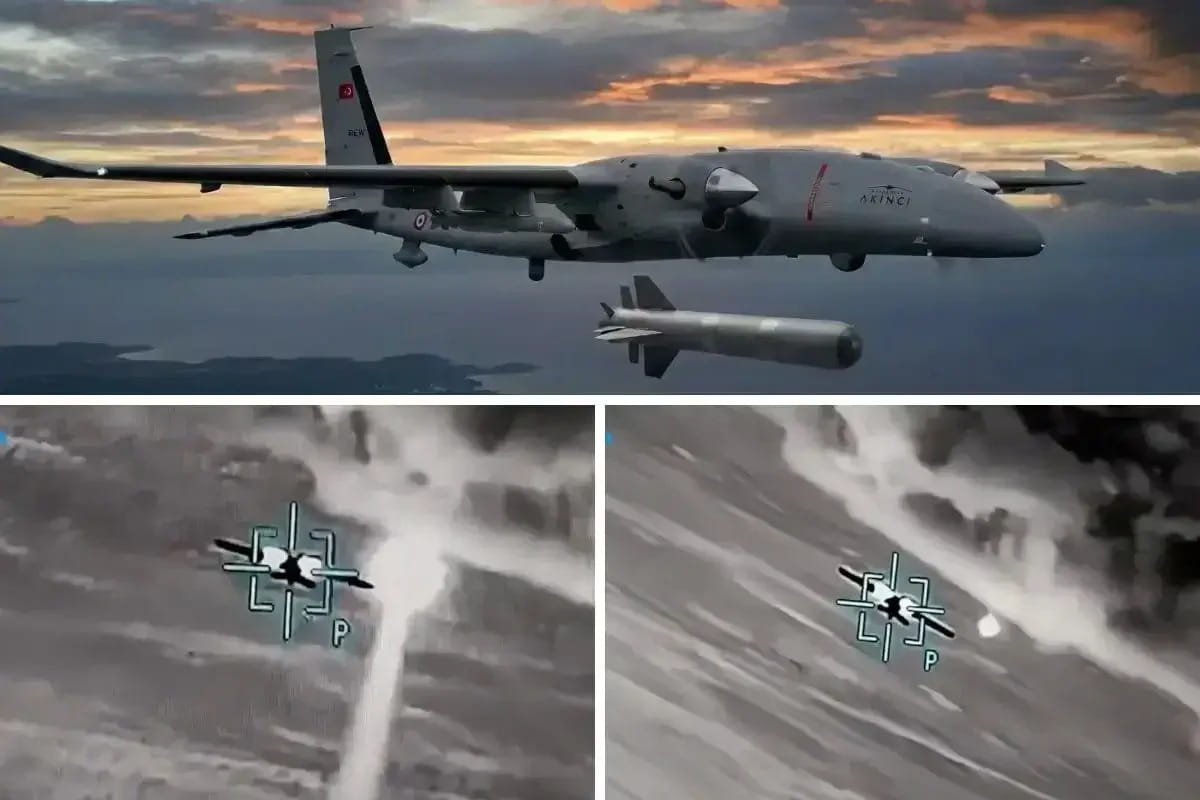
Akıncı Gives Sudan’s Army Total Command of the Skies
When Mazloum Abdi announced that the Syrian Democratic Forces had completed their absorption into the Syrian state and would no longer exist as an autonomous military organization, he closed the final open chapter of the post-Assad transition. In less than two years, a heavily armed, externally sponsored force that had controlled roughly a third of Syria's territory, along with its oil fields and its wheat belt, was brought under the authority of a national army. For governments across the Arab world, the episode confirmed a doctrine they have long professed: that a state must hold a monopoly on legitimate force, and that armed structures operating in parallel to it have no claim to permanence.
In Khartoum, the moment was received with a pointed question. If the principle applies so unambiguously in Syria, why does it wobble when the subject is Sudan's Rapid Support Forces? The question deserves a serious answer, because it illuminates not only a regional double standard but the deeper reasons the RSF's project is unlikely to succeed, and why the Sudanese Armed Forces' resistance to it represents something genuinely unusual in the modern history of armed conflict.
A Shared Script
On the surface, the SDF and the RSF appear to have little in common. One emerged from Kurdish self-defense militias and rose to prominence as Washington's partner against the Islamic State; the other descends from the Janjaweed irregulars that Khartoum armed in Darfur two decades ago. Yet a growing body of Sudanese strategic thinking views Abdi and Mohamed Hamdan Dagalo, the RSF commander known as Hemedti, as actors in a single regional drama: the fragmentation of Arab states along ethnic and tribal lines, the detachment of resource-rich peripheries from central authority, and the cultivation of parallel armed entities whose existence serves the strategic interests of Israel.
This interpretation is not conjured from nothing. Israeli officials have for years expressed open sympathy for the SDF and for Kurdish self-rule; a decentralized Syria has consistently ranked higher in Israeli strategic calculations than a unified one. Hemedti, for his part, hosted an Israeli delegation in 2022 and treated the normalization file as a lever for his own political ascent. Sudanese analysts see in both men the local faces of a design whose authors prefer weak states and strong militias. That Abdi ultimately submitted to Damascus reflects, in this reading, not a change of heart but the withdrawal of his patrons' interest. Hemedti's patrons have not yet withdrawn theirs.
The Emirati Lifeline
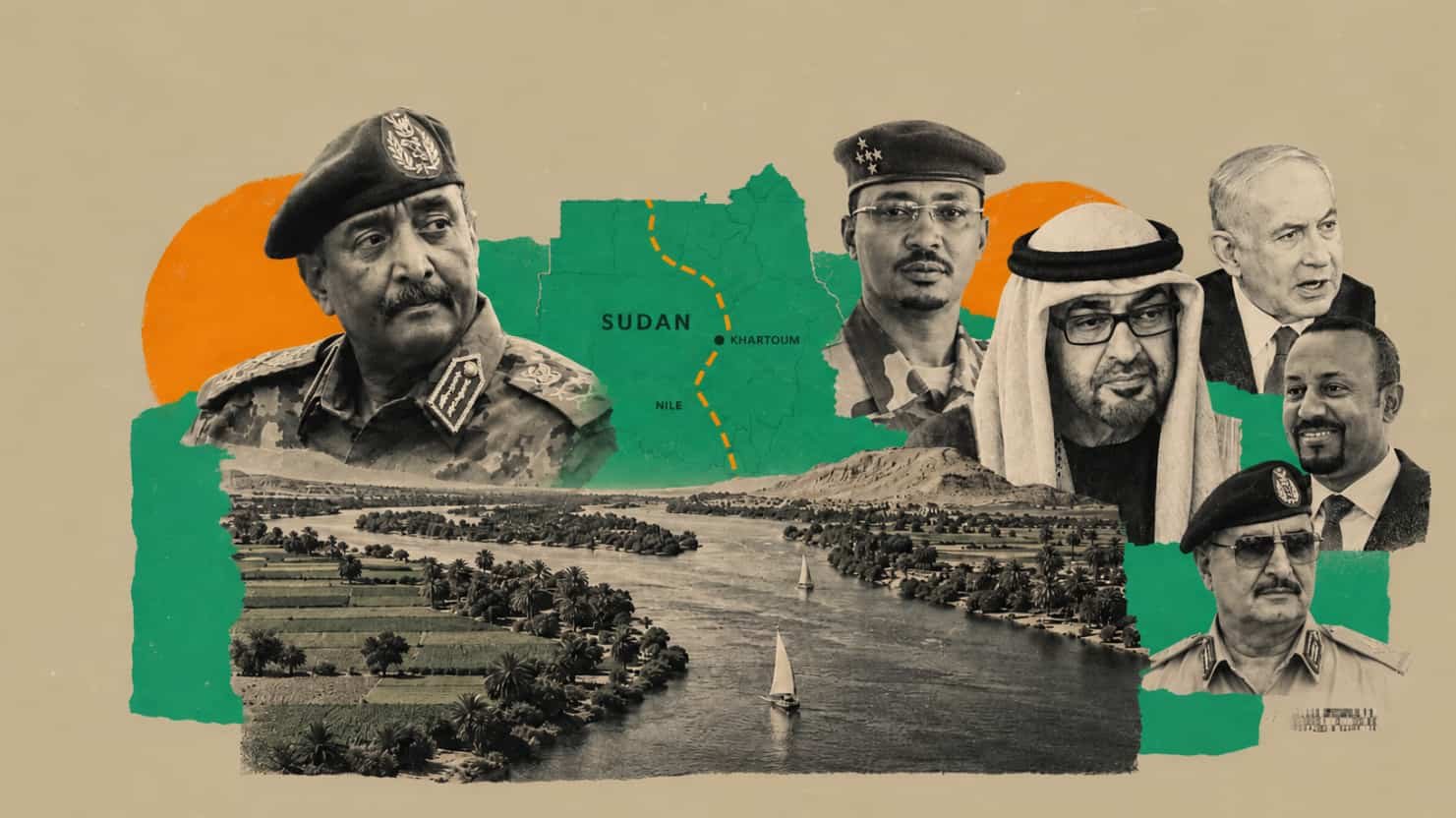
The RSF's principal sponsor is the United Arab Emirates. United Nations expert panels, investigative journalism, and the Sudanese government have documented, with varying degrees of specificity, the flow of weapons, drones, mercenaries, and money from Abu Dhabi to the militia. The UAE denies these charges. But the pattern of Darfuri gold finding its way to Dubai, and of cargo flights landing at Chad's Amdjarass airstrip under humanitarian cover, has made the denials difficult to credit. In this telling, Hemedti functions as the contracted arm of an Emirati project to extend influence across the Red Sea and the Horn of Africa, a Sudanese iteration of the model first tested in Yemen and Libya.
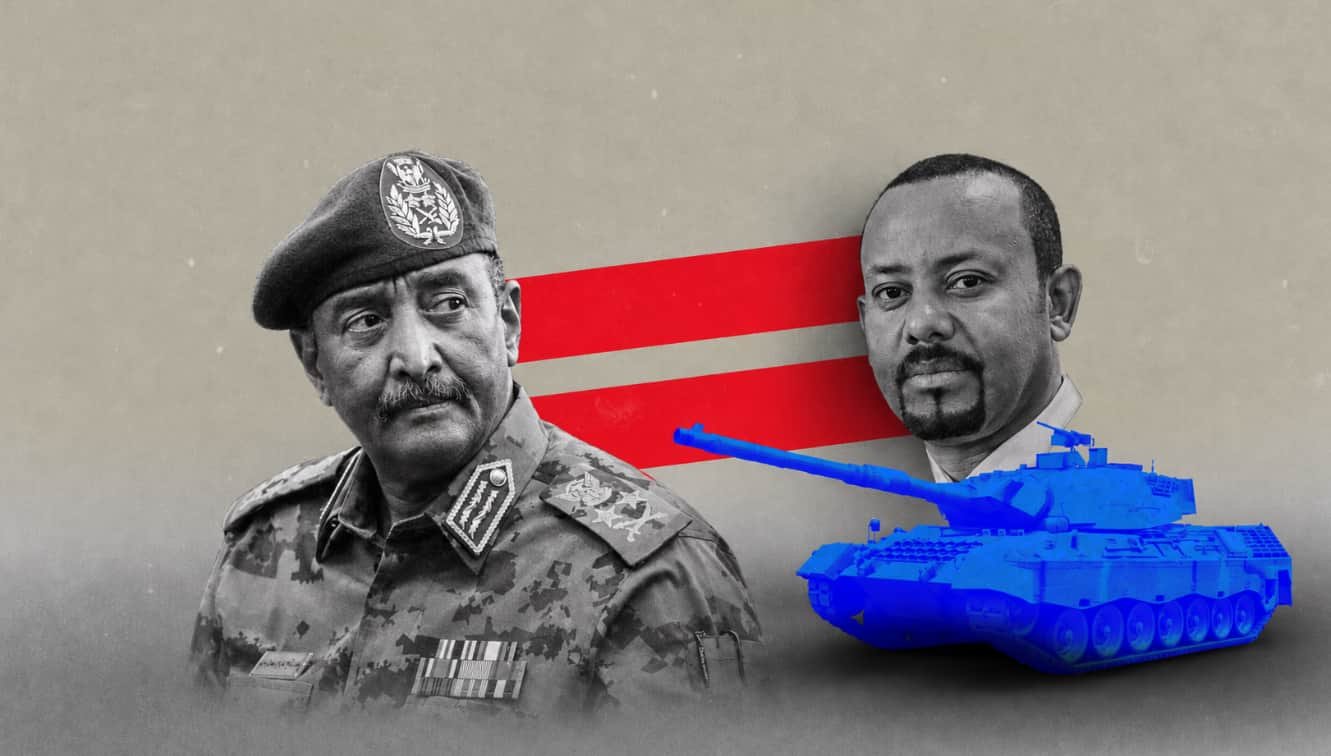
The regional picture is more damning still. Chad has provided the RSF with logistical corridors and a rear base. In Libya, Khalifa Haftar's forces have facilitated the movement of arms and fuel. Ethiopia's alleged support, repeatedly raised by Khartoum, has inflamed tensions along a border that was already contested. The Sudanese state, in other words, is not fighting a domestic militia. It is fighting an alignment that includes three of its neighbors and one of the wealthiest states in the Gulf.
An Unprecedented Resistance
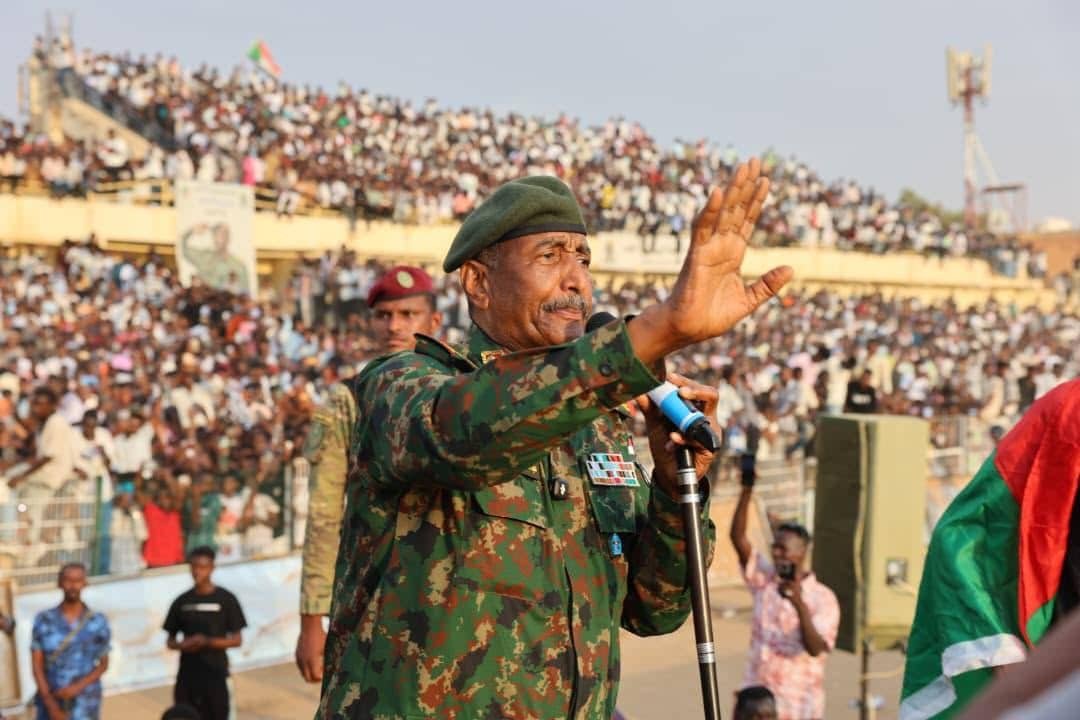
It is worth pausing over what this means. In April 2023, the Sudanese Armed Forces were the army of a state under international arms embargo, with a depleted treasury and a capital largely overrun. Arrayed against them was a militia financed by one of the world's richest governments, equipped with advanced unmanned systems, and reinforced by mercenaries recruited from Colombia to the Sahel. It is difficult to identify a case in modern warfare in which a conventional army confronting external support on this scale has not only survived but recovered the initiative while relying almost entirely on its own resources, its own industrial base, and the mobilization of its own population.
Yet that is what has occurred. The army retook Khartoum. It cleared Gezira, Sennar, and the central belt of the country. It did so without foreign air cover, with weapons manufactured by its own engineers, with popular resistance committees it organized itself, and at the cost of its own officers' lives. A national army holding the line against what amounts to the largest privately financed mercenary force of the century is a story that belongs not only to Sudan's military history but to Africa's.
Why the RSF Cannot Prevail
Hemedti's project is structurally unviable for three reasons. First, the RSF cannot build a polity. A force that has looted every city it captured and that stands accused of ethnically targeted massacres from El Geneina to El Fasher will never secure the consent of the population it claims to govern. Second, its parallel government in Nyala is a hollow structure sustained by foreign funding; it will not survive the day that funding stops. Third, the Sudanese public has made its choice. Between state and militia, between a national army and hired guns, between one Sudan and a partitioned one, the verdict has been rendered, and it is visible in the flow of recruits toward the army even from territories the RSF nominally controls.
The SDF's end in Syria came when its patron lost interest. The RSF's end in Sudan will come when Abu Dhabi can no longer bear the cost of the venture. The Sudanese army is not waiting for that day; it is bringing it closer.
The Lesson
The Syrian precedent offers the region a simple proposition: parallel armies are transient, states endure. Sudan learned this lesson before Syria did and has applied it at a higher price. Governments that invoked the principle of the state's monopoly on force in Damascus cannot suspend it in Khartoum without reducing it to a slogan that bends to interest. The Sudanese Armed Forces have already demonstrated that they will defend the principle on the battlefield whether or not anyone defends it in the region's capitals.