Explore
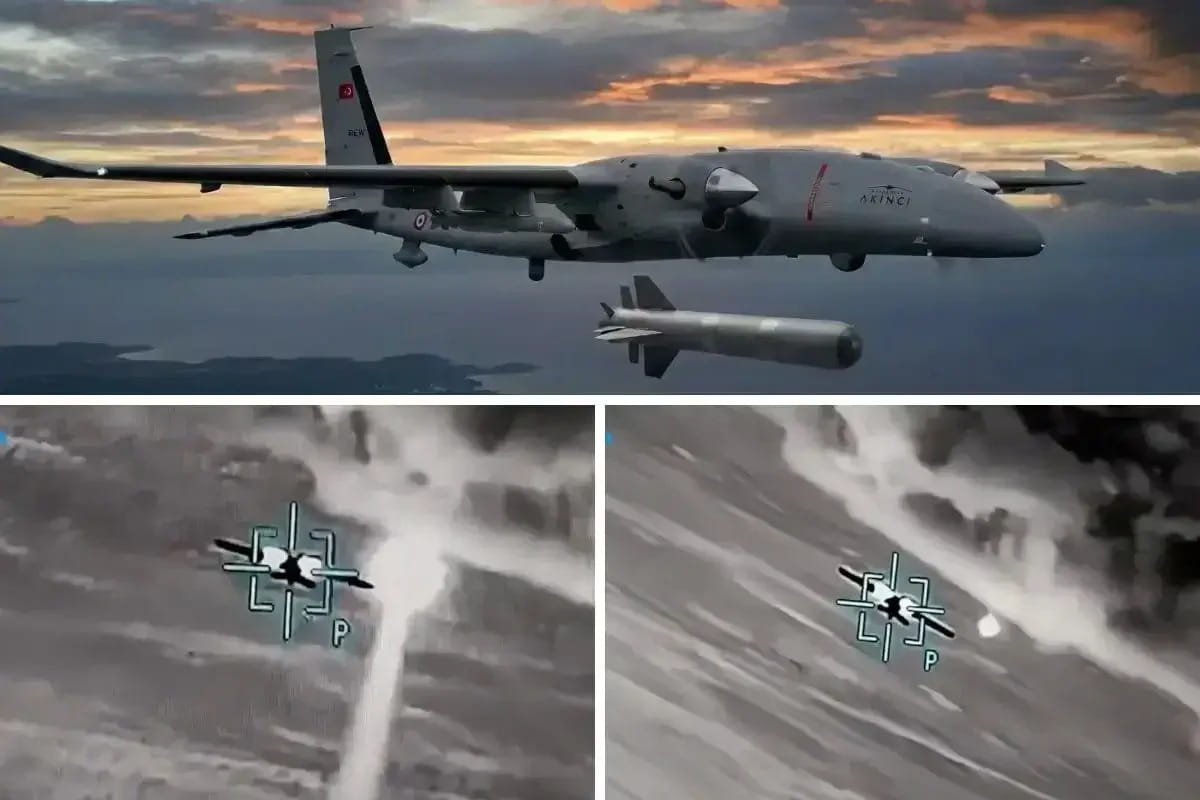
Akıncı Gives Sudan’s Army Total Command of the Skies
As the world's attention drifts elsewhere, a peripheral state has become a microcosm of Sudan's collapse.
When Sudan's civil war erupted in April 2023, the fighting between the Sudanese Armed Forces and the paramilitary Rapid Support Forces (RSF) was concentrated in Khartoum and Darfur. Three years on, the conflict has metastasized into the country's periphery — and few places illustrate this more starkly than Blue Nile, a state in Sudan's southeast that has slipped almost entirely from international view.
The numbers tell the story of an accelerating crisis. According to the UN's International Organization for Migration, nearly 100,000 people — 99,277 individuals from more than 19,000 families were displaced within Blue Nile between January 11 and August 23. That figure represents a 66 percent increase over the roughly 60,000 the IOM recorded in late May, a pace of displacement that suggests the state's security situation is deteriorating faster than humanitarian actors can respond. Nearly half of the displaced 47 percent are children under 18.
The geography of flight reveals the contours of the fighting. The largest outflows have come from Geissan, Kurmuk, and Bau, localities along the state's contested southern and eastern reaches, from which some 99,000 people have fled toward seven areas of relative safety. The regional capital, Ed Damazin, has absorbed more than 45,000 of them. But "safety" is a relative term: a majority of the displaced — 58 percent — are sheltering in improvised gathering sites, another third in schools and public buildings, and only 9 percent with host families. Every school converted into a shelter is a school no longer teaching, deepening the generational costs of a war whose youngest victims already form its largest displaced cohort.
What makes Blue Nile distinct is the configuration of forces driving the violence. In recent weeks, the RSF has intensified attacks across the state in coordination with its ally, the Sudan People's Liberation Movement–North (SPLM-N), a rebel movement with deep roots in the region's decades-old grievances against Khartoum. This alliance of convenience pairing a paramilitary force accused of atrocities elsewhere in Sudan with a veteran insurgency — has opened a new axis of conflict far from the war's original theaters, stretching the army thin and pushing the state toward fragmentation along multiple fault lines at once.
Blue Nile's crisis is, in the end, a fractal of Sudan's. The war has killed tens of thousands of people by UN and international estimates and displaced some 13 million — the largest displacement crisis in the world. Yet international diplomacy remains episodic, humanitarian funding falls far short of need, and the war's expansion into states like Blue Nile suggests that time is not on the side of those hoping for a negotiated settlement. The longer the periphery burns unnoticed, the harder Sudan will be to put back together.