
Opinion
The Fall of Mekelle Is Not the End of Ethiopia's War
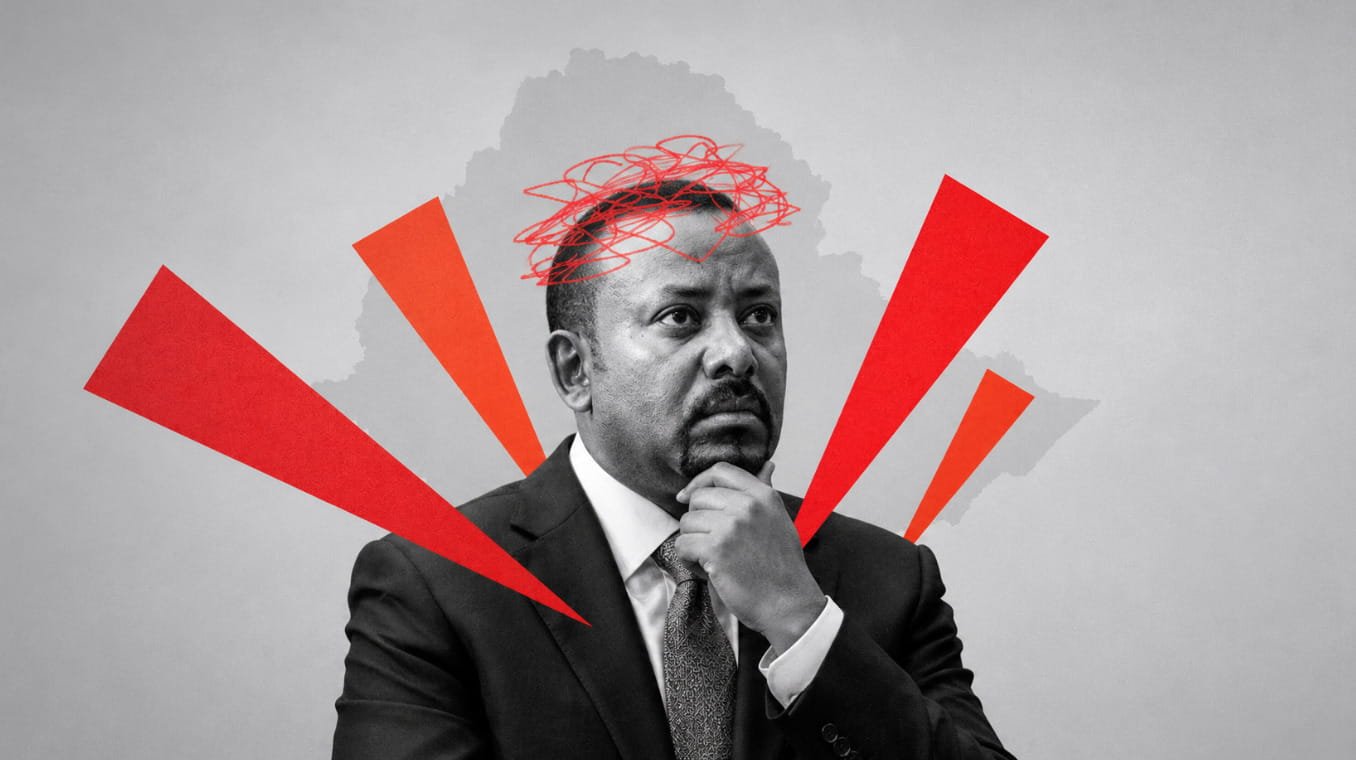
Nearly four years after Ethiopia's federal government and Tigrayan forces signed the Pretoria Agreement, the guns that once tore through the north have largely fallen silent. Yet a close reading of what has happened since November 2022 suggests the war did not so much end as change shape. The deal survives because everyone finds it convenient to keep it alive. Its core promises remain unfulfilled because everyone finds that convenient too.
The Pretoria text was clear enough. Tigrayan fighters would lay down their arms. Eritrean troops and other forces outside the national army would leave Tigray. Constitutional order would be restored, and disputed territory would be settled through legal channels rather than by force of occupation. Some of this happened: heavy fighting stopped, federal services returned, and an interim administration took office in Mekelle.
What did not happen is the part that matters most. Western Tigray remains under Amhara control. Foreign and irregular forces have not fully pulled out. Tigrayan disarmament is partial at best. Hundreds of thousands of people are still displaced, and the region has been pushed to the margins of national politics. Rather than a broken peace, this looks like a consolidated conflict, one that has settled into a lower, more durable register.
The port that shapes everything
The reason lies far from Tigray's front lines, on Eritrea's southern coast. Ethiopia lost its coastline when Eritrea became independent in 1993 and has depended on Djibouti for the bulk of its trade since the 1998–2000 border war cut it off from the Eritrean port of Assab. Prime Minister Abiy Ahmed has repeatedly framed this as an intolerable condition for a nation of 150 million, and official rhetoric slides between wanting commercial access and asserting a historical entitlement to Assab itself.
In Asmara, that language lands as a threat. Eritrea's coastline is the concrete result of a 30-year independence struggle, and any Ethiopian talk of sea access as a "right" is heard as a claim on sovereign territory. Inside Ethiopia, meanwhile, the Tigray People's Liberation Front carries an old political burden: it led the transitional government that accepted the 1993 referendum, and nationalists have never forgiven it for letting the coast go.
Port access, border security and armed opposition have thus fused into a single confrontation, and Tigray is where all three converge. It shares a border with Eritrea, it hosts forces that have not disarmed, and a large slice of its territory sits under the control of a rival region's militias.
An alliance nobody will name
The wartime partnership between Addis Ababa and Asmara did not survive the peace. Eritrea was excluded from the Pretoria talks, and the alignment that followed has been striking: the Eritrean government and the TPLF, sworn enemies for a generation, now share an interest in checking the federal government. No pact has been declared, and the TPLF denies coordinating with Asmara. But reports of contact, and federal accusations of joint military planning, point to a tactical understanding that locals in both places call by a Tigrigna word, Tsimdo.
The logic is simple. A federal government stretched across insurgencies in Amhara, Oromia and Tigray has fewer soldiers, less money and less bandwidth to press Eritrea over Assab. Asmara does not need a formal ally; it only needs Addis Ababa distracted.
The federal government reads the same board in reverse. By casting the TPLF as Eritrea's proxy, it can frame Tigrayan resistance to disarmament as a foreign-backed threat, justify its own foot-dragging on Pretoria, and rally the public around sovereignty. That framing also builds a two-step case: neutralise the "internal partner" first, then turn the same sovereignty argument outward toward Assab, where a historical claim can dress up coercion as recovery. None of this proves a military plan exists. It shows how one narrative can serve two targets.
For the TPLF, hostility between its two larger neighbours is leverage. The mere possibility of Eritrean backing gives Mekelle a card to play in demanding that Addis Ababa honour the agreement.
Why nobody moves first
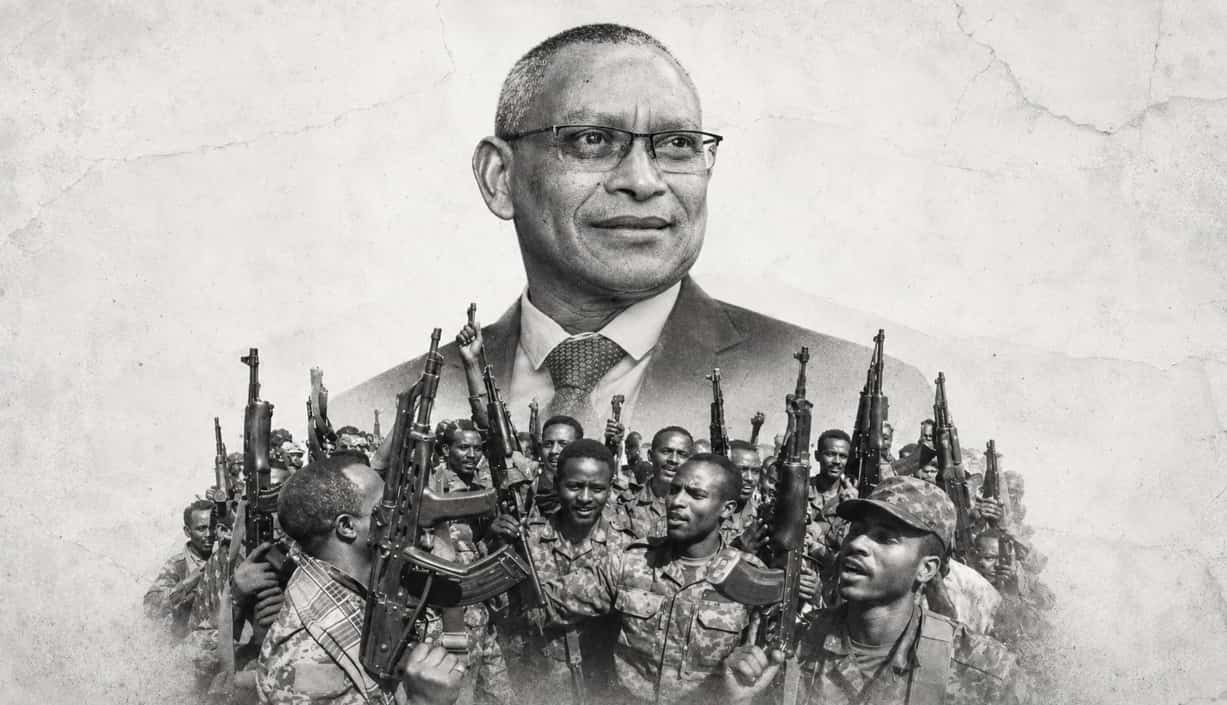
The Pretoria implementation plan tied Tigrayan disarmament to the withdrawal of foreign and irregular forces: as the threat receded, the weapons would be handed over. That sequence has stalled. Tigrayan commanders ask why they should disarm while Western Tigray remains occupied, and they know their arsenal is their only insurance if the Ethiopia–Eritrea standoff turns into war.
Federal authorities, for their part, appear reluctant to hand a strategically sensitive territory back to a fractured Tigrayan leadership, and they know that doing so would mean a collision with the Amhara political and military actors whose support they still need. Each side treats its own obligation as a security loss and insists the other go first.
The people paying for this deadlock are the more than 760,000 Tigrayans who remain displaced from Western Tigray, stuck inside a contest over who governs the land they fled. Exclusion compounds the problem: Tigray sat out the June 1, 2026 national election, leaving its leaders without a parliamentary channel and therefore with every incentive to keep their military one. Addis Ababa then cites that same armed capacity as proof the region is not ready to rejoin national politics.
Two problems, one solution
Breaking the cycle requires separating the disputes that have been allowed to merge. Ethiopia and Eritrea need a direct, peaceful process on Assab, covering port access, sovereignty and the accusations of proxy warfare, because the Pretoria Agreement was never designed to carry that weight. In Tigray, implementation needs a verifiable sequence: foreign and irregular forces out, Western Tigray back under Tigrayan administration, the displaced returned, weapons surrendered, and the region restored to federal politics.
Each step shrinks the space the Red Sea rivalry has opened. Eritrea would have less use for Tigray as a pressure valve. Addis Ababa would have less reason to treat Tigrayan grievances as foreign subversion. Tigrayan forces would have less reason to look to Asmara for protection. Peace in the north will hold only when implementing the deal is worth more to its signatories than the uncertainty they have learned to live with.
Shipping traffic through the Strait of Hormuz continues to decline as regional tensions rise, while diplomatic efforts struggle to produce a breakthrough.