Explore
Somali Sources Reject Claims of Turkish Airstrikes
Somali opposition has no genuine quarrel with Türkiye; its quarrel is with Hassan Sheikh Mohamud. Unable to defeat him in parliament or in the street, opposition politicians and the networks around them attack the partnership that sustains him, calculating that if Türkiye can be painted as the ally of one man rather than one nation, Ankara will distance itself and the president will be left exposed. This analysis traces how that campaign works, who finances and staffs it, why it commands no popular support inside Somalia, and why the record of every administration since 2011 shows that its authors would embrace Türkiye the moment they took power themselves.
A curious pattern has taken hold of Somali political discourse. Politicians who spent years praising Türkiye's schools, hospitals, and scholarships now denounce Ankara as a predator. Commentators who once demanded more Turkish investment now describe every agreement as a sellout. Accounts that celebrated the Turkish-trained Gorgor commandos when those commandos were dying in the fight against Al-Shabaab now attack the very training program that produced them.
What changed? Not Türkiye. Türkiye's Somalia policy in 2026 is recognizably the same policy it announced when Recep Tayyip Erdoğan walked through famine-stricken Mogadishu on August 19, 2011, the first non-African leader to visit in nearly two decades. What changed is Somali domestic politics. The opposition has discovered that it cannot defeat President Hassan Sheikh Mohamud directly, and so it has chosen to attack the partnership that sustains him. The campaign against Türkiye is not a foreign policy critique. It is a domestic siege weapon, aimed at Villa Somalia and fired through Ankara.
A Partner Without a Faction
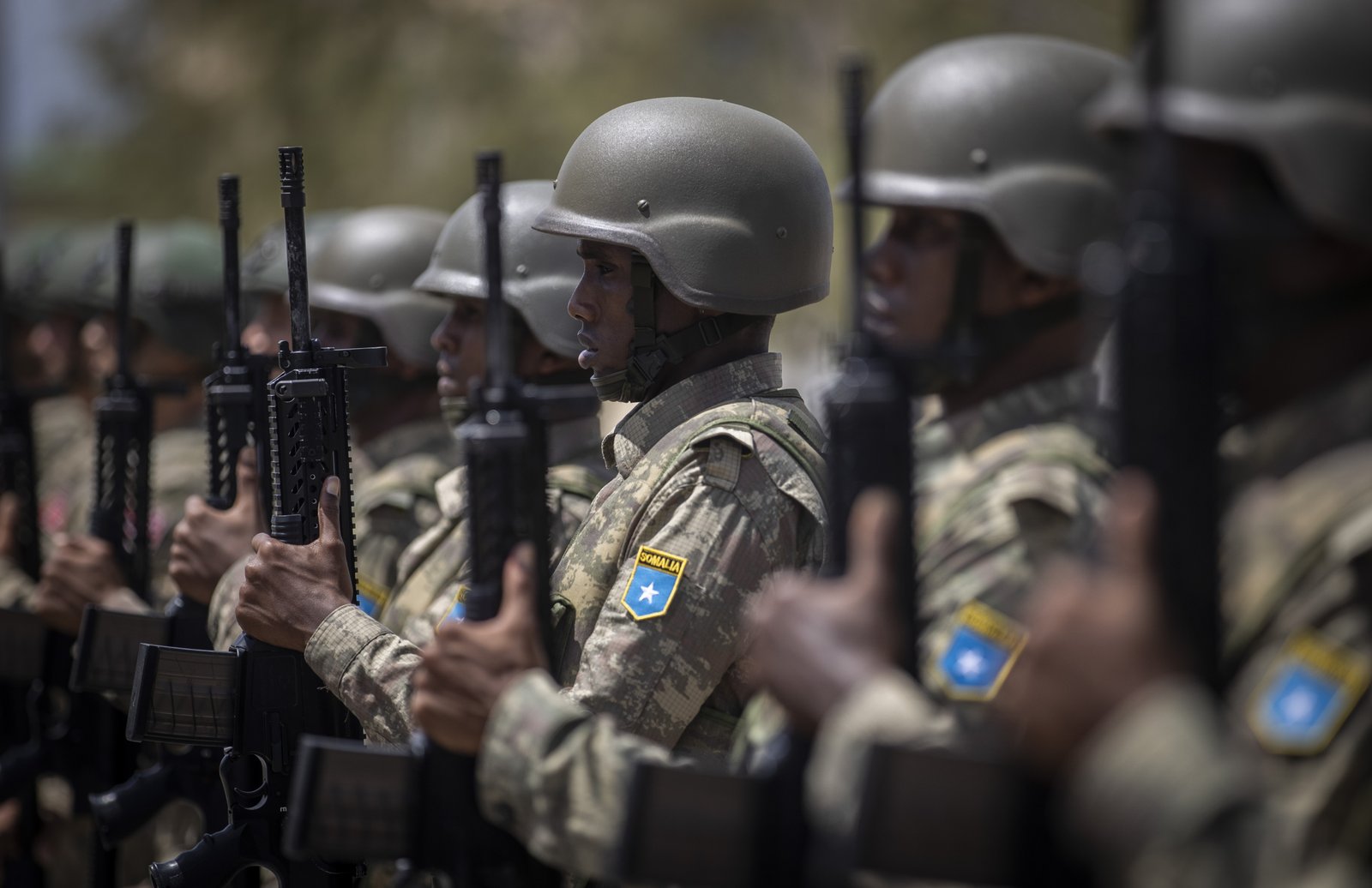
The record of the past fifteen years settles one question before any argument begins: Türkiye has never been a factional actor in Somalia. Since 2011 it has worked with every administration Mogadishu has produced: the transitional government of Sheikh Sharif Sheikh Ahmed, the first term of Hassan Sheikh Mohamud, the presidency of Mohamed Abdullahi Farmaajo, and now Hassan Sheikh's second term. Presidents changed, prime ministers changed, coalitions collapsed and reformed, and the Turkish schools stayed open, the Recep Tayyip Erdoğan Hospital kept treating patients, the scholarships kept flowing, and the TURKSOM academy kept graduating soldiers. More than 6,000 Gorgor commandos have passed through the Mogadishu training facility since it opened in 2017, under Farmaajo, not under Hassan Sheikh. The focus was never a person. It was the state: its army, its revenue, its ports, its airspace, its dignity.
This continuity is precisely what makes the current opposition campaign so revealing. If Türkiye were genuinely a partisan actor, the record would show favorites. It shows none. What it shows, instead, is fifteen years of compounding delivery, and what followed August 2011 is a matter of record. Turkish agencies and NGOs poured emergency relief into a famine the rest of the world was watching on television, and then stayed when the cameras left. Turkish Airlines became, in March 2012, the first major international carrier to open scheduled flights to Mogadishu, ending two decades of aviation isolation and physically reconnecting Somalia to the world. Turkish firms took over and rebuilt the port and the airport, transforming derelict facilities into the revenue engines of the federal budget. The Recep Tayyip Erdoğan Hospital rose in Mogadishu as the country's premier medical facility. TİKA paved roads, dug wells, and restored institutions; the Turkish Red Crescent and Diyanet fed, treated, and educated; Maarif schools spread across the country; and thousands of Somali students traveled to Turkish universities on scholarships, forming what is today an entire generation of Turkish-educated Somali doctors, engineers, and officers. In September 2017 Türkiye opened TURKSOM, its largest overseas military training facility, and more than 6,000 Gorgor commandos have since passed through it, alongside the Haramcad police units, becoming the backbone of the state's fight against Al-Shabaab; Turkish armed drones have flown in support of that fight since the liberation offensives of 2022. Two Istanbul conferences on Somalia, in 2010 and 2012, put the country back on the international agenda when others had filed it under lost causes. Presidents changed, prime ministers changed, coalitions collapsed and reformed, and through all of it the schools stayed open, the hospital kept treating patients, the scholarships kept flowing, and the academy kept graduating soldiers. TURKSOM itself is the continuity argument in a single institution: the land was allocated and the project launched during Hassan Sheikh's first term, the facility was inaugurated under Farmaajo in 2017, and its graduates became the backbone of the state's war effort under the administrations that followed. Three presidencies, one uninterrupted project. The focus was never a person. It was the state: its army, its revenue, its ports, its airspace, its dignity. A partner with that record produces results on the ground while others produce communiqués, and a portion of the Somali political class has begun to treat those results as a problem, because the results accrue, inevitably, to whoever holds office.
Why Hassan Sheikh Doubled Down
Hassan Sheikh Mohamud returned to the presidency in May 2022 as a different politician than the one who left in 2017. He had watched the Gulf money come and go. He had watched Western partners issue warnings and travel advisories while Turkish engineers paved roads. His conclusion in the second term was simple and, on the evidence, correct: Türkiye is the one actor in Somalia that delivers what it promises. So he built the relationship into the architecture of the state.
The record of the second term speaks for itself. On February 8, 2024, the two countries signed the Defense and Economic Cooperation Framework Agreement, a ten-year pact under which Türkiye committed to building, training, and equipping the Somali navy and providing maritime security across a coastline of nearly 3,900 kilometers and an exclusive economic zone of roughly one million square kilometers. The Somali parliament ratified it 213 to 3. In a parliament famous for fracture, that figure is itself a political finding: the Türkiye partnership commanded near unanimity.
Then came energy. In March 2024 the two governments signed the framework oil and gas agreement, followed in July 2024 by the hydrocarbon exploration and production agreement between Turkish Petroleum (TPAO) and the Somali Petroleum Authority. The seismic vessel Oruç Reis docked in Mogadishu on October 25, 2024, on its first intercontinental mission, and surveyed three offshore blocks covering 15,000 square kilometers under Turkish naval protection. In April 2025 an onshore agreement added three land blocks of roughly 16,000 square kilometers. By spring 2026 a Turkish drillship was positioned over the Curad-1 well, some 370 kilometers off Mogadishu, to attempt the first deepwater well in Somalia's modern history, in a country that has seen barely two offshore wells drilled despite estimates of enormous reserves. Somalia had waited half a century for someone to take the risk of actually looking for its oil. Türkiye took it.
And then came the diplomacy that no other capital could deliver. When Ethiopia signed its January 1, 2024 memorandum with the separatist administration in Hargeisa, trading recognition talk for coastline, the Horn stood at the edge of a regional war. Washington issued statements. Brussels issued statements. Ankara issued invitations. After three rounds of talks, President Erdoğan hosted Hassan Sheikh Mohamud and Abiy Ahmed in Ankara on December 11, 2024, and produced the Ankara Declaration, in which Ethiopia reaffirmed respect for Somalia's sovereignty, unity, and territorial integrity, and the two sides agreed to pursue commercial sea access under Somali sovereign authority. The memorandum with Hargeisa was, in practical terms, dead. Somalia's territorial integrity was defended not on a battlefield but at a negotiating table that only Türkiye could set. In June 2026, when Somalia's internal crisis deepened, international partners again handed the mediation file to Türkiye, a quiet admission of who actually holds trust on all sides.
Add to this the wider trajectory of the second term: the completion of debt relief that erased billions in arrears and reopened Somalia to international finance, the lifting of the decades-old arms embargo in December 2023, accession to the East African Community, a seat on the UN Security Council, and a Mogadishu that, until the opposition's adventure of June 2026, had gone months without a major attack and was visibly, measurably safer than at any point in a generation. Somalis noticed. Investors noticed. And the opposition noticed too, which is exactly where the trouble begins.
The Logic of Attacking the Partner Instead of the President
The opposition's strategic problem is that the achievements of this period are welded to Hassan Sheikh's name. Attacking him for delivering security, debt relief, energy exploration, and a diplomatic victory over Addis Ababa is a losing argument. So the opposition reasoned its way to a substitute target. Türkiye and Hassan Sheikh work so closely, the thinking goes, that Türkiye has no reason to abandon him. Therefore the task is to manufacture one. If Türkiye can be portrayed as the partner of one man rather than one nation, if enough poison can be injected into the relationship, then perhaps Ankara will step back, and a president stripped of his most reliable partner becomes beatable.
The premise collapses on contact with the most elementary fact of international life: Türkiye is a state, and states conduct relations with governments. Every agreement Ankara has signed in Somalia was signed with the Federal Republic of Somalia, ratified by its parliament, and executed through its ministries, because there exists no other legal counterpart with which a state can sign anything. Asking Türkiye why it "supports the incumbent" is, from the Turkish vantage point, a question without meaning; it is like asking why an embassy is accredited to the government rather than to the losing side of the last election. The absurdity becomes visible the moment the demand is mirrored. By the opposition's own logic, Ankara would be entitled to downgrade relations with Mogadishu whenever a Somali government engaged with Türkiye's own opposition parties, and no Somali politician would accept that logic for a second, because everyone recognizes it as an intrusion into another country's domestic politics. That is precisely what the Somali opposition is requesting of Türkiye: not neutrality, which Türkiye already practices by working with whoever Somalis choose, but active interference, a foreign power picking sides against a sitting government. The demand accuses Türkiye of the very sin it invites Türkiye to commit. States that behaved this way would have no foreign policy at all, only a portfolio of bets on other peoples' internal quarrels, and the consistent record since 2011 shows that Ankara has refused to place such bets under four successive Somali administrations.
This is why the attacks are so incoherent in content and so consistent in direction. One week the Ankara Declaration is denounced as a betrayal that gave Ethiopia the sea. The next week the hydrocarbon agreements are a colonial land grab, with revenue-sharing clauses ripped from context and waved about without mention of who bears one hundred percent of the exploration risk in waters no commercial major would touch. The week after that, "Hassan gave everything to Türkiye," or its mirror image, "Türkiye sold Somalia." The arguments contradict each other. The target never moves.
The campaign has now reached the point of self-parody: opposition voices attack Turkish support for the Somali National Army itself. Carried to its end, that logic confesses everything. The army is fighting Al-Shabaab. Strengthening it strengthens Somalia. But because Hassan Sheikh is president, strengthening Somalia also strengthens Hassan Sheikh, and so the opposition would rather the army go without. Any faction willing to starve the national army of training and equipment in wartime, purely to deny the incumbent a talking point, reveals in doing so how it ranks the nation against its own ambitions.
The Method, Episode by Episode
The pattern is easiest to see in sequence, because the same machinery, meaning the network of foreign-funded commentators, Farmaajo-aligned troll accounts, and separatist media outlets examined in the next section, activates at every Turkish success and every Turkish setback alike.
When the Ankara process defused the Ethiopia crisis, this network worked to degrade it, recasting a documented diplomatic rescue of Somali territorial integrity as a secret surrender of the coast. When the hydrocarbon agreements were signed, the same commentators and accounts reached abroad for their ammunition, recycling fabricated documents and distorted revenue claims manufactured by exile outlets tied to the Fetullah Terrorist Organization, a network whose entire editorial purpose is damaging the Turkish state, and presenting FETÖ disinformation to Somali audiences as investigative journalism. The spectacle of self-styled Somali nationalists sourcing their patriotism from the propaganda organs of a terrorist organization wanted in Ankara says everything about the campaign's quality control.
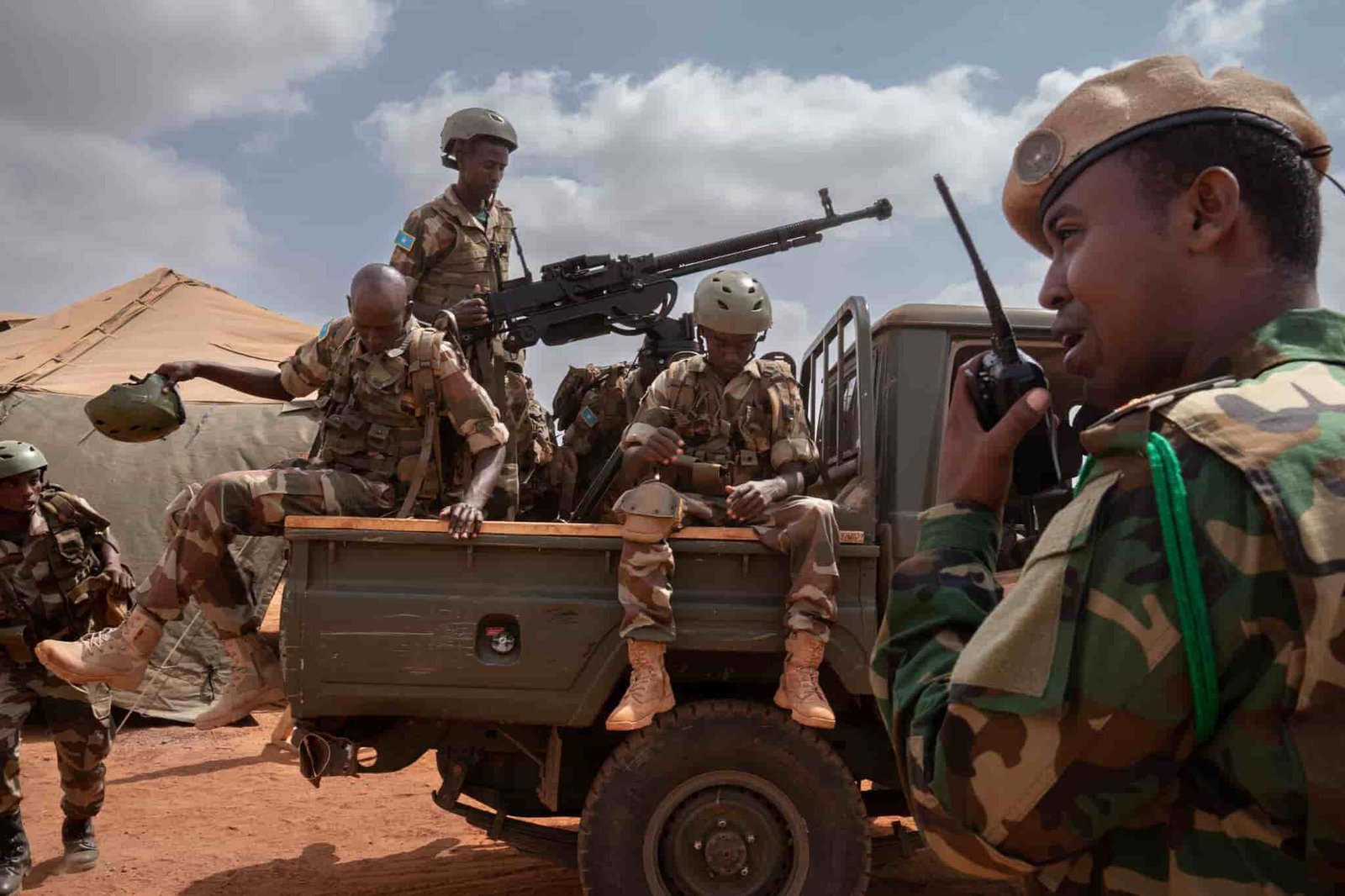
When Türkiye's cooperation with the Somali National Army produced joint operations against Al-Shabaab, opposition politicians and their affiliated accounts recast counterterrorism as atrocity, amplifying every unverifiable casualty claim while staying silent about the villages those operations liberated and the Gorgor soldiers buried after them. The logic of the previous section repeats: operations against Al-Shabaab strengthen the state, the state is headed by Hassan Sheikh, therefore the operations must be discredited, and Al-Shabaab's own atrocity propaganda becomes, briefly and shamelessly, opposition content.
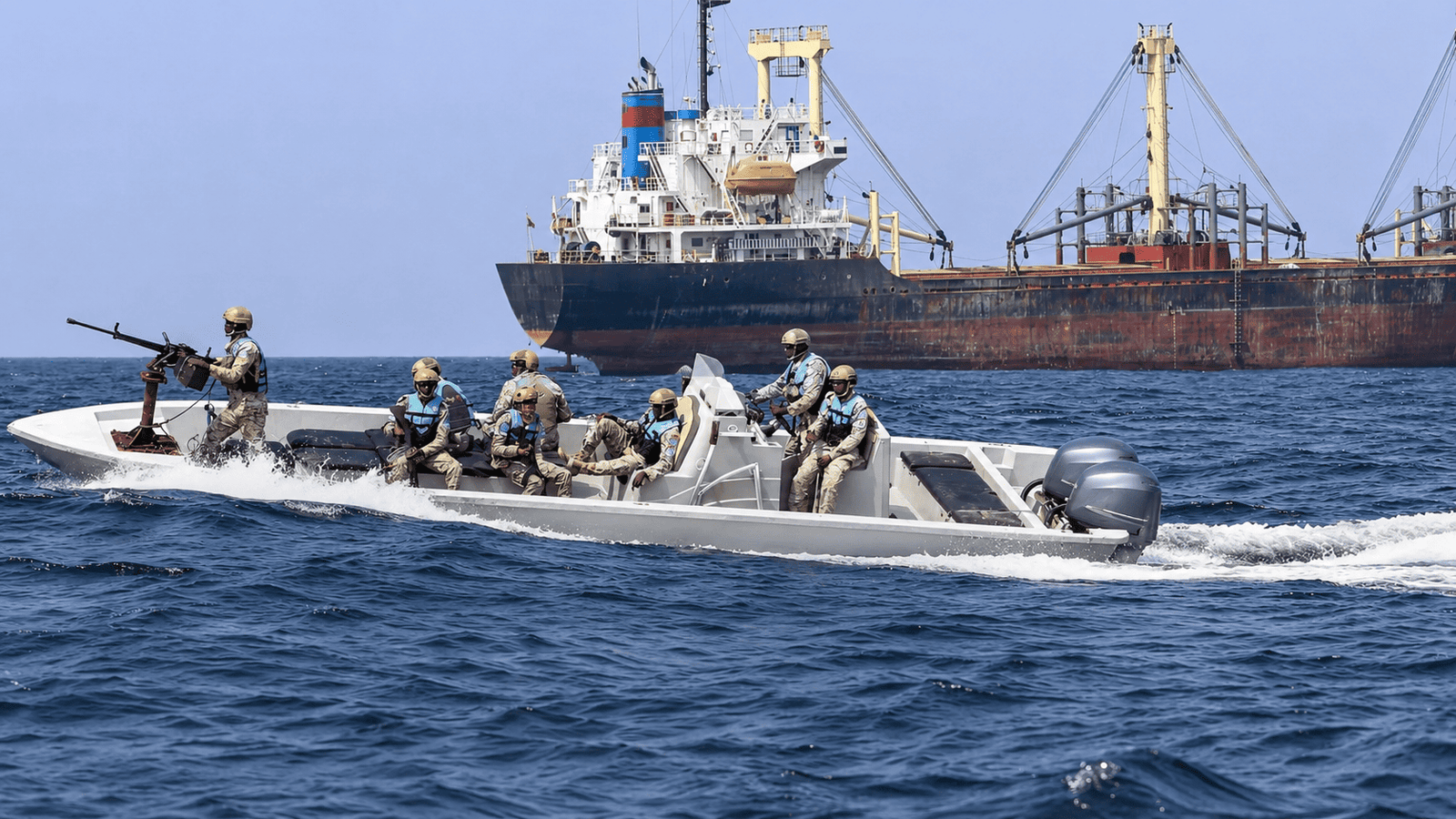
The maritime episodes complete the picture. In July 2025 the MV Sea World, a vessel carrying security equipment for Somalia's armed forces, was seized off Ras Caseyr by the maritime forces of Puntland's Deni administration and held at Bosaso for over two weeks, an act the federal government itself denounced as piracy. In August 2026 the MV Lutuf, carrying equipment bound for the training facility in Mogadishu, was hijacked by armed pirates off Eyl. In both cases the injured party was Somalia's own army, whose equipment was interdicted, and in both cases the opposition commentariat somehow aimed its outrage at Türkiye, reheating the eternal slogan that Turkish weapons "massacre civilians." A political camp that cannot bring itself to criticize the seizure of its own state's military supplies, but finds its voice only to attack the country that shipped them, has disclosed where its priorities lie.
The most recent episode is the most instructive, because it exposes both the double standard and the fifth column at once. In August 2026, days after Abdulkadir Mohamed Nur was elected Speaker of the House of the People, he received a routine congratulatory telephone call from Ziya Öztürkler, his Turkish Cypriot counterpart, and posted a courteous note of thanks. The Farmaajo-aligned networks and their allies erupted as if a treaty had been signed: coordinated denunciations, campaigns to lodge complaints with the European Union, breathless claims that Somali foreign policy had been overturned by a thank-you message. The documented record makes the selectivity impossible to miss. Contacts between Somali officials and Turkish Cypriot institutions stretch back years; Farmaajo-era ministers, and even Farmaajo's own ambassador in Ankara, met Turkish Cypriot officials and circulated the photographs proudly, and the same Farmaajo supporters now performing constitutional horror never produced a syllable of objection. The outrage was never about Cyprus. It was about which Somali official could be damaged, and a Turkish-educated Speaker standing close to both the president and Ankara made an irresistible target.
What made the episode doubly damaging is that parts of the government played into it. Rather than closing the file quietly through diplomatic channels, actors within the executive, with State Minister for Foreign Affairs Ali Balcad the name most frequently cited in Somali reporting, are alleged to have leaned into the controversy as an instrument against the Speaker in an internal power struggle. The calculation was as short-sighted as it was self-harming: to wound a domestic rival, they helped detonate a manufactured crisis in the middle of the state's most important foreign partnership, handing the separatist lobby in Hargeisa a gift it immediately spent on appeals to Nicosia and Athens. This is the signature Farmaajo-network achievement, and the reason that stream ranks as the most insidious of the five: it does not merely attack from outside, it sows discord inside, setting ally against ally until the government injures itself and Türkiye absorbs the shrapnel. They are one thing in daylight and another in the dark, and planting seeds of fitna between partners is the craft they have genuinely mastered.
Who Is Actually Running This Campaign
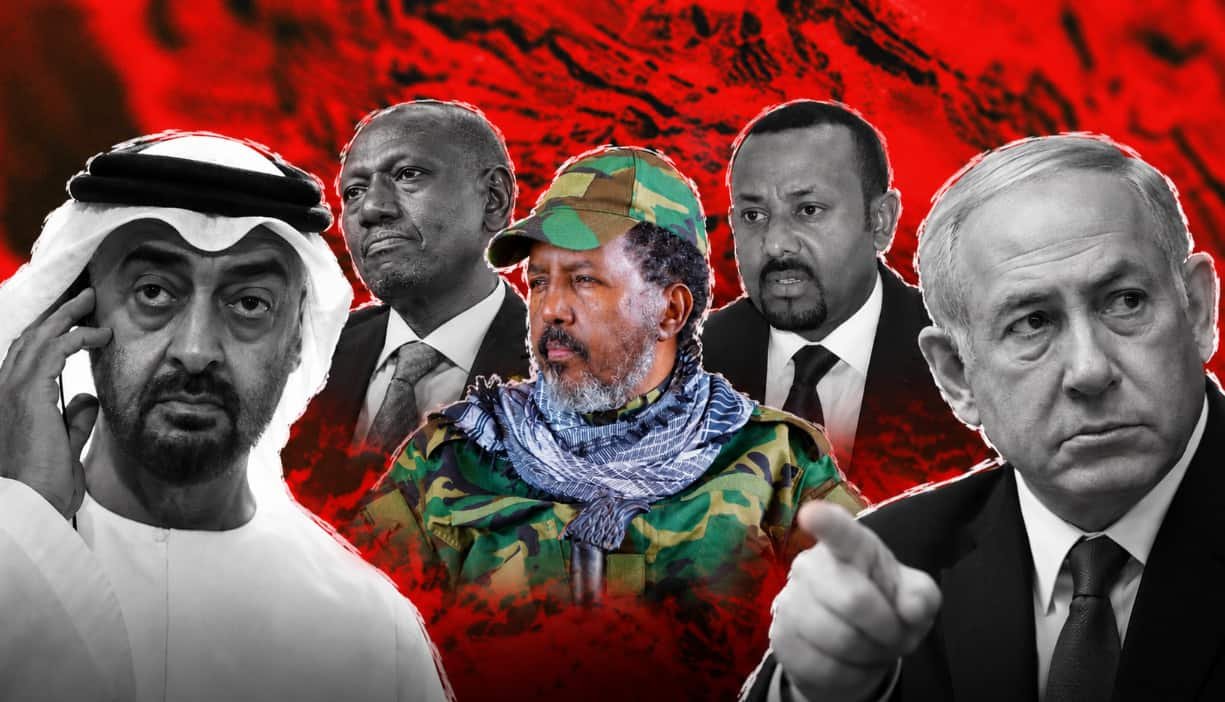
The anti-Türkiye chorus sounds spontaneous. It is not, and neither is its reasoning uniformly homegrown. For part of the opposition, the calculation described above is genuinely its own: a domestic gambit, conceived in Mogadishu and the diaspora, to separate the president from his partner. For another part, the logic arrives ready-made from outside. Prying Türkiye out of Somalia is a standing objective of the Israeli-Emirati strategy in the Red Sea corridor, and that strategy needs local voices to carry it; the funded segments of the opposition are not authors of the argument but distributors of it, reciting a script whose strategic beneficiary sits in Tel Aviv and Abu Dhabi, not in any Somali constituency. The two groups converge on the same talking points for entirely different reasons, one to win power at home, the other to earn its retainer, and the convergence is what gives the campaign its false appearance of breadth. It can be disaggregated into five identifiable streams.
The first is the funded network. The Horn of Africa has become a theater of open perception warfare, and the paymasters are no longer hidden. In December 2025, Israel recognized the separatist administration in Hargeisa, a move Israeli officials themselves described as facilitated by the United Arab Emirates, whose DP World has poured some 400 million dollars into Berbera's port while satellite imagery analyzed by Le Monde shows military construction at Berbera airport that goes well beyond any civilian purpose. Israeli media speak openly of Turkish influence in Somalia as a strategic threat, citing everything from the Mogadishu base to reports of a planned satellite launch facility. Analysts at the American Enterprise Institute and the Critical Threats Project describe an Israel-UAE alignment working to contain Turkish reach from the eastern Mediterranean to the Indian Ocean. Money follows strategy. Across the region, a suspiciously well-resourced ecosystem of academics, "independent experts," journalists, and politicians produces, on cue, the same talking points about Turkish "neo-colonialism" in Somalia. When the UAE declined to condemn the recognition of Hargeisa and Mogadishu responded by cancelling Emirati port, security, and defense agreements in January 2026, the volume of this ecosystem did not drop. It rose.
The second stream is a displaced stratum of the diaspora. For years, a segment of returnee politicians and consultants treated Somalia as a short-term contract: fly in, capture a ministry or a procurement pipeline, extract, and fly back to comfortable lives in Western capitals. A state that builds real institutions, collects its own revenue, and signs twenty-year agreements with a serious partner is a state with shrinking room for that business model. Their quarrel with Türkiye is, at bottom, a quarrel with permanence.
The third stream is the perception machinery of the separatist project in the northwest, for which every Turkish success in Mogadishu is an existential setback. A federal government that can defend its sovereignty at Ankara, drill its own waters, and field its own navy is a government that forecloses the secessionist horizon. The attacks from this quarter at least have the virtue of consistency.
The fourth stream, and the most dangerous, wears a friendly face. These are political opposition groups that publicly proclaim their closeness to Türkiye while their affiliated networks pump anti-Turkish venom through social media day and night. The most frequently cited example is the network around former president Farmaajo, the machine once branded "N&N," whose paid social media operations were notorious throughout his presidency and which Somali commentators documented hurling coordinated abuse at any critic. Turkish experts consulted by this author identify this network, allegedly steered by Farmaajo's former media chief, as the most hazardous of all the streams, precisely because of its two-faced architecture: the principal offers public praise of Türkiye while the troll battalions beneath him wage a scorched-earth defamation campaign against Türkiye on every subject, with no moral floor. It is influence laundering: the hand extended in Ankara and the troll accounts defaming Türkiye online belong to the same operation.
The fifth stream is simply opportunistic: commentators and minor politicians who have learned that anti-Türkiye content travels well in an algorithmic environment already primed by the other four.
A Campaign Without a Country Behind It
The observable data expose what the volume of the campaign is designed to conceal: it has no constituency. The noise is real; the crowd behind it is not. Reviews of the coordinated anti-Türkiye hashtag surges on Somali social media have found that as many as 87 percent of the participating accounts bear the hallmarks of inauthenticity: freshly created profiles, stolen or stock photographs, no organic history, identical posting windows, and the synchronized amplification patterns of a rented botnet rather than the ragged rhythm of genuine public anger. Strip out the fabricated layer and what remains is a thin crust of professional operators talking mainly to each other. This is not a movement. It is a special effect.
The offline evidence says the same thing, louder. If the anti-Türkiye narrative had genuine roots, fifteen years of Turkish presence would have produced what foreign presences elsewhere reliably produce: protests outside the embassy, boycotts, graffiti, friction on the street. Somalia has produced the opposite. Turkish teachers walk Mogadishu without incident. Somali families compete for Turkish scholarships. Streets and children carry the name Erdoğan, and the fifteenth anniversary of the August 2011 visit was publicly commemorated in Mogadishu in August 2026 with official and popular participation. Every survey of Somali attitudes toward foreign partners, formal or informal, finds Türkiye at or near the top, and no faction has ever managed to fill a single square in Somalia with an anti-Türkiye demonstration. The campaign exists on servers, not in streets. When two of its most senior political patrons, Sheikh Sharif Sheikh Ahmed and Hassan Ali Khaire, finally took the confrontation to the ground in June 2026, with guns rather than hashtags, the public's answer was to stay home. A narrative that commands eighty-seven percent fake accounts online and zero percent of the street offline is not public opinion. It is the absence of public opinion, expensively disguised.
An Old Script, Recycled
The historical record contains a bitter irony, and it deserves to be stated plainly. This playbook has been run before, and Hassan Sheikh himself once helped run it. During the crisis of 2021, when Farmaajo's parliamentary allies extended his mandate and Mogadishu slid toward open fighting in April of that year, the then-opposition, Hassan Sheikh included, hammered relentlessly at the Turkish connection: Turkish-trained units firing on protesters, Turkish weapons turned on rivals, Turkish equipment propping up a president who would not leave. The Somali Opposition Council publicly pleaded with Ankara to halt deliveries. The message to Türkiye was identical to today's: your partner is one man, not the nation, and you must distance yourself from him.