
Technology
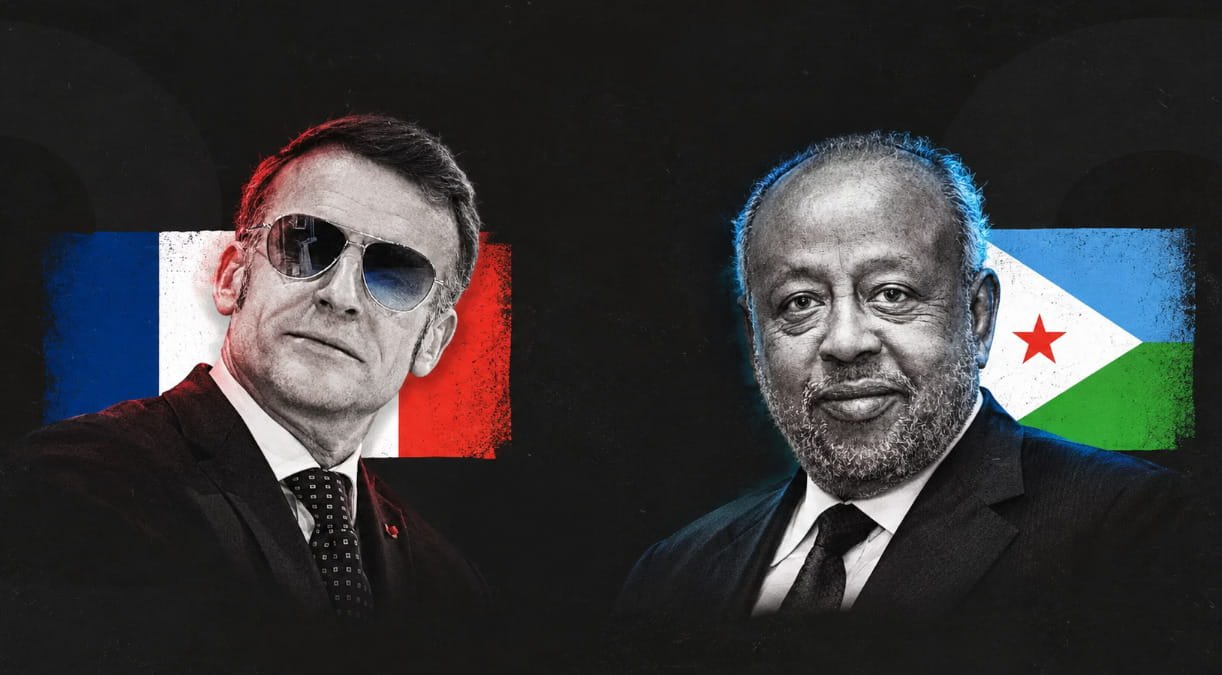
Guelleh in Paris: A Space Summit and a Decade of Leverage
Djibouti's president has opened the new political year with two messages aimed at two different audiences. To the outside world: hands off. To his own government: deliver.
Speaking in Ali Sabieh on Sunday at the close of a three-day conference of the ruling People's Rally for Progress (RPP), President Ismaïl Omar Guelleh warned against foreign meddling in his country's affairs, declaring that Djibouti's sovereignty and its right to decide independently are not up for negotiation. The country's internal affairs, he said, belong to its people and government alone, and no encroachment will be tolerated. Notably, he named no state, no group and no specific dispute — a calculated vagueness that allows the warning to land everywhere at once.
The timing explains the tone. Djibouti sits at the mouth of the Red Sea, hosting foreign military bases from the United States, China, France, Japan and others, at a moment when the Horn of Africa has turned into one of the world's most crowded arenas of great-power rivalry. Regional tensions — from the Red Sea shipping crisis to Ethiopia's push for sea access — have raised the price of every square kilometer of Djiboutian coastline. In that environment, a president reminding the world that hosting foreign powers is not the same as being directed by them is less a routine talking point than a positioning statement.
Yet the more consequential speech of the season may have been the quieter one. Days earlier, on September 1, Guelleh used the opening Council of Ministers to hand his government an unusually specific roadmap: reinforce the sovereign functions of the state — internal security, border control, protection of vital infrastructure, and defenses against emerging threats like cyberattacks and disinformation — while converting economic growth into tangible opportunity for citizens.
The second half of that sentence is where the real challenge lies. Djibouti posted 6.5 percent growth in 2025, a figure most economies would envy. But the growth model — anchored in ports, logistics and rents from the country's strategic geography — produces far fewer jobs than it does GDP. The numbers laid out alongside the roadmap are stark: overall unemployment estimated at 26 percent in 2025, more than half the working-age population outside the labor market altogether, and, according to World Bank figures, nearly 46 percent of Djiboutians aged 16 to 24 neither working nor in school or training. A country can grow at 6.5 percent and still leave its youth standing outside the economy looking in.
Guelleh's prescription is diversification: light industry, the digital economy, tourism, renewable energy and fisheries, paired with sustained investment in education, training and healthcare. He framed the country's youth as its greatest asset and called for decisive action on skills, professional integration and access to entrepreneurship. A parallel modernization drive — paperless public services, interoperable administrations, and a planned national forum on artificial intelligence — is meant to rebuild the state's own machinery for the task.
Taken separately, the Ali Sabieh warning and the September 1 roadmap read as foreign and domestic policy. Read together, they form a single argument: sovereignty is not only defended at the border, it is built at home. A state that cannot employ nearly half its young people is structurally exposed — to social strain, to external leverage, and to the narrative warfare and disinformation the president himself flagged as emerging threats. Guelleh's own framing of the season — commitment, action, results — concedes as much: the era in which geography alone paid Djibouti's bills is ending, and the government is being asked to prove that growth can be translated into cohesion.
That is also the standard by which this political year will be judged. The sovereignty message requires no follow-through beyond firmness; the reform message requires delivery — jobs created, services digitized, young people moved from the margins into the economy. In 2026, Djibouti's independence will be measured less by the speeches defending it than by the payrolls backing it up.
French investors are reallocating capital toward strategic sectors such as artificial intelligence and technology rather than pulling out of the region altogether.
Shipping traffic through the Strait of Hormuz continues to decline as regional tensions rise, while diplomatic efforts struggle to produce a breakthrough.