
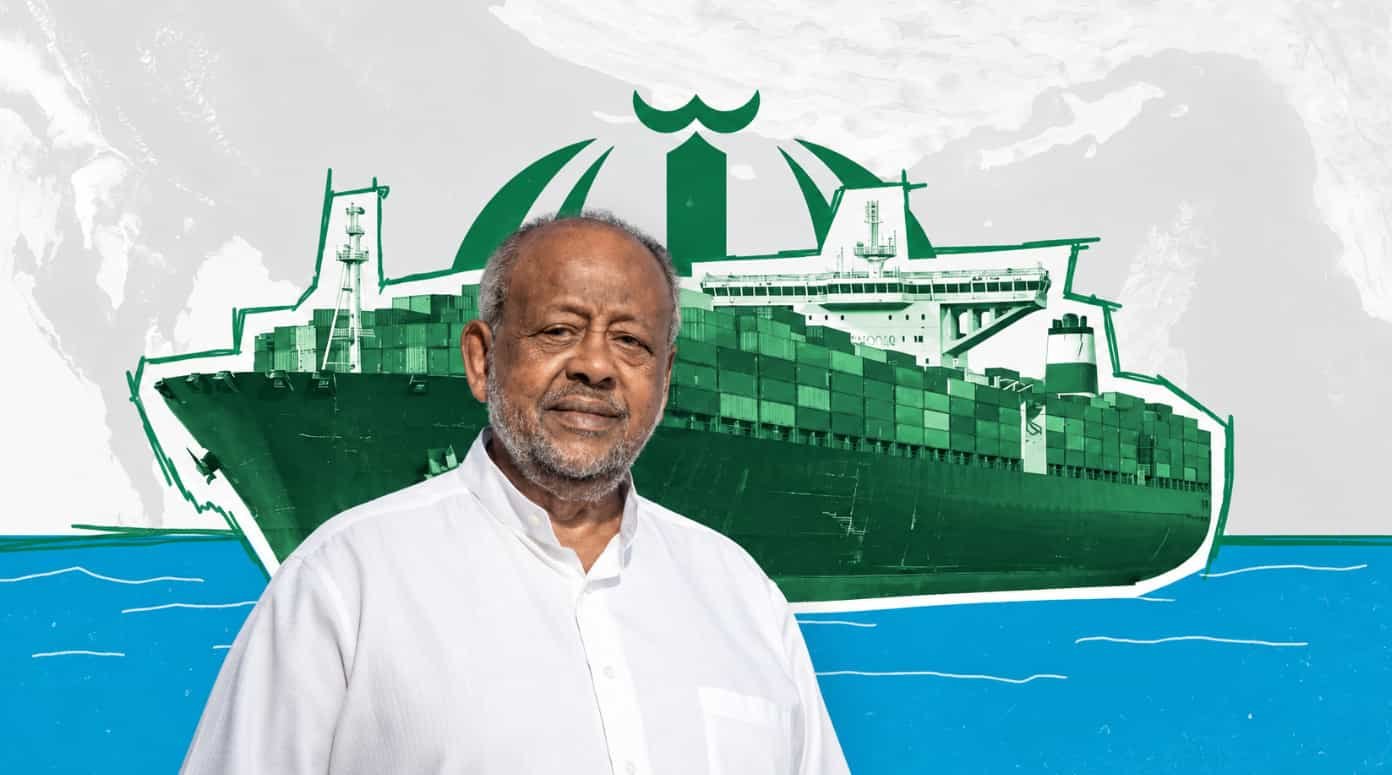
Politics & Security
Sovereignty Abroad, Jobs at Home: Guelleh's 2026 Playbook
Djiboutian President Ismail Omar Guelleh arrived in the French capital on Tuesday. Invited by Emmanuel Macron to attend the first International Space Summit on September 9-10, Guelleh was received at the airport by Foreign Minister Abdoulkader Houssein Omar, Minister of Higher Education and Research Nabil Mohamed Ahmed, and Yannick Favennec-Bécot, president of the France-Djibouti friendship group at the French National Assembly. At a summit gathering heads of state and government, world-renowned scientists and leading companies from more than 120 countries, the leader of an African nation of under two million sits at the founding table.
That photograph could be read as a mere protocol story. Yet Guelleh's presence in Paris reflects where a relationship rebuilt from the ground up over the past decade has arrived: in an era when France has been withdrawing from Africa country by country, Djibouti has become Paris's last military stronghold on the continent and this visit is a record of the terms on which that stronghold's landlord is now received.
The Visible Face of the Visit: From Satellites to the Summit Table
Guelleh's seat at the space summit is not a courtesy invitation but the return on a concrete program. Djibouti effectively launched its national space program by placing its first satellite, DJIBOUTI-1A, into orbit in November 2023, followed by DJIBOUTI-1B in December 2024. The satellites collect meteorological, climate and environmental data, serving the country's most pressing needs from water resource management to monitoring climate-driven phenomena. The presence of the Minister of Higher Education and Research in the delegation is no accident either: Djibouti frames the program as a vehicle for training a new generation of Djiboutian engineers in space technologies, and for turning technological mastery into a lever of sovereignty, sustainable development and preparedness. And the partner in that vision is France, which signed an agreement in December 2024 to help develop Djibouti's national space agency.
The Hidden Layer: A Decade That Reversed the Equation
The story behind the weight of Guelleh's reception in Paris begins in 2017. That year, China opened the first overseas military base in its history in Djibouti a few kilometres from the French base. For Paris, which had regarded Djibouti as its strategic backyard for a century and a half, alarm bells rang; Macron's March 2019 visit to Djibouti was openly described in the French press as a move against growing Chinese influence. But the real rupture came in the Sahel: the governments of Mali, Burkina Faso and Niger expelled French troops, Chad abruptly ended military cooperation, and Senegal called for the closure of French bases. Within a few years, France's military map of Africa was all but erased leaving a single exception: Djibouti, host to 1,500 soldiers, France's largest military contingent abroad and the only base untouched by the continental drawdown.
The Guelleh government knew how to bring that new equation to the table. After two years of hard negotiation, the renewed Defense Cooperation Treaty signed in July 2024 again in Paris, again with Macron reformed the military relationship dating back to 1977 in Djibouti's favor: an increase in base rent, France's continued responsibility for protecting the country's airspace, and a commitment to build a new airport. In December 2024, Macron traveled to Djibouti; sharing Christmas dinner with his soldiers at the last bastion, he said the base had to be "reinvented as a projection point" for France's African missions — and the airport and space agency agreements were signed during that same visit. In June 2025, the French National Assembly ratified the treaty while approving the restitution of the Héron naval base land to Djibouti. The symbolism was clear: France was staying, but on the landlord's terms.
Why This Visit Is Different
Guelleh's previous engagements in Paris unfolded in the shadow of defense bargaining; this visit's agenda is future technologies. The sequence is telling: first the military relationship was rebalanced (2024), then economic commitments were secured (the airport), and now a scientific-technological layer is being added (space). For Djibouti, this is the latest step in a strategy of diversifying the relationship beyond the tenant-landlord frame — just as it opened its ports to China, its territory to America and its investment gateway to the Gulf without granting any partner a veto. For France, it is the showcase project of a transition from the image of colonial residue to that of a development and technology partner. Guelleh is expected to raise new cooperation tracks for Djibouti's space agency, training programs and potential financing channels on the summit's margins — and Paris has no intention of sending the landlord of its last bastion home empty-handed.
The Price and the Value of a Summit Seat
A decade ago the question was "how long will France stay in Djibouti?" Today, as Guelleh is fêted in Paris, the question has inverted: "can France exist in Africa without Djibouti?" At a moment when the Red Sea crisis has pushed the Bab el-Mandeb to the centre of the world's agenda, Djibouti's strategic value rises in Paris's eyes by the year — and Guelleh has steadily pursued a negotiating line that converts that value from rent to an airport to satellites. This week's space summit invitation is the diplomatic reward of that line: the leader of a small country sits at the table of great powers as the return not merely on his country's position, but on his skilful management of it. Guelleh will likely return from Paris with more than photographs — because the rule taught by ten years of this relationship has not changed: it is now France that extends the invitation, and Djibouti that collects.
French investors are reallocating capital toward strategic sectors such as artificial intelligence and technology rather than pulling out of the region altogether.
Shipping traffic through the Strait of Hormuz continues to decline as regional tensions rise, while diplomatic efforts struggle to produce a breakthrough.