Politics & Security
Turkish Navy and Somali forces free hijacked ship: Ankara's role in the Horn enters a new phase
From the Rapid Support Forces to Hargeisa, the UAE-Israel-Ethiopia project of fragmentation now faces a coalition built on the opposite principle.
On August 7, 2026, Saudi Arabia, Türkiye and Pakistan signed a joint defense agreement in Mecca declaring that an armed attack on any one of them would be treated as an attack on all three. The commentary that followed looked north and east: at Iran, at the Gulf, at Washington's retreat. Almost nobody looked south. Yet within a month of the signing, three things happened on the African side of the Red Sea that belong in the same story. The Sudanese army seized Hamrat al-Wiz in North Kordofan and cut a critical Rapid Support Forces supply corridor. Somali federal forces crushed an assault on Baidoa by militias loyal to former South-West president Laftagareen, fighting alongside Al-Shabaab. Ethiopia, which has no coastline, was reported to be manufacturing drones at two domestic factories and to have amassed a fleet in the thousands.
These are not three separate stories. They are three fronts of a single contest over whether the states of the Red Sea's African shore will remain whole. On one side stands an axis that has spent a decade investing in parallel governments, breakaway regions and coastal enclaves. On the other, now, stands an alliance whose founding text, according to Turkish Foreign Minister Hakan Fidan, rests on sovereignty, territorial integrity and non-intervention. The Mecca Defence Alliance was not written with Africa in mind. But its geography and its principles make it the worst news the region's separatists have had in years.
Call it what its own architects would not: an axis of fragmentation. Its core is the partnership between the United Arab Emirates and Israel, formalized after the Abraham Accords and extended since into port projects, intelligence cooperation and security coordination along the southern Red Sea. Ethiopia is the axis's continental partner, drawn in by capital, technology and the promise of a sea it does not possess. Kenya is attached at the edges, chiefly as a financial and diplomatic host.
The method is consistent wherever it appears. Where a state is weak, the axis does not strengthen the state; it sponsors an alternative to it.
In Sudan, the alternative is the RSF. In February 2025, the RSF and allied groups signed a charter in Nairobi establishing a parallel government, later styled the "Tasees" administration, with its own security council decreed by Hemedti in May 2026. Kenya hosted the signing. The UAE, by the consistent findings of investigators and now of the courts of public opinion across the region, armed the militia that signed it. As recently as this week, an RSF drone attributed to Emirati supply killed thirteen people in a crowd outside a Sudanese courthouse.
In Somalia, the alternative is Hargeisa. On January 1, 2024, Ethiopia signed a memorandum with the Somaliland administration trading recognition for a stretch of coast, the most direct assault on Somali territorial integrity in a generation. On December 26, 2025, Israel became the first state to recognize the breakaway region, and Israeli officials openly credited Emirati facilitation. Berbera's port and airport, built out with Emirati money, were quietly upgraded with military infrastructure that the International Institute for Strategic Studies assessed as preparing the ground for Israeli access. By April 2026 Israel had appointed an envoy; by August, Somaliland's president was openly offering Berbera as a base to Israel and the United States. In the same interview he insisted no foreign presence existed yet. Djibouti's president, whose country borders the region, had already described the UAE as Israel's vanguard.
In Yemen, the alternative was the Southern Transitional Council, whose December 2025 declaration of a separate "South Arabia" produced, for four days, two new pro-Emirati statelets flanking Bab el-Mandeb. Riyadh's response was the first sign of what was coming: an ultimatum that forced the UAE to pull its forces out of Yemen.
Three theaters, one template. Recognize the fragment, arm the fragment, build a port in the fragment, and let the fragment's coast become your coast. It is a strategy that works only against states too weak to answer. Its vulnerability is that it requires those states to stay weak.
The most important fact about the Mecca Alliance for Africa is that its three members were already fighting together on African soil before they signed anything. Sudan was the rehearsal.
When the Sudanese Armed Forces were at their weakest, in mid-2024, they had lost Khartoum, Gezira and much of Kordofan to the RSF. The turn came in October 2024, when Türkiye delivered Bayraktar TB2 and Akıncı drones to the army, the first direct Turkish military support to a government in the war. Reporting by the Washington Post and Le Monde later documented a package exceeding 120 million dollars, including drone systems, warheads and Turkish technical instructors who fine-tuned Akıncı targeting in the field. Turkish drones helped the army retake Gezira, Khartoum and North Kordofan and to sever RSF supply lines. The government returned to the capital in January 2026.
Pakistan supplied the second layer. In January 2026, Reuters reported that Islamabad was finalizing a 1.5 billion dollar package for the Sudanese army: more than two hundred reconnaissance and loitering drones, ten K-8 light attack aircraft, advanced air defense systems, Super Mushshak trainers and possibly JF-17 fighters. Saudi Arabia supplied the third layer, financing. Le Monde reported that Riyadh paid for the Turkish drones and the Pakistani weapons alike, and regional analysts described the Pakistan-Sudan arrangement as underwritten by the Kingdom. Saudi Arabia also supplied the diplomatic layer: it rejected the Nairobi charter within days, called the RSF parallel government an illegitimate step outside Sudan's institutions, and backed reconstruction from Port Sudan.
Turkish hardware, Pakistani volume, Saudi money and Saudi diplomacy. That is the entire architecture of the Mecca Alliance, assembled in Sudan eighteen months before Mecca. The pact did not create the coalition that is beating the RSF. It gave that coalition a charter, a secretariat in Riyadh and a name.
President Erdoğan told General Burhan in Ankara in June 2026 that Türkiye's role was driven by the desire to halt the bloodshed and preserve Sudan's territorial integrity. Critics in Western and Israeli outlets have attacked the drone campaign on humanitarian grounds, and no honest account should omit the civilian toll that drones of every origin have inflicted in this war. But the strategic point stands independently of the moral argument. A militia that once controlled the capital, financed by gold and Gulf patronage, now bleeds its supply lines in Kordofan. The RSF's sponsors bet on a Sudan without a center. Three states bet on the center. The center is winning.
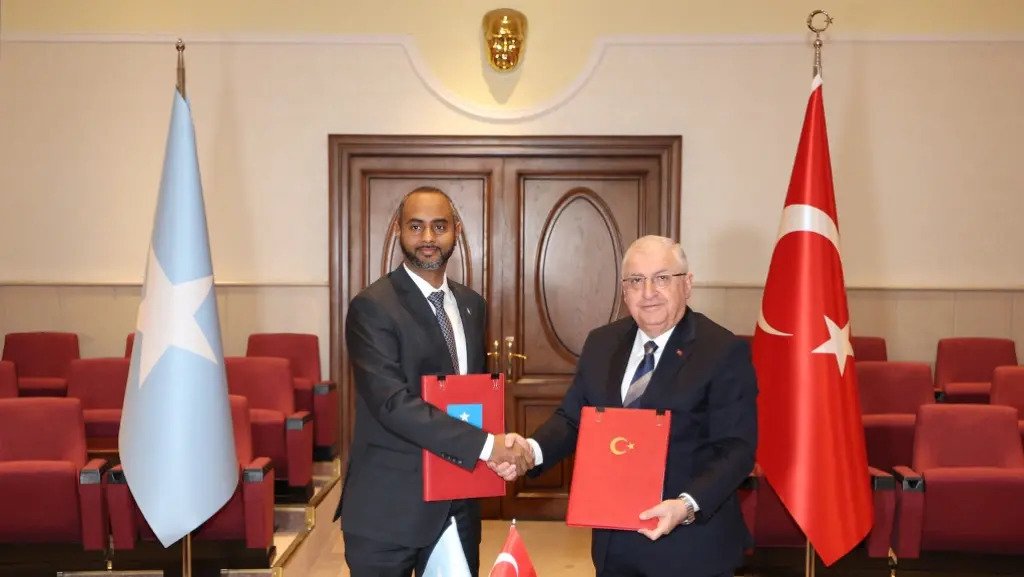
If Sudan is where the alliance fought, Somalia is where its principles are already written into law. Türkiye is not merely a partner of Somalia. Under the Defense and Economic Cooperation Framework Agreement signed on February 8, 2024, and ratified by both parliaments, Türkiye is the state formally charged with protecting Somalia's maritime jurisdiction and building its navy.
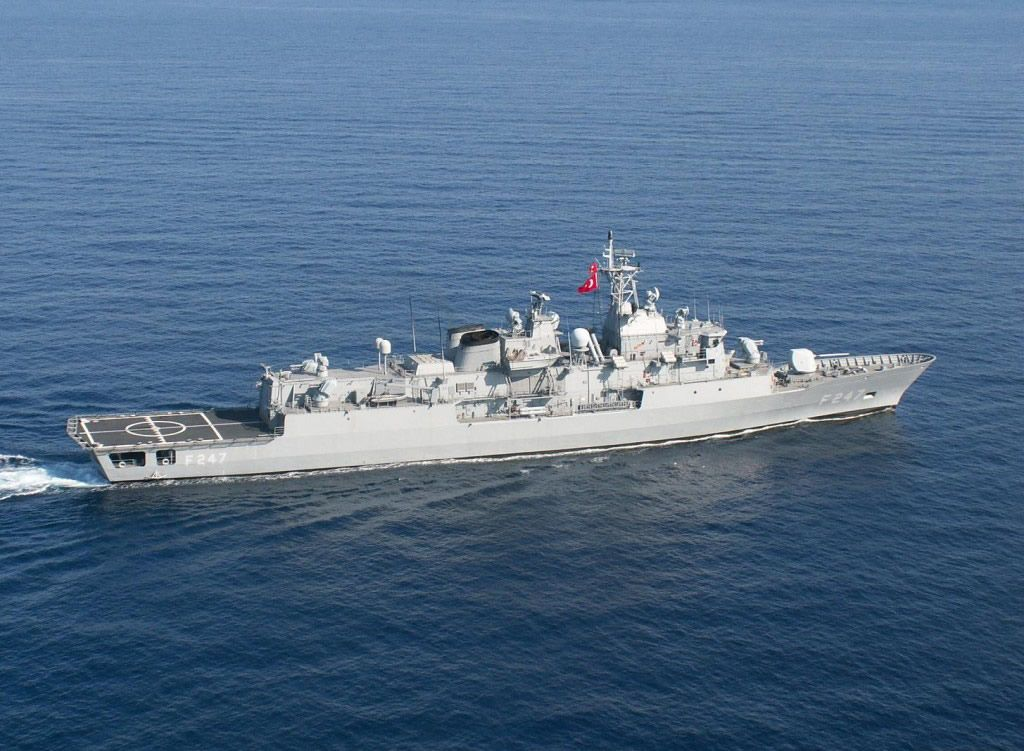
The agreement runs ten years. It gives Türkiye exclusive responsibility for training, equipping and modernizing the Somali navy and for patrolling Somalia's exclusive economic zone, in exchange for a share of the zone's marine revenue. It sits on top of TURKSOM, Türkiye's largest overseas base, which has trained more than fifteen thousand Somali troops since 2017, including naval and special operations units. It has since grown extensions: SOMTURK, the joint fisheries and maritime company established in December 2025 and led by Türkiye's armed forces pension fund; three Turkish warships deployed to Somali waters in February 2026 ahead of offshore drilling; a deepwater rig that arrived in March and, by all accounts, is ahead of schedule on Somalia's first offshore well. In July 2026 the Turkish parliament renewed the mandate for Turkish forces to operate across jointly determined areas on land and at sea, at Mogadishu's request. In August, the two navies conducted a joint maritime operation.
Türkiye's political record matches the security one. When Ethiopia and Hargeisa signed their coast-for-recognition memorandum, it was the Ankara Declaration, hosted by Erdoğan in December 2024, that killed it, offering Ethiopia commercial sea access under Somali sovereignty instead of a slice of Somali territory. When Israel recognized Somaliland, Ankara called it a new example of Netanyahu's unlawful conduct and open interference in Somalia's internal affairs.
What Mecca adds is that Türkiye no longer stands in Somalia alone. Saudi Arabia's Foreign Ministry responded to the Israeli recognition on the day it happened, affirming full support for Somalia's sovereignty, unity and territorial integrity and rejecting what it called unilateral separatist measures and attempts to impose parallel entities. Pakistan strongly condemned any attempt to undermine Somalia's territorial integrity and referred to the so-called Somaliland region of the Federal Republic of Somalia. Both signed the twenty-one-state statement of December 28, 2025, alongside Türkiye, and both signed the twelve-state statement of April 2026 condemning Israel's appointment of an envoy to Hargeisa. The Organization of Islamic Cooperation, meeting in Jeddah in January 2026, adopted a resolution reiterating that Somaliland remains an integral part of Somalia. Saudi Arabia also chairs the Red Sea and Gulf of Aden Council, whose membership includes Somalia and excludes Ethiopia and Israel on the principle that the sea belongs to its littoral states.
Every Mecca signatory, in other words, had already taken an identical position on Somalia before Mecca. The pact fuses those positions into a collective deterrent. A guarantor state that could once be pressured bilaterally now has behind it the financial depth of Riyadh and the military weight of Islamabad. Anyone planning to test Türkiye on the Somali coast must now calculate the reaction of three capitals, not one.
Ethiopia is the axis's African instrument, and its most tragic one. Addis Ababa's demand for a sea is old and, in its commercial form, legitimate. But the form it has taken since 2024 is not commercial. It is the pursuit of a sovereign naval outlet through a breakaway region, financed by the UAE, blessed by Israel and aimed at Somalia's territory.
Consider what Ethiopia has built and what it has not. It has built drone factories: two plants producing since 2025, a fleet estimated in the thousands, deployed against Fano in Amhara, against insurgents in Oromia and, as this week's fighting on the Tigray frontier shows, against the possibility of a new northern war. It has built the Berbera corridor with Emirati money. It has built a security relationship with Israel spanning cyber, water and intelligence. What it has not built, and cannot build without someone else's coast, is a navy. Ethiopia's port hunger is real; the rest of the axis feeds on that hunger.
The Mecca triangle closes the water. Saudi doctrine holds that non-littoral powers must not militarize the Red Sea, which is exactly what an Ethiopian naval presence at Berbera would be. Türkiye's guarantee makes Somali sovereignty over that coast a matter of Turkish security. Pakistan has no interest in a rival axis running from Berbera through the Gulf of Aden into the Indian Ocean. An Ethiopian navy on the Somaliland coast would, in practice, be a forward position of the UAE-Israel line on the African continent. That is a scenario all three Mecca states reject for three different reasons, which is the strongest kind of consensus.
There is an exit, and Riyadh has already opened it. Saudi Foreign Minister Faisal bin Farhan visited Addis Ababa in February 2026, offering Ethiopia a relationship that does not depend on Abu Dhabi. The Ankara Declaration offered the formula: commercial access, under Somali sovereignty, negotiated with Mogadishu. Ethiopia can take that road and prosper as a trading partner of every state on the coast. Or it can remain what the axis needs it to be, a landlocked drone power lending its weight to other people's coastal ambitions. The horse does not reach the water in either case. The only question is who pays for the ride.
The clearest evidence that the axis understands what Mecca means is the campaign launched against Türkiye inside Somalia in the weeks after the signing.
The pattern is visible on every Somali social media feed. In September, accounts began circulating claims that Turkish F-16s and drones had struck President Hassan Sheikh Mohamud's domestic opponents, including an alleged strike on September 4 at the Doolow residence of a general who is Laftagareen's father-in-law. Somali security sources rejected the operational claim outright: no Turkish air or other operation took place in Doolow on that date. They noted that Turkish intelligence had mediated between government and opposition forces during the June 4 clashes in Mogadishu, hardly the record of a party seeking a military victory for one faction. They attributed the campaign to foreign actors seeking to erode Somali confidence in the partnership, and identified Israel as its beneficiary.
The logic of the campaign is easy to reconstruct. The axis cannot defeat the Turkish presence in Somalia militarily, and after Mecca it cannot coerce it diplomatically without engaging Riyadh and Islamabad. What remains is to turn Somalis against it: to reframe a fifteen-year state-building partnership as a Turkish occupation, and the guarantor of Somali unity as a factional actor. The same script has been used against Saudi Arabia in Sudan and against Türkiye in Libya. Its appearance now, at this volume, is not a sign that the Turkish position is weak. It is a sign that every other lever has failed.
There are two theories of Red Sea security. One holds that the sea is safest when it is divided among many small dependencies, each with a foreign patron and a port. The other holds that the sea is safest when the states along it are whole, functioning and able to police their own waters. The first theory has been tested for a decade. Its results are the RSF, the Houthis, the piracy resurgence off Puntland that has produced sixty-seven detentions in a year, and a recognition crisis that the OIC and the Arab League have both condemned as a threat to regional peace.
The Mecca Alliance embodies the second theory. It is not a Red Sea pact by design, but every element of its members' Red Sea policy points the same way: rebuild the Somali navy, restore the Sudanese state, keep non-littoral militaries out, and treat parallel governments as what they are. The Multinational Maritime Defence Coalition announced in Riyadh this year works from the same premise. A Somalia that can patrol its own exclusive economic zone, protect its own offshore oil and interdict its own pirates is a Somalia that no longer needs foreign enclaves. That is a better guarantee of free navigation at Bab el-Mendeb than any number of bases in breakaway ports.
A serious analysis must record what the pact is not. Its text is unpublished. Its three members' threat maps do not fully overlap; Türkiye's nearest threat is not Saudi Arabia's, and Pakistan's is neither. There is no joint command, and the drone attack on Jizan two days after the signing produced no invocation of the collective clause. Pakistan's nuclear deterrent will not stretch to cover Mogadishu. Egypt, the missing signatory, would have made the Red Sea logic explicit; its absence leaves the pact's southern flank implicit. The Saudi-Emirati rivalry is real but bounded, and Abu Dhabi retains assets in Bosaso, Berbera and Nairobi that the pact does not touch.
The right way to read Mecca in Africa is therefore not as a fleet that will anchor at Bab el-Mandeb tomorrow. It is as a change in what the region's spoilers can afford to attempt. Deterrence usually works in the shadow of weapons that are never fired. The RSF's foreign backers, the sponsors of Hargeisa's recognition and the planners of an Ethiopian naval outlet all made their calculations against a Somalia and a Sudan that stood alone, or against a Türkiye that stood alone beside them. That calculation is now obsolete.
For most of this century, the southern Red Sea has had a hole in its architecture where a state system should have been. Somalia's capacity was thin, Sudan's collapsed, and the axis of fragmentation filled the gap one port and one recognition at a time. Türkiye's fifteen-year investment in Mogadishu closed one side of that gap. The Sudanese army's recovery, with Turkish, Pakistani and Saudi support, closed another. The Mecca Alliance builds a wall behind both.
Its founders may not have been thinking about Africa when they signed. But agreements are measured by their geography, not their intentions, and the geography of this one runs through Mogadishu and Port Sudan. The separatists of East Africa and their sponsors have spent a decade learning that fragments are cheap to buy. They are now learning that whole states, with allies, are expensive to break.
The balance of power in the Red Sea does not change with a signature. What can be attempted there does. That is what changed in Mecca.